.png)

Indian Shares Rally Over 1% as Auto, Financial Stocks Lead Gains
An end-of-day recap of all that transpired in the Indian markets, highlighting the major price movements and the factors driving them


November 19, 2026 at 12:29 PM IST
Indian equity indices rose more than 1% on Thursday, bucking weakness across Asian markets as auto and financial stocks led gains. The Nifty50 advanced 1.14% to 25,514.30, while the Sensex gained 1.21% to 83,021.75.
Fifteen of the 16 major sectors advanced, with auto, consumer durables, FMCG and PSU banks among the top performers. Maruti Suzuki India, Eicher Motors and Mahindra & Mahindra were the biggest Nifty 50 gainers, while IT stocks underperformed. The Nifty MidCap 100 and SmallCap 100 rose around 1.1% and 0.7%, respectively.
Both benchmarks have gained more than 10% in November, supported by record foreign portfolio inflows of $11.28 billion, resilient corporate earnings and a 21.6% decline in crude oil prices.
Sentiment remained cautious globally amid concerns over the AI trade and hawkish comments from Federal Reserve officials ahead of Anthropic's market debut.
The Indian rupee closed at 93.36 per US dollar on Thursday, near its strongest level since April, supported by renewed foreign investment and lower crude oil prices.
Government bond yields eased with the benchmark 6.94%, 2036 gilt yield ended at 7.2543% compared with 7.2858% on Wednesday as crude oil declined and short bets covered aids.
Top Movers of the Day
Maruti Suzuki surged 7.58% to close at ₹13,589, leading the Nifty 50 gainers with a massive trading turnover of ₹18.32 billion. The stock rallied sharply as falling Brent and WTI crude oil prices alongside lower metal prices eased input cost pressures, while post-festive vehicle demand remained resilient.
Eicher Motors climbed 4.66% to settle at ₹8,058.50 as the Nifty Auto index outperformed with a gain of over 4%. Investors accumulated the automaker on improving near-term margin expectations driven by cooling commodity prices and sustained foreign institutional inflows into Indian equities.
Mahindra & Mahindra advanced 4.46% to close at ₹3,509.00, supported by strong trading volume of 4.82 million shares and a turnover of ₹16.76 billion. The stock benefited from broad-based buying across automobile counters as lower fuel and metal costs improved the earnings outlook for domestic vehicle manufacturers.
Tata Motors Passenger Vehicles rose 4.34% to end at ₹263.50, attracting heavy market participation with 22.058 million shares traded during the session. The counter tracked the sector-wide surge in auto stocks as easing crude oil prices and renewed foreign portfolio inflows lifted rate-sensitive consumer plays.
Hindustan Unilever gained 4.07% to close at ₹2,074.20, spearheading the outperformance in the Nifty FMCG index during the Sensex's 990-point rally. Falling crude oil prices helped alleviate concerns over packaging and raw material inflation, drawing strong institutional buying into the consumer staples giant.
Tech Mahindra fell 1.54% to close at ₹1,723 as the Nifty IT index extended its losing streak to a third consecutive session. The stock faced selling pressure after hawkish signals from the US Federal Reserve minutes raised rate-hike concerns that could keep global discretionary technology spending muted.
Infosys declined 1.52% to settle at ₹1,091.90, weighing on the technology sector despite the broader benchmark rally. Investor sentiment remained cautious due to hawkish US monetary policy cues, slow revenue growth, and lingering concerns following the company's reduced organic growth guidance.
TCS dropped 1.55% to close at ₹2,342.70, tracking the broader 1.11% decline in the Nifty IT index. Market participants booked profits after October's sharp 17.7% sectoral rally, while cautious client spending and delayed revenue scaling from artificial intelligence projects dampened buying interest.
HCL Technologies slipped 0.88% to end at ₹1,332.90 amidst sustained weakness across major Indian software exporters. Hawkish US Federal Reserve commentary and selective discretionary tech spending prompted investors to rotate capital out of IT stocks and into rallying automobile and banking counters.
Apollo Hospitals Enterprise declined 0.94% to close at ₹8,738, standing out as one of the eight Nifty 50 stocks to finish in negative territory. The stock experienced localised profit booking as institutional funds rotated out of defensive healthcare names to chase momentum in high-beta auto, banking, and consumer stocks.
PB Fintech plunged 1.95% to close at ₹1,015.00. Shares tumbled up to 6% intraday after co-founder and Executive Vice-Chairman Alok Bansal announced his decision to step back from day-to-day executive responsibilities by March 31, 2027.
Futures & Options
The Nifty November 2026 futures contract closed at 25,559.60, a premium of 45.30 points over the Nifty 50's cash market close of 25,514.30. The benchmark index gained 286.35 points, or 1.14%, while the NSE's India VIX rose 1.52% to 15.80.
HDFC Bank, Reliance Industries and Infosys were the most traded individual stock futures contracts on the NSE. November 2026 F&O contracts will expire on November 23.
Bonds
Government bondyields fell on Thursday as crude oil prices eased at the end of trade. The benchmark 6.94%, 2036 gilt yield stood at 7.2543%, compared with 7.2858% on Wednesday.
Some traders built short positions ahead of Friday's ₹330-billion government bond auction. The government will sell ₹190 billion of the 6.53%, 2031 bond and ₹140 billion of the 7.71%, 2066 bond.
Forex
The Indian rupee closed 5 paise higher at 93.36 against the US dollar on Thursday. This marks its fourth consecutive session of gains, keeping it near its strongest level since April, supported by renewed foreign investment and lower crude oil prices. Overseas investors have bought nearly $12 billion of Indian equities so far in November, putting monthly inflows on track for a record. Foreign investors have also resumed purchases of Indian government bonds after three consecutive months of outflows.
Brent crude fell to around $92 per barrel, easing India's energy import costs, while the RBI's special foreign exchange window for state-run oil companies helped curb spot dollar demand. However, the rupee remains vulnerable to energy price shocks and geopolitical disruptions. External pressures include an October trade deficit at a one-year high and inflation above the RBI's 6% upper tolerance limit.
Crypto
The cryptocurrency market extended its multi-week decline on Thursday after hawkish Federal Reserve meeting minutes reinforced expectations of a December interest rate hike. Bitcoin fell around 2.5% to trade between $62,500 and $63,000, testing support near $62,000 while struggling to regain the $65,000 level. Ethereum slipped below the key $1,800 support zone to trade between $1,770 and $1,800.
Persistent institutional outflows from US spot Bitcoin and Ethereum exchange-traded funds, mounting macroeconomic pressures and heightened risk aversion across technology and other risk assets added to selling pressure. The broader market remained vulnerable as investors reassessed the outlook for monetary policy and risk appetite.
US Stock Futures
US stock futures rose on Thursday after the S&P 500 declined for a fifth consecutive session, ahead of Anthropic’s Nasdaq debut today with the ticker ‘ANT’, with US equities leading the premarket gains. Nasdaq-100 futures rose 0.99%, S&P 500 futures added 0.59%, and Dow Jones Industrial Average futures rose by 1.1%.
Anthropic priced its Initial Public Offering at $83 a share, while expanding its offering to 980 million shares and bringing the amount raised to $81.3 billion, surpassing SpaceX. Its debut on Nasdaq will test investors’ risk appetite for AI stocks, given that the market has become more cautious about AI recently, along with the upcoming Federal Reserve’s October meeting raising the prospects of an interest rate hike next month.
US Treasury Notes
US Treasury yields edged lower on Thursday, with the 10-year yield trading around 5.05-5.07%, extending its decline for a fourth consecutive session. The two-year yield hovered near 4.80%, while the 30-year yield stood around 5.41%. Geopolitical tensions, softer oil prices and volatility in equity markets supported safe-haven demand for government debt.
However, yields remained elevated above 5% as hawkish October Federal Reserve meeting minutes and warnings from policymakers about upside inflation risks reinforced expectations of another interest rate hike in December.
Top News
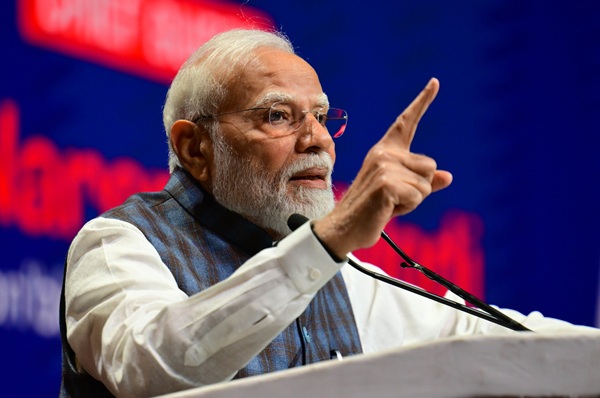
- Tax cuts given, but where are jobs, higher wages? PM Modi asks India Inc
- Modi pushes Indian industry to expand globally, take advantage of policy measures
- India's crude oil production to fall 20% over the next decade: IEA
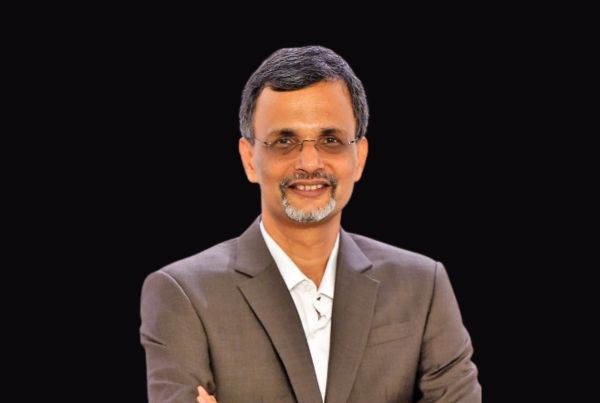
- Economic affairs secy calls for higher wages to spur household spending
- Paytm, Pine Labs shares plunge as UPI transaction fee rollout in India delayed
- Govt revises PUC validity norms; BS-VI vehicles get longer intervals
- Satya Nadella admits Microsoft could have prevented global Outlook outage
- NLC India's green energy unit files for IPO
- Sarvam faces backlash for offering Chinese AI models on its platform
- Govt imposes 162.5% duty on bulk scotch imports despite UK trade pact
- Gold recoups from 14-month low, tighter Fed outlook caps gains
- Saudi Arabia overtakes UAE as India's No. 2 oil supplier; Russia retains lead
- Fairfax likely buyer in IIFL Capital's $165 million block deal, CNBC-TV18 reports
More From BasisPoint