.png)

Why the Govt Must Resist the Urge to Cut Import Duties on Pulses
Cheaper imports promise relief from rising pulse prices. But could a duty cut before rabi sowing carry a hidden cost? Former Agriculture Secretary Siraj Hussain weighs the choices facing farmers and policymakers.

Rajesh Mahapatra, ex-Editor of PTI, has deep experience in political and economic journalism, shaping media coverage of key events.
October 5, 2026 at 10:05 AM IST
Reports suggest the government is considering cutting import duties on pulses to boost supplies and contain food inflation after an uneven monsoon raised concerns over domestic output. Former agriculture secretary Siraj Hussain warns that this prescription could have side effects: cheaper yellow pea imports ahead of rabi sowing could send the wrong signal to domestic chana growers, undermining efforts to increase production.
In a conversation with Rajesh Mahapatra, Hussain examines the impact of the 13% monsoon rainfall deficit and the balance between protecting consumers and supporting farmers. He also discusses the choices facing policymakers on ethanol diversion, drought relief and rising food inflation.
The interview has been edited for clarity and length. (Click here to watch)
Q: How do you see the monsoon deficit affecting agricultural production this year?
A: Precise output losses are difficult to quantify early on, but the rainfall distribution has been remarkably uneven. June saw severe rain deficits in Karnataka and Maharashtra, while July brought recovery in some regions. South India continued to suffer. Although September brought heavy rains to Uttar Pradesh, monsoon deficits remain stark in key states: Bihar is 38% deficient, Punjab is 37% deficient and Haryana is 19% deficient. Rainfed regions such as Marathwada, Vidarbha, Saurashtra and parts of Karnataka have been hit particularly hard. Consequently, production of rainfed crops—such as pulses (tur), soybean, cotton, sugarcane and maize—is expected to be lower than last year.
Q: There have been reports suggesting a 13–15% drop in kharif paddy acreage. Is that accurate, and how are major grain-producing states holding up?
A: That may turn out to be correct. In major grain-producing states such as Punjab and Haryana, despite significant rainfall deficits, overall production will not suffer substantially because these areas are largely irrigated. However, farmers there have to rely extensively on groundwater and diesel pumps, which increases their cost of cultivation. In contrast, standing crops in eastern Uttar Pradesh suffered severe flood damage due to excessive rains in September. This is despite a modest official rainfall deficit of 9%, whereas western Uttar Pradesh, with a 3% surplus, experienced relatively well-distributed rains.
Q: What are the lingering concerns as we transition into the rabi season?
A: Reservoir levels in the southern states and Rajasthan are running very low. Western Rajasthan received 27% less rainfall than normal, while eastern Rajasthan recorded a 24% deficit, creating water stress for winter crops such as wheat and mustard. Furthermore, if El Niño conditions intensify, the availability of irrigation water for rabi crops can be severely constrained. Field interactions with farmers in drought-affected districts of Maharashtra and Karnataka indicate that localised crop production losses could be as high as 15%.
Q: Rising global energy costs and geopolitical conflict have pushed up input prices. How are farmers coping with the increase in the cost of production?
A: As far as fertiliser is concerned, the central government has shielded farmers from international urea price spikes by absorbing the cost. During the early months of the war of US and Israel on Iran, the government procured substantial quantities of urea and other fertilisers to prevent any shortage or adverse impact on their prices at home for Kharif crop. Global urea prices soared above $900 per tonne during this period before cooling to $400–$500 per tonne. As a result, the government’s fertiliser subsidy burden is now projected to reach ₹3 trillion in 2026–27.
Nevertheless, farmers face elevated cultivation costs due to increased diesel use for irrigation. Unlike earlier periods of drought-like conditions, such as in 2015, when farmers were provided with diesel subsidies, there has been no such measure this time. That is because the norms for official drought declarations have changed and make it far harder for states and the Centre to declare an official drought.
Q: How vulnerable is India’s fertiliser sector to geopolitical disruptions and raw material shortages?
A: India remains heavily dependent on imported raw materials, including liquefied natural gas and sulphuric acid, and for non-urea fertilisers on phosphatic and potassic inputs. While joint venture projects abroad—such as the IFFCO joint venture in Oman—have proven highly successful, proposed projects in countries such as Iran stalled due to US sanctions and geopolitical pressures. Once stability returns to West Asia, India must actively pursue joint venture fertiliser projects in resource-rich nations across the Gulf to secure long-term domestic supplies.
Q: Food inflation is rising despite substantial buffer stocks of grain held by the government. What should the government be doing to stabilise prices?
A: Market sentiment often drives inflation even when physical stocks exist, such as with rice, where central buffer stocks exceed minimum norms fivefold. To relieve supply pressures, the government should consider making three immediate adjustments:
- Reduce the Ethanol Blending Target: Roll back the overall ethanol blending mandate from 20% to 15% (the Chief Economic Adviser has suggested 10%).
- Restrict Grain Diversion: Diversion of sugarcane and maize to ethanol should be curtailed to prevent further increases in sugar prices and the cost of maize used as animal feed.
- Halt Rice Allocation from Central Pool for Ethanol: Reconsider the policy allocating 7.2 million tonnes of rice for ethanol production, reserving these stocks instead to safeguard domestic food security and buffer against rabi uncertainties.
Q: Protein inflation is a major concern for Indian households. How should policies on pulses and their imports be managed ahead of rabi sowing?
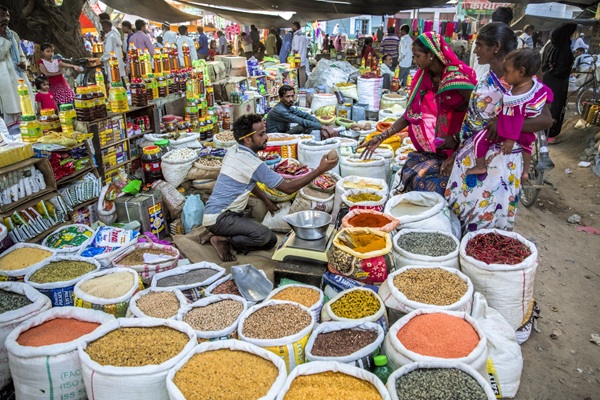
A: India faces persistent protein deficiencies, and encouraging domestic pulse production is vital. While minimum support prices were raised for several rabi crops, the MSP increase for chana (gram) was relatively modest. Crucially, the government must avoid lowering import duties on yellow peas, a lower-cost substitute for chana, right before rabi sowing. Doing so sends a negative market signal to domestic pulse growers. Whenever pulse imports are permitted, policy must ensure that the landed import cost does not undercut domestic MSP levels.
Q: Given the crop losses suffered by rainfed farmers, what immediate financial relief and welfare measures can the government initiate?
A: Affected farmers require immediate state support through the State Disaster Response Fund, under which standard norms prescribe ₹8,500 per hectare for rainfed crops, ₹17,000 per hectare for irrigated crops and ₹22,500 per hectare for perennial crops. Beyond direct disaster relief, key interventions must include:
- PM-KISAN Reorientation: Provide differential financial support under PM-KISAN, paying higher instalment amounts to rainfed farmers and those in non-procurement regions than to farmers in irrigated belts.
- Resource Preservation: Arrange fodder transportation for cattle and drinking water supplies to last until the next monsoon in mid-2027.
- Employment Generation: Scale up VB-G RAM G programme allocations in rainfed districts to generate employment and prevent distress-driven migration from rural areas to cities.
- Official Relief Measures: State governments that formally declare droughts can halt revenue recovery, provide loan repayment moratoriums and arrange input subsidies.
Q: Looking at broader macroeconomic policy, how do these agricultural pressures intersect with global market trends and the RBI’s interest rate trajectory?
A: Food inflation is compounding problems arising from global supply bottlenecks. Monsoon deficits in Indonesia threaten global palm oil output, while Indonesia redirects nearly 50% of its production towards biodiesel. Meanwhile, the ongoing conflict in the Black Sea disrupts sunflower oil and fertiliser shipments, pushing India’s edible oil import bill to nearly $20 billion this year. Because elevated food prices directly shape inflation expectations, these combined agricultural and international cost pressures make a 25-basis-point repo rate hike by the Reserve Bank of India highly likely.
More From BasisPoint