.png)

When to Fight, When to Talk, And When to Stop
From Haji Pir to Sri Lanka, India’s military experience shows what political leaders need from military advice when they choose to escalate, adapt, negotiate or stop.

Lt Gen Syed Ata Hasnain is Governor, the State of Bihar, and Former Commander of India's Srinagar-based Chinar Corps.
November 12, 2026 at 3:15 AM IST
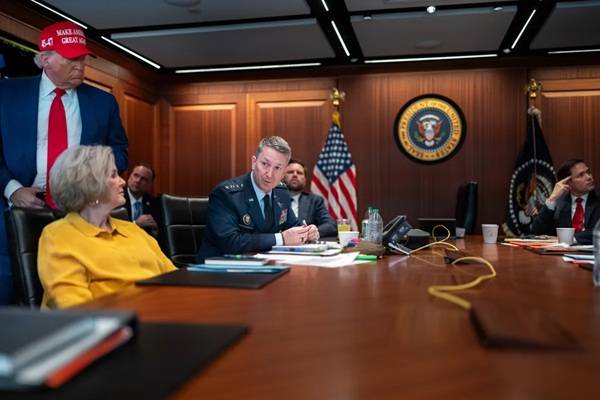
No two military strategic situations are ever similar but progressive analysis of past conflicts when applied to the current environment always gives us great scope to ponder. When President Donald Trump said on November 9 that he would hold off on new strikes against Iran while maintaining the naval blockade, he cited appeals from Gulf governments. Their concern was understandable. They would bear much of the immediate cost of renewed fighting. For Washington, the pause offers a chance to ask what another round of strikes would achieve. Would it bring an acceptable settlement closer, or would the US face much the same decision again after Iran had retaliated?
In a previous article elsewhere, I argued that a president needs commanders who can speak plainly before he gives an order. What should they tell him? India’s experience offers several examples. Sometimes the risk of acting is justified by the danger of waiting. A successful advance can create an opportunity beyond the original plan. At other times, the government must decide whether further fighting is worth the likely gains or whether diplomacy can do more. Each choice calls for a different kind of military advice.
Haji Pir and the Risks of Acting
In August 1965, India was still rebuilding and expanding its Army after the setback of 1962. Pakistan had sent infiltrators into Jammu and Kashmir under Operation Gibraltar. Lt Gen Harbaksh Singh, the Western Army Commander, recognised the danger of leaving an important infiltration route through the Haji Pir bulge open and directed XV Corps to plan its capture. Army Chief Gen J.N. Chaudhuri approved the operation, and Prime Minister Lal Bahadur Shastri’s government backed the decision to cross the Ceasefire Line. Indian troops captured the pass in a daring operation.
When Another Week may Achieve Little
By September 1965, Shastri and his advisers faced a different question. Could a few more days of fighting deliver a decisive result? The later debate has often centred on Chaudhuri’s assessment of ammunition. The official history records that India had expended about 14% of its frontline ammunition by September 22. That aggregate figure tells us little about how long a particular offensive could be sustained or what it could achieve. The fighting in Punjab had produced uneven results, the economy was under strain, and pressure at the United Nations for a ceasefire was mounting.
In the judgment of many, the government was right to accept the ceasefire. India might have gained more ground, but a decisive gain was too uncertain to justify prolonging the war. A commander advising the government at that stage had to distinguish between the ability to keep fighting and the likelihood of securing a result worth the cost. The government then had to weigh that judgment against pressures that no military balance sheet could capture.
Dhaka and the Freedom to Adapt
In 1971, the importance of Dhaka was recognised and debated before the war. Its capture was not an explicit task in the initial operational plan. As Indian forces advanced, Lt Gen Sagat Singh’s crossing of the Meghna brought the capital under direct threat. India could now move to isolate Dhaka and press for surrender without having to fight its way through the city. The advance had created an opportunity that looked much less attainable when the plan was drawn up.
Trust between the political and military leadership gives commanders room to act when an opportunity of this kind opens up. That freedom works best when commanders understand the political purpose and can explain how a change in the plan serves it. A government that has confidence in their judgment can give them latitude as events move faster than anyone in the planning room expected.
Sri Lanka and the Price of Staying
I saw a different dilemma in Sri Lanka. The Indian Army captured Jaffna, but the LTTE remained capable of fighting a guerrilla war. The Indian Peace Keeping Force grew to nearly 100,000 at its peak, with substantial air and naval support. Numbers show the scale of the commitment. What the force could achieve also depended on supply lines, morale, motivation and the will of both sides to keep fighting. The capture of a town could be measured on a map. The prospects of bringing the conflict to an end were harder to judge.
India could have stayed on for reasons of prestige. Colombo wanted the force withdrawn. Punjab was still in turmoil, creeping terrorism in Jammu and Kashmir was gathering pace, and Pakistan mounted its large Zarb-e-Momin exercise in December 1989 while the withdrawal was under way. Completing the withdrawal in March 1990 was, in my view, a pragmatic decision. Military advice had to help the government judge what staying longer could achieve in Sri Lanka and what that commitment would cost India elsewhere.
The Decision to Open Talks
The initiative taken by Prime Minister Narendra Modi in 2015 illustrates another choice. The Ufa meeting with Nawaz Sharif in July and renewed contact in Paris in November led to talks between the National Security Advisers in Bangkok on December 6. External Affairs Minister Sushma Swaraj’s visit to Islamabad for the Heart of Asia conference was followed by the announcement of a Comprehensive Bilateral Dialogue. Prime Minister Modi gave the effort his personal backing by stopping in Lahore on December 25, 2015. The Pathankot attack on January 2, 2016, disrupted that opening and required a fresh assessment. Talks and terror together, never resumed; a correct decision in the context of the times.
Opening talks involved a political risk. The security leadership’s role was to assess how the threats were changing and help the government judge what assurances it could rely on. The political leadership had to decide how far to pursue the opportunity and when events warranted a change of course. That is as much a test of the relationship as the decision to use force.
Washington’s circumstances are different. It can still put the same questions to its advisers. What can Iran still do to retaliate and sustain its resistance? How would another round of strikes change the terms either side might accept? What would a continued fighting cost Gulf partners whose cooperation Washington needs? The military should tell the President what force can realistically achieve and where its estimates could be wrong. Diplomats should tell him whether those gains would improve the prospects of a settlement. Before giving the next order, the President should be able to say what political result he expects and what he will do if the operation fails to bring it closer.
More From BasisPoint