.png)

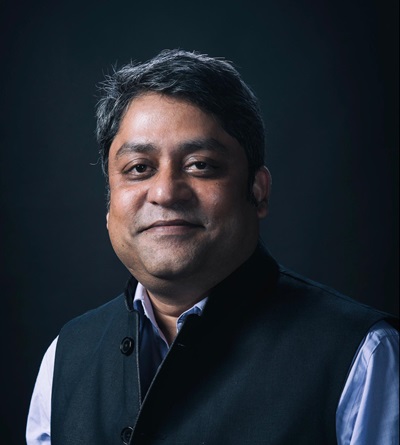
Rajesh Mahapatra, ex-Editor of PTI, has deep experience in political and economic journalism, shaping media coverage of key events.
September 14, 2026 at 7:13 AM IST
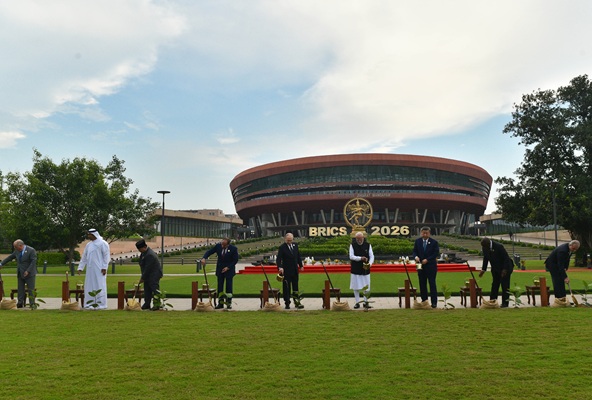
The 2026 BRICS Summit, as it turns out now, was more about the bilateral meetings on the sidelines than what its leaders accomplished collectively through the New Delhi Declaration. The consensus reached through the 140-paragraph, 32-page document was no mean feat for a grouping where members are divided over war, sanctions, border disputes and rival security alignments. It has institutional value. It also reflected the limits of what BRICS could say together.
The text used broad formulations, reflecting the compromises needed for consensus. It spoke of restraint, dialogue, multilateral reform, fairer trade, resilient supply chains, climate finance, technology and the Global South; but on critical questions such as the conflict in West Asia, the Ukraine war, unilateral tariffs and sanctions by the US, it largely avoided naming actors, assigning responsibility or creating enforceable commitments.
The Declaration flagged a long list of concerns around subjects that topped the summit’s agenda, including intra-BRICS trade imbalances, local currency trading, energy security and democratising AI; but few were matched by specific remedies, deadlines for resolution or a clear path from principle to implementation.
The Declaration preserved common ground without requiring members to resolve every difference. Keeping that dialogue going matters, even when immediate agreement on action is difficult. Alongside this, the bilateral meetings showed where leaders of the member nations were prepared to take more specific steps. That is why the spotlight fell more on the sidelines than the summit.
India-China: The Real Headline
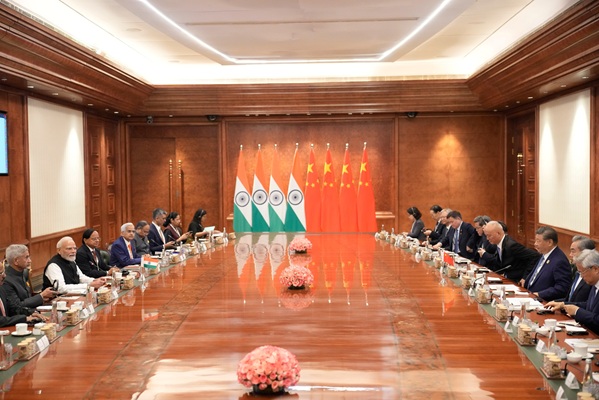
Prime Minister Narendra Modi’s meeting with Chinese President Xi Jinping on the sidelines carried particular strategic weight. It was Xi’s first visit to India in nearly seven years, a period marked by escalation of border tensions and strained diplomatic ties.
The 50-minute conversation between the two leaders on Saturday evening sought to address the pressure points in the relationship between the Asian neighbours: peace along the Line of Actual Control, a fair and mutually acceptable boundary settlement, India’s fast-growing trade deficit with China, supply-chain stability with respect to imports critical to India’s manufacturing growth, and people-to-people contact.
Xi emphasised why “differences should not become disputes”; Modi outlined three mutuals, “mutual respect, mutual sensitivity and mutual interest”, that ought to guide the relationship between the two countries.
None of this resolved the structural rivalry. In fact, the respective foreign ministries of the two countries issued separate readouts following the Modi-Xi meeting. The readouts underscored continuing divergence in their approach. India viewed wider normalisation of the relationship as conditional upon peace and tranquillity on the border, while China preferred to keep the border issue on a parallel track and keep it from preventing progress on other fronts, especially in relation to economic exchanges and multilateral cooperation.
Yet, these differing positions gave context to the summit Declaration’s broader support for “peaceful dispute settlement”. The bilateral reinforced a political framework, clarified positions and maintained a channel for managing escalation. It identified the disputed terrain, the governing agreements and the political sequence for further work.
There was no strategic reset—Xi even skipped the dinner hosted by Modi—but the bilateral did help keep engagement moving. If carried forward, progress between India and China could bolster Asian security, industrial supply chains and the internal balance of BRICS.
India-Russia: Cooperation in Practice
The Modi-Putin meeting demonstrated a different kind of significance: continuity backed by instruments, dates and routes. The two leaders talked defence, energy, space, infrastructure, skills mobility and people-to-people ties. They reviewed the progress of the Programme for Economic Cooperation 2030 and agreed to set a $100 billion target for bilateral trade by 2030, almost double its current level. The Russians held their industrial exhibition, INNOPROM, for the first time in India.
The $100-billion target envisaged reducing non-tariff barriers, increasing market access for Indian exports, expanding settlements in national currencies, and exploring an India-Eurasian Economic Union free trade area. There was also discussion on developing the North-South Corridor, the North Sea Route and the Chennai-Vladivostok maritime link.
The Summit Declaration’s language on resilient supply chains was aspirational; the bilateral named the corridors, payment systems and measures to ease barriers through which resilience might be built. The Declaration could oppose sanctions in principle, while the bilateral relationship would shape how India and Russia would manage payments, investment, exports, and strategic supplies in practice.
Iran-UAE: Changing Diplomatic Weather
The bilateral meeting that stood out was between Iranian President Masoud Pezeshkian and Abu Dhabi Crown Prince Sheikh Khaled bin Mohamed bin Zayed Al Nahyan, the highest level of contact between Iran and the UAE since the war broke out in West Asia.
It was more than ceremonial proximity. Only a month ago, Abu Dhabi suspended all trade and financial ties with Iran after alleging that Iranian forces had fired two ballistic missiles towards the UAE, an allegation Tehran denied. Throughout the war, the UAE has been a key target of drone and missile attacks by Iranian forces. Against such a backdrop, the Declaration’s negotiated appeal for “maximum restraint” provided a common position without resolving the disagreement between the two member nations. Their bilateral meeting reopened a political channel.
In Pezeshkian’s words, the two sides had agreed to “put the past behind us and look to the future”. Abu Dhabi did not issue a matching statement and its economic suspension remained in force, but the meeting nonetheless revealed more about the relationship’s possibilities and limits than the summit communiqué did.
Spotlight on Sidelines
BRICS 2026 illustrated the challenges of a growing, multipolar coalition. From a five-nation grouping, its strength has grown to 11. Eight other nations joined this year as partner countries, making it a powerful bloc, economically and politically, on the world stage. But the more diverse and bigger the grouping becomes, the more difficult it is to produce language that is both unanimous and consequential.
The New Delhi Declaration should, therefore, be understood as a diplomatic floor, proof that disagreements had not led to disintegration. The bilateral meetings added detail to the collectively agreed language. They did not eliminate India-China rivalry, the Russia-Ukraine war or the Iran-UAE rupture, but they established channels, targets and negotiating positions that could potentially yield desirable outcomes in future.
The joint communiqué described a world BRICS wished to influence; the bilateral meetings on the sidelines showed how influence might actually be exercised.
More From BasisPoint