.png)

Two Tales of Trade Turnarounds
India’s export revival has produced two unlikely reversals: refined petroleum flowing to Russia and Gujarat Hilsa finding its way to Bangladesh.

Michael Patra is an economist, a career central banker, and a former RBI Deputy Governor who led monetary policy and helped shape India’s inflation targeting framework.
September 23, 2026 at 5:23 AM IST
India appears to be on a cyclical upswing in its merchandise export performance.
Over the first five months of 2026–27, merchandise exports, at $216 billion, have risen year-on-year at a rate just shy of 18%. With services exports of $183 billion, up by nearly 13%, overall exports are close to $400 billion, an increase of over 15%. This underpins the onset of viability in the balance of payments after some stress in the year gone by.
The cutting edge to the merchandise export thrust is provided by high-value electronics and engineering, as in the recent past, but no less ebullient are exports of petroleum products which surged by 63% in August alone. Furthermore, rice, marine products and processed foods maintained steady double-digit momentum.
While exports to the key markets of the UAE and Saudi Arabia dipped due to regional shipping rerouting and logistics frictions, strong compensatory gains were recorded in shipments to the US, China, Singapore, Japan, and surprisingly, Russia.
According to the Ministry of Commerce, this recent export growth is driven by a healthy mix of both volume and price effects, with strong evidence indicating that genuine volume growth is a major catalyst.
The First Twist
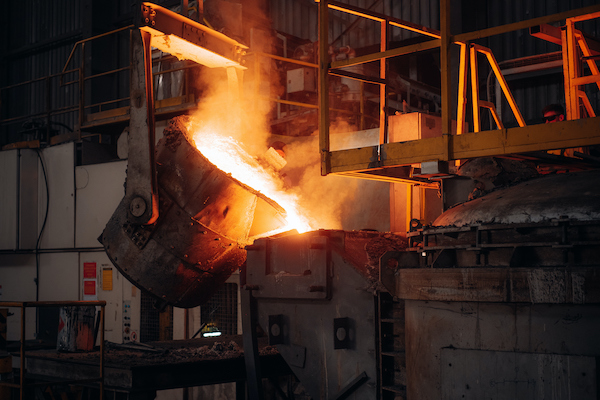
Energy analytics firms reveal that in August alone, India supplied around 70% of Russia's total petroleum product imports. India shipped about 120,000 tonnes of gasoline (petrol) to Russia during that month, building on over 1 million barrels dispatched across June and July. Given the political and banking scrutiny of shipping directly from India to Russia, complex roundabout routes are used, such as transferring between ships off the coast of Egypt before being re-routed and delivered directly to Russia's Arctic ports.
Indian petroleum product exports to Russia now face geopolitical, financial, and logistical risks from the newly enacted Lindsey O. Graham Sanctioning Russia and Iran Act of 2026, by which the US can directly target entities facilitating the trade of Russian energy products. Indian refiners shipping fuel back into Russia are highly vulnerable to being blacklisted under this category, and even to having their international assets frozen or being completely cut off from Western markets.
India’s reaction has been that these punitive tariffs could deeply damage India-US bilateral ties and cause massive disruptions to the global energy market. The official view is that securing affordable energy for 1.4 billion people remains the absolute priority. At the same time, there is an acute awareness that the US is India's largest single-country export destination. A 100% US tariff would disrupt India’s core export sectors, including textiles, gems and jewellery, engineering goods, and pharmaceuticals.
Faced with a 30-day grace period before discretionary US tariffs can hit, the law’s fine print will need careful study to seek a partial waiver or a specified buying quota to wind down existing transactions safely.
Another Twist in Another Tale
Another, more pleasant, turn of events is happening closer to home.
In South Asia, especially to the east, the Hilsa is widely celebrated as the "Queen of Fish". A unique blend of rich culinary profile and cultural heritage elevates it into a social icon in these parts. The Hilsa is packed with omega-3 fatty acids that help lower cholesterol and improve blood circulation. It is also a source of vital micronutrients like Vitamin D, Vitamin B12, calcium, and potassium.
The Hilsa spends most of its life in the saltwater of the ocean but travels miles upstream into fresh river deltas to spawn during the monsoon season. Fish that travel the farthest upstream, such as in the Padma River of Bangladesh or the Godavari River in India, develop a richer flavour and firmer texture.
Hilsa is the official national fish of Bangladesh and a major symbol of national pride. It is a core part of festivals and weddings. It has even inspired poems, songs, and classical literature across South Asia. Bangladesh ranks first among 11 nations in the world that engage in Hilsa production and accounts for roughly 70-80% of global Hilsa exports, especially to India during peak festival seasons. Hilsa makes up about 12% of the country's total fish production and contributes roughly 1% to the national GDP.
High domestic demand, overfishing, and rising prices have in recent years led Bangladesh to restrict exports to prioritise local markets. In 2026, Bangladesh has hit a period of unusually low domestic Hilsa catches. Hence, starting in July, India is exporting Hilsa to Bangladesh, marking an unprecedented reversal of traditional trade patterns. In fact, this is perhaps the first time in history. Between July and September 2026, India exported around 500 tonnes of Hilsa to Bangladesh, with traders preparing to dispatch an additional 150 to 200 tonnes.
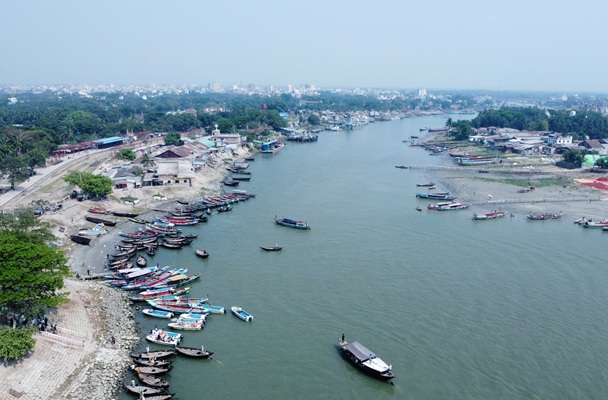
Surprisingly, the exported Hilsa is not from West Bengal. According to reports, the consignments are primarily sourced from the western coast of India—specifically the Bharuch region in Gujarat—and shipped out via Gujarat's ports and West Bengal's Howrah wholesale market. The Narmada River estuary near Bharuch, Gujarat, has emerged as a highly favourable alternative for Hilsa catches. The deep, cleaner waters and ideal estuary conditions attract massive schools of migratory Hilsa to breed. This ecological shift led to an unprecedented production boom. Moreover, the Hilsa caught on India's western coast during this period has a very high roe (egg) content. Bangladeshi traders are importing these fish to extract, package, and re-export the premium roe globally, while the remaining fish is salted, dried, and sold locally.
Twist Spillovers
The massive influx of Gujarat Hilsa has fundamentally reshaped the economics of the Indian seafood market, introducing a stark divide between affordability and culinary preference. Before the Gujarat surge, Hilsa was a luxury that underwent price spikes during major festivals like Durga Puja. The injection of thousands of tonnes of Gujarat Hilsa has created a reliable supply chain that keeps retail prices stable and accessible.
The unprecedented reverse trade flows of India exporting petrol to Russia and Hilsa fish to Bangladesh highlight a fundamental reality. Modern international trade is purely pragmatic, borderless, and entirely driven by immediate supply shocks and domestic capacity. Value-added economics scores over historical patterns. In standard economic models, nations export what they natively possess in abundance. However, geopolitical conflicts and climate-induced shifts can shatter these legacy channels. End
More From BasisPoint