.png)


Lt Gen Syed Ata Hasnain is Governor, the State of Bihar, and Former Commander of India's Srinagar-based Chinar Corps.
July 20, 2026 at 6:07 AM IST
For generations, the Principles of War have provided military professionals with a framework for planning and conducting operations. Though expressed differently by various armed forces, they represent distilled wisdom derived from centuries of conflict rather than rigid doctrine. Every major war, however, compels strategists to re-examine their application in light of changing technologies and operational realities.
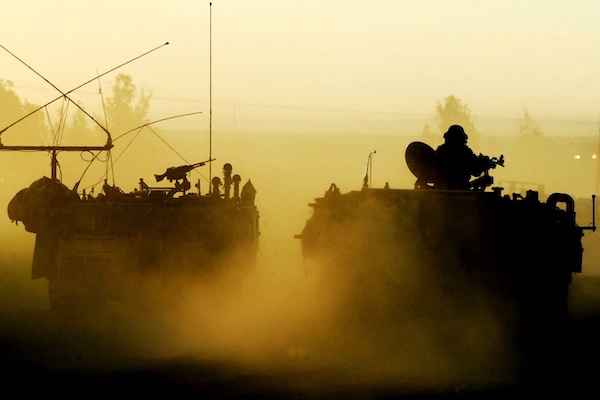
The recent conflict in West Asia, involving Israel, Iran and the United States, is one such watershed. While reaffirming the enduring relevance of the classical principles, it has also highlighted new operational imperatives shaped by artificial intelligence, precision strike capabilities, cyber operations, space-based surveillance and the information domain. It also reveals an important distinction between resilience—the ability to absorb shocks—and war stamina—the capacity to prepare for, sustain and outlast conflict over time. The principles themselves have not changed; what has changed fundamentally is the battlefield on which they must now be applied.
The Enduring Principles in a New Context
The foremost principle remains Selection and Maintenance of Aim. Military action succeeds only when it remains firmly aligned with political objectives. The West Asian conflict has demonstrated that even sophisticated military capabilities have been employed with carefully calibrated political intent. Escalation was managed as carefully as military operations themselves. The objective was not territorial conquest but deterrence, coercion, degradation of military capability and the restoration of strategic credibility. Clausewitz's enduring dictum—that war is an instrument of policy—remains as relevant in the age of artificial intelligence as it was in the age of muskets.
Surprise, traditionally achieved through secrecy and manoeuvre, has acquired a different meaning. In an era of commercial satellites, persistent drone surveillance and open-source intelligence, concealing military preparations has become increasingly difficult. Surprise now lies in innovation, timing and the unexpected integration of capabilities. Drone swarms, long-range precision missiles, electronic warfare and cyber effects can produce operational surprise even when strategic intent is widely anticipated.
Likewise, Concentration of Force no longer demands the physical massing of troops and armour. Precision-guided weapons, networked intelligence and long-range strike capabilities have made it possible to concentrate effects rather than formations. Combat power is increasingly measured by accuracy, integration and speed rather than numbers alone.
Even Administration, once associated primarily with logistics, has expanded dramatically. Sustainment today encompasses resilient communication networks, cyber security, industrial production, ammunition replenishment, semiconductor supply chains and the capacity to sustain high operational tempo over prolonged periods. Modern logistics have become as much about technology and industry as transport and supplies.
The Emerging Principles of Modern Warfare
Beyond these enduring principles, the conflict highlights a number of emerging operational imperatives.
The first is Information Dominance. Every missile strike was accompanied by an equally intense contest for narrative superiority. Governments sought to influence not only domestic opinion but also international diplomacy, alliance cohesion and public perception. Military success today cannot be measured solely by physical destruction. Victory increasingly requires success in the information domain, the embedding of credibility.
Decision Superiority has become a decisive advantage. Artificial intelligence, real-time surveillance and integrated intelligence have compressed decision cycles, enabling those who observe, analyze and act first to seize the initiative. Equally, Deception has regained prominence. Iran's dispersed missile infrastructure, underground facilities and operational ambiguity complicated targeting and demonstrated that modern technology has enhanced, rather than diminished, one of warfare's oldest principles.
Multi-Domain Operations (MDO) have become indispensable to modern warfare. Military success now depends upon the integrated application of land, sea, air, cyber, space and electromagnetic capabilities. The West Asian conflict suggests that non-kinetic instruments, particularly cyber operations, remain underutilized. Future campaigns will increasingly seek to paralyze an adversary's decision-making systems rather than merely destroy military assets.
Resilience, War Stamina and Strategic Endurance
Perhaps the most significant lesson emerging from the conflict is the need to distinguish between Resilience and War Stamina. Though often used interchangeably, they represent fundamentally different strategic attributes.
Resilience is the capacity of a nation to absorb punishment and recover quickly. It encompasses layered air defence, continuity of governance, protection of critical infrastructure, societal cohesion and the ability to restore normalcy despite sustained attack. Israel's repeated ability to maintain essential services and public confidence despite missile attacks illustrated resilience in practice.
War Stamina, however, deserves recognition as a strategic principle in its own right. Unlike resilience, which is essentially reactive, war stamina reflects a nation's capacity to prepare patiently, accumulate military capability over decades and sustain conflict despite prolonged political, economic and diplomatic pressure. It is measured not in days of combat but in years of national commitment. War Stamina does encompass refurbishment based upon suitably placed reserves.
Iran offers a compelling illustration. Since the early 1990s it has steadily invested in missile technology, dispersed production facilities, underground infrastructure and indigenous defence capabilities despite sanctions and international isolation. Whatever one's assessment of Iranian policy, the strategic lesson is unmistakable. Enduring military capability is rarely created during crises; it is built patiently over decades. Future wars may increasingly be decided not by who strikes first, but by who retains the capacity to continue striking long after the initial exchange.
The conflict also offers a broader lesson in coercive strategy. Repeated threats to close the Strait of Hormuz have long been regarded as instruments of strategic leverage. Yet deterrence depends upon credibility as much as capability. A threat invoked repeatedly without corresponding action gradually risks losing its psychological impact. Strategic signalling, like military force itself, derives effectiveness from careful calibration rather than habitual repetition. In an interconnected global economy, repeated threats may eventually generate fatigue rather than fear.
The Future Grammar of War
Military history repeatedly reminds us that every technological revolution tempts observers to declare established military wisdom obsolete. Such conclusions rarely survive careful analysis. Artificial intelligence, autonomous systems and precision weapons undoubtedly represent transformative developments, but they cannot substitute for sound political judgement, coherent strategy or effective leadership. Machines may accelerate warfare, yet human beings continue to determine political objectives, define acceptable risk and exercise strategic judgement.
The West Asian conflict will be remembered not for overturning the classical Principles of War, but for expanding their application. Alongside aim, surprise and concentration of force now stand information dominance, decision superiority, deception, multi-domain integration, resilience and, above all, war stamina—the strategic patience to prepare, endure and prevail over time. The enduring Principles of War remain the grammar of military thought; only the vocabulary has changed. Tomorrow's commanders will still rely on timeless military wisdom, but they must apply it to battlefields where technology amplifies human judgement rather than replaces it.
More From BasisPoint