.png)

The Houthis Are No Longer Just Iran's Proxies
How precision warfare, Saudi vulnerability and new regional alignments are changing the balance of power in the Red Sea

Lt Gen Syed Ata Hasnain is Governor, the State of Bihar, and Former Commander of India's Srinagar-based Chinar Corps.
October 14, 2026 at 4:28 AM IST
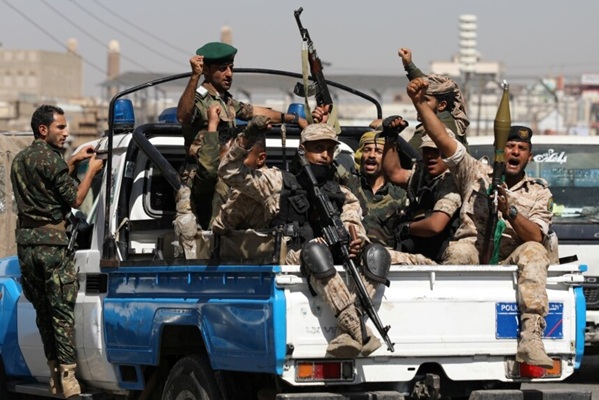
The Houthis have emerged as one of the most consequential military actors in the Middle East. A movement that began as a localised insurgency is now capable of threatening international shipping, striking deep into Saudi Arabia and compelling regional powers to reconsider their security arrangements. The recent escalation suggests that this transformation is entering a more dangerous phase.
Reported attacks on Saudi airports and threats to energy infrastructure carry significance beyond physical damage. They challenge Saudi Arabia's reputation for stability, its aviation connectivity, investment ambitions and Crown Prince Mohammed bin Salman's programme of economic transformation.
The central question is whether the Houthis are executing an Iranian strategy, acting independently or acquiring sufficient confidence to pursue objectives that do not always coincide with Tehran's.
From Maritime Disruption to Strategic Coercion
The Houthis have demonstrated that territorial control is not essential to strategic influence. Their proximity to Bab-el-Mandeb, one of the world's crucial maritime chokepoints, gives them leverage disproportionate to their conventional strength. Missile and drone threats have forced shipping companies to reconsider the Red Sea route, affecting Suez Canal traffic, insurance premiums and European and Asian supply chains.
The extension of coercion from shipping lanes to Saudi economic assets changes the equation. The value of precision weapons lies in their capacity to impose uncertainty. Not every missile must penetrate air defences. Repeated alerts, occasional successful strikes and credible threats can disrupt aviation, discourage investment and force expensive protective deployments.
This is the economics of asymmetric warfare; the defender must protect almost everything; the attacker needs to threaten only a few carefully selected targets.
Iran's Proxies or Independent Actors?
Describing the Houthis simply as Iranian proxies is increasingly inadequate. Iranian assistance in weapons technology, training and strategic cooperation has helped transform a Yemeni insurgency into a force capable of long-range strikes. The relationship fits Tehran's preference for confronting stronger adversaries through geographically dispersed partners.
Yet the Houthis are not an Iranian military formation. Their origins, leadership, territorial interests and political legitimacy are rooted in Yemen. Years of warfare have produced an experienced indigenous military organisation with its own ambitions.
We must distinguish strategic alignment from operational subordination. Iran may supply critical capabilities and benefit from Houthi actions without choosing every target or authorising every launch. The Houthis, meanwhile, can undertake operations to strengthen domestic legitimacy, retaliate against Saudi action or improve their negotiating position.
The most plausible assessment is considerable Houthi operational autonomy within an Iranian-supported strategic ecosystem. Nor does the claim that they have suddenly turned rogue explain their calculated selection of economic targets. There is method in this disruption, even when escalation threatens to outrun the original calculation.
Indeed, the emerging danger may be that Houthi leaders take risks Tehran itself would prefer to avoid.
Saudi Arabia's Security Dilemma
Saudi Arabia enjoys overwhelming conventional military superiority, but superiority does not guarantee immunity from inexpensive precision weapons. Air operations can degrade launch sites and infrastructure; eliminating dispersed missiles, mobile launchers and underground facilities is much harder.
For Crown Prince Mohammed bin Salman (MbS), the stakes are high and extend beyond military credibility. His vision of transforming Saudi Arabia from an economy dependent on oil revenues into a diversified global economic hub rests upon international confidence, sustained investment, tourism and secure aviation connectivity. An airport under repeated threat is an economic problem. A threat to Aramco, even without major production losses, sends a message to energy markets.
The Houthis are attacking not just physical targets but assumptions underpinning Saudi Arabia's economic future. Riyadh has to restore deterrence without becoming trapped in another open-ended Yemeni war.
The Mecca Accord's Test
The escalation is also testing the regional security arrangements linking Saudi Arabia, Pakistan and Turkey. Their responses may reveal whether political solidarity can become effective defence cooperation.
Pakistan's long standing military relationship with Saudi Arabia gives the crisis special importance. Islamabad has acknowledged military deployments, while denying reports that Pakistani fighter aircraft have undertaken combat operations against the Houthis. Pakistan’s credibility in situations where its interests are at conflict, are always suspect.
Direct offensive participation would have implications for Pakistan's relations with Iran and for domestic opinion. Pakistan's parliament declined to join the Saudi-led Yemen campaign in 2015. The present situation therefore tests how far its security commitments have evolved.
Turkey has condemned Houthi attacks and expressed support for Saudi security. But Turkish political backing, technical assistance and direct combat participation are very different things. Ankara, like Islamabad, will have to weigh solidarity with Riyadh if credibility has to be established.
The Mecca arrangement could strengthen regional deterrence without becoming a unified expeditionary alliance. For India, Pakistan's potentially expanding military footprint in the Gulf deserves close attention, although its consequences should not be exaggerated.
Oil, Trump and the American Elections
President Donald Trump has alleged that Houthi actions seek to push up oil prices ahead of the November 3 American midterm elections. The argument has a strategic logic: attacks on Gulf infrastructure and maritime routes can raise transport costs, unsettle markets and add to inflationary pressures during an election campaign.
But a possible political effect is not proof of an Iranian-directed electoral operation. The Houthis have immediate motives of their own, including retaliation and bargaining leverage. Tehran may nevertheless benefit from economic pressure on Washington without conducting the attacks itself.
The distinction matters. Strategic coordination, opportunistic exploitation and coincidental interests are not the same. Establishing which is operating requires intelligence, not merely assertion.
India Cannot Remain a Spectator
India's stakes are direct. Gulf energy supplies, commercial shipping, economic relations with Saudi Arabia and the welfare of Indians working in the kingdom all depend upon regional stability. Threats to Red Sea navigation lengthen voyages, raise freight and insurance costs and undermine export competitiveness. A simultaneous disruption around Bab-el-Mandeb and the Strait of Hormuz would be especially damaging.
India's condemnation of attacks on civilian and economic infrastructure is therefore consistent with its national interests. Practical measures will be needed at all times to maintain maritime domain awareness, coordination with shipping operators, contingency planning, energy diversification and protection of Indian nationals.
Diplomatically, New Delhi must retain access to all sides. Its interests do not lie in joining an anti-Iranian military alignment, nor in tolerating attacks on Saudi Arabia and international commerce. Strategic autonomy means engaging competing powers while defending freedom of navigation and economic security.
The Wider Lesson
The latest Houthi offensive illustrates a transformation in warfare. Affordable precision technology allows comparatively weak actors to impose strategic costs on powerful states. Punitive airstrikes may destroy facilities without removing the political motivations and dispersed capabilities that sustain such movements. The result can be repeated cycles of coercion, retaliation and negotiation rather than decisive victory.
Saudi Arabia must rebuild deterrence without another interminable war. Iran must preserve leverage without losing control of escalation. Pakistan and Turkey should work on ending the conflict rather than add only their weight to escalate it. Strategic military groupings are not created only to fight but also to prevent fighting and escalation. India must safeguard its people and economic interests while preserving diplomatic flexibility.
The Houthis remain linked to Iran, but their growing confidence makes them more complicated than obedient proxies. The danger is not simply that Iran controls the Houthis. It is that the Houthis may now possess sufficient power to influence events even when Iran cannot fully control them.
More From BasisPoint