.png)

Indian Shares Hit Nine-Month Highs, Rupee Strengthens Past 93 On Foreign Inflows
An end-of-day recap of all that transpired in the Indian markets, highlighting the major price movements and the factors driving them

November 20, 2026 at 12:53 PM IST
The Indian equities benchmark rose for a second straight session on Friday, closing at nine-month highs and extending their weekly winning streak to four weeks, as record foreign inflows and easing crude prices supported sentiment.
The Nifty50 gained 286.30 points, or 1.12%, to 25,800.60, while the Sensex advanced 897.96 points, or 1.08%, to 83,919.71. Both indices rose around 2.6%-2.9% during the week.
Foreign investors have bought a record $12.21 billion of Indian equities so far in November, as funds shifted away from AI-linked markets. Resilient corporate earnings and bullish brokerage calls also supported sentiment. Banks, private lenders, PSU banks, realty and financial services stocks led Friday's gains. Apollo Hospitals Enterprise, Axis Bank and Max Healthcare Institute were the top Nifty 50 gainers. The Nifty MidCap 100 rose 0.66%, while the SmallCap 100 fell 0.13%.
Brent crude futures have fallen around 23% in November amid hopes of de-escalation in the US-Iran conflict and recovering regional oil shipments.
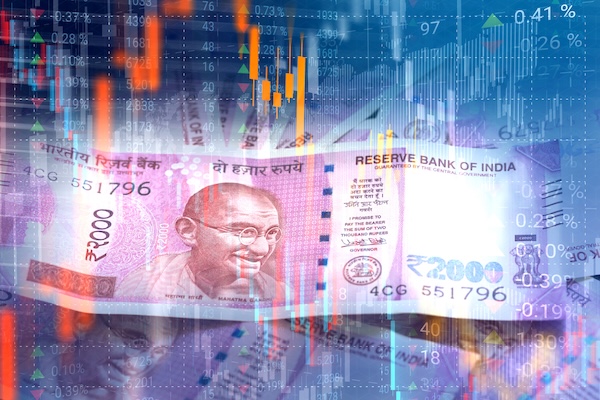
The rupee strengthened past 93 per US dollar for the first time since April, closing the week at 92.67 as foreign equity inflows and lower oil prices supported the currency.
Government bond yields fell sharply after robust demand at Friday's auction and easing overseas cues prompted short covering. The benchmark 6.94%, 2036 gilt yield declined to 7.1868% from 7.2543% on Thursday. The RBI set the cut-off yield on the 6.53%, 2031 bond at 7.1116%, below the 7.64% estimated by the 91bps poll.
Top Movers of the Day
Apollo Hospitals Enterprise surged 5.29% to close at 9,200.00 rupees, hitting a fresh record intraday high of 9,205.00 rupees. The stock rallied sharply after Macquarie double-upgraded it from Underperform to Outperform and raised its price target to 10,500 rupees, citing strong utilization at newly commissioned facilities and robust Q2 FY27 earnings.
Axis Bank climbed 4.72% to settle at 1,446.00 rupees, spearheading a 3.01% surge in the Nifty Private Bank index. The private lender benefited heavily from an unabated turnaround in foreign portfolio inflows exceeding 840 billion rupees over the past two weeks as overseas funds rotated out of global AI equities into Indian financials.
Max Healthcare Institute advanced 3.88% to close at 1,081.00 rupees, touching a three-month intraday high during the session. Investor sentiment was lifted after Macquarie double-upgraded the hospital operator to Outperform with a revised price target of 1,450 rupees, noting that consensus earnings have bottomed out and valuations have cooled off.
Maruti Suzuki India gained 3.11% to end at 14,011.00 rupees, extending its strong upward momentum for a second consecutive session. The automaker attracted steady accumulation as foreign institutional investors favoured domestic-facing automobile heavyweights amid a strengthening rupee that reclaimed the 93-per-dollar mark.
UltraTech Cement rose 3.02% to close at 12,939.00 rupees, standing out as one of the top performers on the Nifty 50. The cement heavyweight drew strong institutional buying alongside an outperforming realty and infrastructure space as domestic markets shrugged off weak Asian cues.
Titan Company declined 1.70% to close at 4,620.00 rupees, emerging as the steepest laggard on the Nifty 50 index. The stock faced sustained selling pressure alongside broader jewellery and consumer durables counters after gold prices plunged over 7% this week, sparking near-term uncertainty across the sector.
Tata Steel fell 1.60% to settle at 178.00 rupees, extending its early-morning weakness through the closing bell. The steel major was dragged lower by broader selling in the Nifty Metal and Commodities indices as a sharp selloff across Asian equity markets dampened sentiment for industrial commodities.
NTPC dropped 1.08% to close at 321.50 rupees, finishing firmly in the red despite the Sensex's nearly 900-point rally. The state-run power utility experienced steady outflows as institutional investors rotated capital out of energy and defensive utilities to chase momentum in rallying banking and healthcare stocks.
Hindustan Unilever slipped 1.05% to end at 2,052.50 rupees, giving back a portion of its sharp 4% rally from the previous session. Market participants booked profits in the consumer staples giant and shifted funds toward outperforming private lenders and high-beta cyclical sectors.
Jio Financial Services declined 0.81% to close at 224.97 rupees, underperforming the broader Nifty Financial Services index. The stock missed out on the sector-wide upswing as foreign institutional inflows concentrated heavily in traditional private banking heavyweights such as Axis Bank and HDFC Bank.
Futures & Options
The Nifty November 2026 futures contract closed at 25,752, a discount of 48.60 points to the Nifty 50's cash market close of 25,800.60. The benchmark index gained 286.30 points, or 1.12%, while the NSE's India VIX rose 7.54% to 17.33.
HDFC Bank, Reliance Industries and Infosys were the most traded individual stock futures contracts on the NSE. November 2026 F&O contracts will expire on November 23.
Bonds
The government bond yields fell sharply on Friday after robust demand at the 330-billion-rupee government bond auction and easing overseas cues prompted traders to cover short positions. The benchmark 6.94%, 2036 gilt yield declined to 7.1868% from 7.2543% on Thursday. The RBI set the cut-off yield on the 6.53%, 2031 bond at 7.1116%, against the 7.64? price estimate in the 91bps poll, indicating stronger-than-expected demand.
The 10-year US Treasury yield eased further below 5%, while Brent crude fell to around $91 per barrel, reducing concerns over imported inflation and supporting domestic bonds. Traders also covered short positions built earlier in the week. Market participants will continue to monitor global cues and await comments from Federal Reserve Governor Christopher Waller later Friday.
Forex
The Indian rupee closed at 92.67 against the dollar, breaking past the psychological 93 mark for the first time since April. The currency displayed its strongest trading session since October 12, cutting year-to-date losses to around 3%.
The currency was supported by investors fleeing AI-driven markets and falling crude oil prices. Foreign investors have poured $12 billion into Indian shares so far in November, seeking to diversify from technology-heavy markets, the largest monthly inflow ever. Additionally, foreign purchases of government bonds have resumed after three weeks of outflows, further strengthening the rupee. However, India’s heavy reliance on energy imports could continue to weigh in on the rupee.
Crypto
The cryptocurrency market faced broad selling pressure on Friday, with total global market capitalisation falling to around 2.11trillion-2.15 trillion. Bitcoin declined nearly 3% over 24 hours to trade between $61,665 and $61,880, while Ethereum fell around 3%-3.3% to 1,745-1,750.
Hawkish Federal Reserve meeting minutes, which signalled the possibility of further interest rate increases amid persistent inflation, weighed on risk appetite across financial markets. A broader sell-off in equities and heavy outflows from spot Bitcoin exchange-traded funds added to the pressure on digital assets.
US Stock Futures
US stock futures fell on Friday after the S&P 500 closed lower for a sixth consecutive session, as Anthropic’s stock market debut failed to ease concerns over AI valuations. The Nasdaq-100 futures fell 1.38%, S&P 500 futures slipped 0.3%, and Dow Jones Industrial Average futures were nearly flat.
Anthropic shares fell 6% as premarket trading began on Friday. All three major US indexes fell more than 2% during regular trading on Thursday, and the Dow dropped below the 50,000 level for the first time since June and is on the road to its worst weekly performance since April 2025. The Nasdaq and S&P500 were down by more than 5% each, also headed for their largest one-week drops in over a year.
US Treasury Notes
US Treasury yields fell sharply on Friday as a global sell-off in equities and artificial intelligence stocks prompted investors to seek safety in government debt. The 10-year Treasury yield declined around 6 basis points to 4.99%, slipping below the 5% threshold. The two-year yield also fell 6 basis points to 4.71%, while the 30-year yield eased to around 5.37%.
Despite the safe-haven demand, hawkish Federal Reserve comments and expectations of a December interest rate hike limited the decline in yields. Investors awaited remarks from Fed Governor Christopher Waller and final consumer sentiment data for further clues on the monetary policy outlook.
Top News
- PMO adviser flags discom hurdles in expanding India's EV charging network
- India's RBI expected to raise rates in December, deliver final hike in February
- EPFO changes PF withdrawal rules: Retirees can now opt for monthly payouts
- Chris Wood hikes exposure to Indian equities as AI trade falters
- Anthropic founders' combined wealth jumps to $166 bn after record IPO
- Nepal PM Balendra Shah to visit India, meet Modi
- India's wheat acreage may see steepest fall in 26 years on water shortage
- Indian central bank clarifies forex reporting rules for service imports, exports
- India's AI-free appeal draws record foreign buying, earnings will decide if it lasts
- Indian finance hub eyes dual share model to kickstart public offers, sources say
- Indian space startup SatSure raises $7 million from sovereign space fund
- Rupee climbs past 93/USD as investors seek shelter in Indian stocks, shorts unwind
More From BasisPoint