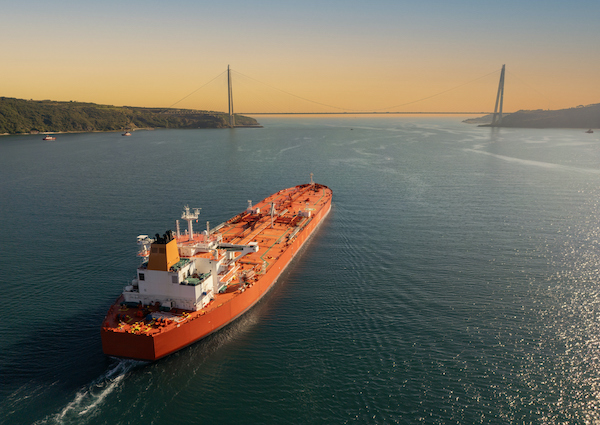
India’s kitchens have continued to receive sunflower oil despite the war disrupting shipments through the Black Sea. Traders have increasingly turned to Argentina, reducing dependence on Ukraine and Russia, once key suppliers. But uninterrupted supplies mask a more complicated and vulnerable sourcing arrangement.
India imports nearly 60% of its edible oil requirements and buys close to 3 million tonnes of sunflower oil annually. Its ability to find alternative suppliers has helped avert shortages, but a workaround is not the same as a reliable supply system. The costs and risks of this shift may not yet be fully visible.
India’s edible oil imports in the 12 months ended October 2026 rose 6% to a record nearly 17 million tonnes, according to the Solvent Extractors’ Association (SEA). In value terms, imports surged 24% to around ₹2 trillion, or more than $21 billion. For a country heavily dependent on overseas supplies, developments in the Black Sea region warrant close attention.
Two commercial vessels sank off Bulgaria’s coast this month, one reportedly struck by a drone. On November 19, Russian President Vladimir Putin ruled out a moratorium on attacks in the region, and Russia reportedly struck Odesa port again the following day. Meanwhile, Platts, the price-reporting arm of S&P Global Energy, changed its reference point for Ukrainian sunflower oil, reflecting the shift in trade from deep-sea ports towards the Danube.
The change matters because Platts assessments are used by traders to negotiate deals. Its pricing reference has moved to the Danube corridor ports of Izmail and Reni, while the standard cargo size has been reduced from 3,000 tonnes to 1,000 tonnes. This is more than a technical adjustment. It reflects traders' growing reliance on alternative ports and smaller shipments as traditional routes become riskier.
A Costlier Shift
Ukraine’s deep-sea ports, including Odesa, Chornomorsk and Pivdennyi, were major export hubs for sunflower oil and other agricultural commodities. Established infrastructure and the ability to handle large vessels made these routes efficient. The war disrupted this network, pushing Ukrainian exports towards the Danube and other European routes, while some Russian exporters also explored alternatives.
Indian buyers responded by increasing purchases from Argentina. But longer voyages can mean higher freight and insurance costs, greater working capital requirements and less predictable deliveries. Shipments from Odesa have not stopped, and Indian buyers may not always be paying more. Yet an emergency sourcing measure is increasingly becoming a feature of the market.
India’s import mix illustrates the shift. Of the approximately 2.9 million tonnes of sunflower oil imported in 2025-26, Russia and Ukraine together accounted for around 55%, down from nearly 70% a year earlier, according to the SEA. Argentina’s share rose to about 30% from 21%. In October, Argentina supplied more than 60% of India's sunflower oil imports, compared with 20% from Bulgaria and 12% from Russia.
Diversification has reduced India's dependence on Russia and Ukraine, but not eliminated it. Nor has it removed the risks associated with disruptions in the Black Sea region. In October, strikes led to the cancellation of 20,000 tonnes of Russian sunflower oil cargoes bound for India, while another 60,000 tonnes were delayed.
If Russian suppliers use Baltic ports instead, transit times can increase by around 10 days. This ties up working capital for longer, raises costs and complicates inventory planning. A shortage or price spike in sunflower oil can also push traders towards palm and soybean oil, increasing demand for these alternatives and potentially lifting prices. Any increase in the edible oil import bill could add to food inflation, which was close to 9% in October.
The Case for Safe Shipping
Restoring safe and predictable shipping through the Black Sea is therefore in India's interest. It would improve access to established export infrastructure, increase competition between Russian and Ukrainian suppliers, facilitate larger cargo movements and potentially lower freight and insurance costs.
Diplomacy could help. Ukrainian President Volodymyr Zelenskyy said earlier this month, after a phone call with Prime Minister Narendra Modi, that India was ready to mediate in establishing Black Sea food corridors. New Delhi was more measured. The External Affairs Ministry said India had exchanged ideas with Moscow and Kyiv on the safety of ships, grain and energy exports, and the possibility of non-attack arrangements.
There has, however, been no announcement of an operational framework. Putin's rejection of a moratorium and continued attacks on shipping and port infrastructure underline the difficulty of securing an agreement. A corridor limited to grain would also do little to address India's exposure to sunflower oil. Any meaningful arrangement must cover a wider range of agricultural cargoes, including edible oils.
India must work on two fronts. It should continue pressing for safer commercial shipping through the Black Sea while making alternative sourcing more efficient. Importers need adequate inventory buffers to absorb delays. Policymakers should use import duties judiciously to manage supplies without unduly hurting domestic producers. Better port handling, storage and logistics can also reduce the cost of alternative routes.
India has demonstrated that it can secure sunflower oil supplies despite prolonged disruption to traditional trade routes. But uninterrupted arrivals should not be mistaken for a stable and efficient supply system. The old Black Sea network offered scale, competition and established infrastructure. Current alternatives do not yet provide the same advantages.
A return to predictable shipping could restore some of them, but India cannot wait for a geopolitical breakthrough. It must strengthen its alternative supply arrangements while continuing to push for safer passage through the Black Sea.
.png)