.png)


Sagari Gupta is a public policy researcher.
August 1, 2026 at 8:39 AM IST
India's merchandise exports have barely moved for three years even as imports have continued to rise. The numbers point to something more structural than a few bad years: India’s trade economy has limited capacity to absorb external shocks.
That matters because trade shocks increasingly come from far more than tariffs. UNCTAD's December 2025 Trade and Development Report warned that policy uncertainty and financial fragility were reshaping global trade and finance, leaving developing economies particularly exposed to tighter financing conditions, currency pressure and volatile trade flows.
India's trade exposure is concentrated in a few places, and that concentration increased over the past year. The United States took nearly a fifth of India's exports in 2024-25, and the European Union 17.33%. China supplied 15.73% of India's imports, while crude petroleum alone accounted for 19.84% of the import bill.
A handful of markets and commodities therefore carry an outsized share of India’s external exposure. Textiles, pharmaceuticals and engineering goods are all substantially exposed to the US market, making a single tariff decision in Washington a multi-sector event in India.
India already runs stress tests. It just does not run them for trade.
The Reserve Bank of India's Financial Stability Department conducts systemic stress tests to assess resilience. Its twice-yearly Financial Stability Report examines banks, non-bank lenders and financial markets to identify where vulnerabilities are building before they become crises. RBI describes stress testing as an early-warning mechanism that shifts supervision from reactive to proactive.
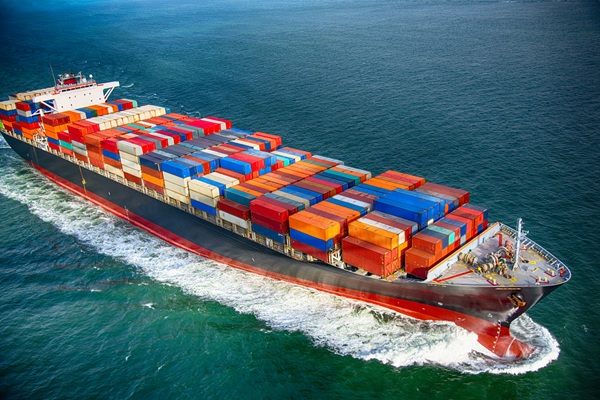
Trade shocks increasingly behave in much the same way. They rarely arrive as a single tariff line. They travel through several channels at once: higher duties, export controls, shipping disruption, sanctions or sudden supply squeezes from a dominant supplier. A disruption involving any one of India's largest trading partners can affect close to a fifth of trade on either the export or import side.
India already has an export-promotion toolkit, and it has recently become larger. The government's new Export Promotion Mission, with an outlay of ₹250.6 billion for 2025-26 to 2030-31, folds schemes such as interest equalisation and market-access support into a single framework. The mission is intended to widen access to credit, lower compliance costs and help small and medium exporters enter new markets. DGFT's Trade eConnect platform and its Trade Intelligence and Analytics portal provide exporters with a unified gateway and near-real-time market data.
These tools help exporters find markets and compete. What they do not do is map where India is most vulnerable before a shock arrives.
Gems and jewellery show why that gap matters. The sector's share of India's export basket nearly halved from 13.30% in 2014-15 to 6.81% in 2024-25, while exports fell from $37.96 billion in 2022-23 to $29.82 billion in 2024-25.
The commodity mix is shifting quickly elsewhere as well. Electronic goods rose from 2.02% of merchandise exports in 2014-15 to 8.81% in 2024-25, alongside strong gains in engineering goods and pharmaceuticals. The shift moves India deeper into sectors where component shortages, export controls and sudden foreign-policy decisions can disrupt production within weeks.
Parliament has already heard how quickly such shocks can hit. In a written reply to the Rajya Sabha, Commerce and Industry Minister Piyush Goyal said diamond exports fell from $25.48 billion in 2021-22 to $18.37 billion in 2023-24, while imports declined from $28.86 billion to $23 billion. He attributed the fall to weaker demand in major export markets and G7 sanctions on Russian-origin diamonds.
Most of India's more than 7,000 diamond firms are concentrated in Surat and Mumbai, many of them small, family-owned businesses with limited capacity to absorb a prolonged downturn. Here was a geographically concentrated industry, dependent on a narrow set of markets, hit by policy decisions made thousands of kilometres away. India had no formal mechanism to flag that vulnerability in advance.
A trade stress test would do precisely that.
It would ask what happens if one major market closes, if a supplier country restricts a critical input, if shipping insurance costs suddenly spike or if a carbon-border rule makes exports uncompetitive. It could model the impact of sanctions on payment channels, disruptions to a major sea route or a sudden jump in crude oil prices.
More importantly, it would identify which sectors depend excessively on one country, one port, one input or one financing channel—and which districts would lose jobs first.
The purpose would not be to predict the next crisis. It would be to know where the damage is likely to appear first.
The government already has much of the data required. DGCI&S records detailed trade flows, Customs systems capture transaction-level movements and the Commerce Ministry publishes trade data by commodity and destination. A stress-testing framework could combine these datasets with scenario analysis: a sharp increase in US tariffs, disruption of a critical shipping route, a crude oil spike, weaker European demand or new export controls on electronics inputs.
The output would not be a forecast. It would be a vulnerability map: where India depends heavily on external suppliers, where jobs are concentrated in a single export industry and where government intervention would have the greatest effect.
India talks extensively about FTAs, export promotion and manufacturing capacity. All of these matter. But signing more trade agreements without knowing which firms, workers and districts will bear the adjustment leaves half the policy job undone.
Trade stress tests would not weaken openness. They could tell policymakers whether the appropriate response to a particular shock is a tariff reduction, an input subsidy, a logistics intervention or temporary income support for an affected industrial cluster. More importantly, they could identify where that support is needed within weeks rather than months after the damage has already occurred.
India does not need to choose between trade and protection. It needs a way to understand its vulnerabilities before they become crises. Before signing the next trade agreement, policymakers should know not only what India stands to gain, but also where it could break.
Trade stress tests could provide that missing layer of economic governance.
More From BasisPoint