.png)

How the SIR Row Could Work in the BJP’s Favour
The BJP could turn anger over voter exclusions into a contest over identity, leaving the Opposition battling to keep the focus on accountability.
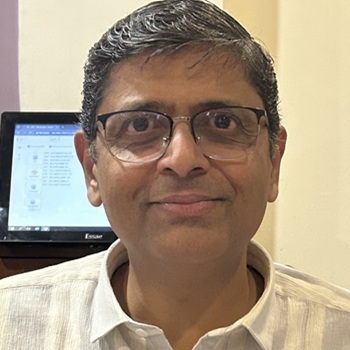
Rajesh Ramachandran is a former Editor-in-Chief of The Tribune group of newspapers and Outlook magazine.
October 16, 2026 at 11:59 AM IST
There is no doubt that the ongoing Special Intensive Revision of the voter’s list in Delhi is ridden with anomalies. Consider this: a couple who have been registered voters at an apartment they own for two decades. They have voted regularly, including in the 2024 Parliamentary and 2025 Assembly elections. They move to another apartment but retain ownership of the original property and continue to use its address in their documents.
Meanwhile, three tenants move into the original apartment and, through subsequent electoral roll revisions, become registered voters at that address. There are now five voters registered against the same apartment. The SIR exercise validates four but leaves one out. When the excluded person belongs to a minority community, the omission could raise concerns about possible acts of discrimination.
The problem is not just in the deletion of the voter’s name, but the opacity of the process; even when the excluded voter produces a passport, an Aadhaar card, and property ownership documents, and can also point to their inclusion in the Election Commission of India’s 2003 SIR records.
Yet none of this secures a correction from the Booth Level Officer, or BLO.
The question is then not simply which documents the voter possesses, but why the verification process has rejected one registration while accepting the others, and how that decision can be challenged.
If a referral to the Electoral Registration Officer, or ERO, and approaches to the election authorities produce only the instruction to fill up Form 6, the original grievance remains unanswered.
Someone who has been registered for decades is being directed to apply afresh for inclusion without being told why the existing registration was not validated. This is how an opaque verification exercise can turn an individual omission into a wider question of trust, particularly when the affected voter fears that their community identity may have played a part.
On October 14, the bench of the Chief Justice of India while hearing a petition regarding Form 6 said that it is “thinking of passing an order that will take care of it.” Hopefully, the issue will get resolved in the next hearing. But it leaves a question in the mind of the voter who has been, at least, temporarily disenfranchised: is there an attempt to purge minority community voters from the voting list? For, the process does not offer any relief or any means by which documents could be examined and a correction made.
Political Stakes
In this context, the agitation against the SIR and for the removal of Chief Election Commissioner Gyanesh Kumar have gained traction among minority communities and those traditionally opposed to the BJP’s Hindu-first politics.
To a great extent, the deletion of minority community votes is a polarising issue, and the BJP actively seeks out communal polarisation during elections, which primarily helps the party. The party hopes that a minority consolidation would provoke an unequal and opposite reaction leading to the consolidation of Hindu voters in BJP’s favour.
Already, home minister Amit Shah, while responding to the allegations against the ECI, has taken on the Opposition claiming it is helping “infiltrators.” The term infiltrators is a loaded expression that carries the weight of the BJP’s core agenda and the history of Partition. All those Muslims who have been illegally migrating from Bangladesh to Indian cities have been targeted by the BJP for long claiming that this was facilitated by the Congress in an attempt to bolster its Muslim vote bank. And it has been the BJP’s stated party programme to cleanse the voter’s list off illegal migrants, whom it refers to as “infiltrators.”
“I want to tell Rahul Gandhiji that the nation is well aware of your plan to save ghuspaithiyas (infiltrators) and now the people of Bharat are not going to fall for your ploy,” Shah said on October 13 while underscoring the argument that cleaning/purifying the voter’s list is the ECI’s Constitutional responsibility.
The debate over SIR or ECI is now being framed as a fight between legitimate Hindu voters and illegal Muslim migrants with the BJP protecting the majority community, while the Congress-led Opposition trying to help build its minority vote bank.
Electoral Arithmetic
The underlying politics of polarisation in this face-off between the government and the Opposition could not have been articulated better. Unlike the agitation against the NEET exam follies that resulted in the resignation of Education Minister Dharmendra Pradhan, this time around the BJP is on familiar turf.
The NEET exam paper leak and the Union government’s inability to conduct even an exam properly had hit the government badly ––– the middle-class, the BJP’s core constituency, felt betrayed, and the government’s myth of efficiency got busted.
But the SIR agitation is a different ball game altogether.
Even if Cockroach Janata Party, which is believed to be an offshoot of the AAP as its founder Abhijeet Dipke was working for the AAP, and other Opposition parties fight the coming elections separately, they will only help split the anti-BJP votes helping the governing party.
The big X-factor in the equation is the growing anti-incumbency anger against the BJP, which got reflected in the Opposition gaining 44 out of 80 seats in Uttar Pradesh in the 2024 Parliamentary polls.
By that measure, the BJP has already lost the game.
The question is whether the SIR agitation will add to the anti-incumbency mood in UP or help build a counter consolidation. Either way, the BJP is expected to play up the politics of polarisation in UP. Till the surge of anti-incumbency sinks the incumbent, the polarisation remains a winning formula.
More From BasisPoint