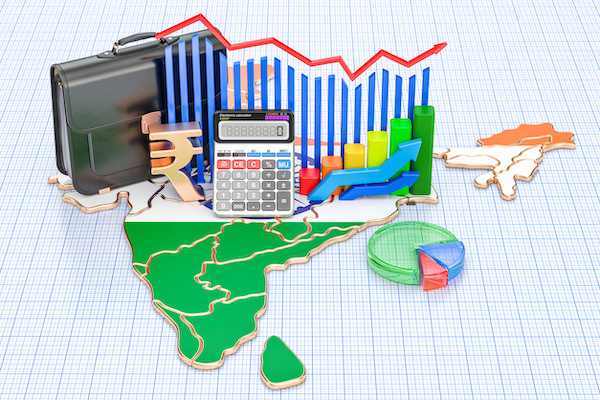
The world is grappling with unprecedented geopolitical and economic challenges, and in this scenario, India has emerged a bright spot in an increasingly uncertain global landscape. The reasons for this are straightforward: high economic growth, political stability, sustained reforms, and simplification and easing of regulatory norms have created an enabling environment for investors. The country attracted investments of over $1 trillion between April 2000 and March 2026, with inflows touching a record $94.5 billion in the last fiscal.
The role of Indian states in attracting investment has also been transformed. Rather than viewing investment promotion as the exclusive domain of the Centre, states have emerged as proactive partners, working in coordination with the Union Government to compete for, and attract global investment.
The focus has shifted from procedural hurdles to proactive facilitation. States are competing to offer the most attractive investment destinations, continuously refining their policies by learning from the experiences of their peers.
A Scorecard, Not a Ranking
A healthy competition among states to improve the investment climate fosters innovation in governance, accelerates reforms, and strengthens India's overall attractiveness as an investment destination. In this regard, government think-tank NITI Aayog, on July 17, 2026, released the first-ever Investment Friendliness Index, covering all 28 states and eight Union Territories.
The report is conceived as a comprehensive and evidence-based framework to assess the readiness of States and Union Territories to attract, facilitate and sustain investments.
It is not just a ranking exercise, rather a strategic framework built on the principles of evidence-based policy making for states to understand inherent gaps, learn from others and undertake measures for improvement.
The index evaluates States across eight pillars, and underscores each state’s strengths and focus areas. Considering India's geographical diversity, spanning nearly 2,900 km from east to west and over 3,200 km from north to south, NITI Aayog has categorised states and Union Territories into three groups - Large States, Hilly and North-Eastern States, and City States and UTs, to ensure a more equitable and meaningful assessment under the index.
Categorisation on the basis of geographical positioning brings in the element of homogeneity in the preparation of the index. The states and UTs were scored using both official data and feedback from stakeholders (perception).
The Key Eight Pillars
NITI Aayog identified eight key pillars to ensure that the Index comprehensively captures every dimension of a state's investment ecosystem rather than focusing on any single parameter.
The eight pillars are Infrastructure, Business Climate, Resources, Government Policy, Regulatory Ease, Institutional Environment, Financial Health, and Environment Resilience.
Gujarat emerged as the overall leader through consistently strong performance across all parameters. Rather than excelling in just one area, the state demonstrated balanced performance across the board. With the lowest fiscal deficit as a percentage of GSDP in 2024, Gujarat exemplifies prudent fiscal management. Coupled with world-class infrastructure and a stable, investor-friendly policy ecosystem, the strong financial foundation has made Gujarat one of India's most preferred investment destinations.
The Strong Performers
Maharashtra sets the benchmark for business climate. The state attracts the largest share of private equity and venture capital investments, accounting for 35% of the country's total. Anchored by Mumbai, India's financial powerhouse, with its deep capital markets, world-class financial institutions, and vibrant business ecosystem, Maharashtra continues to be a magnet for businesses and investors alike.
Tamil Nadu stands out for the consistency in its policies and stakeholder confidence. It ranks among the best in stakeholder satisfaction with state policies, reflecting the quality of its policy formulation and implementation. Survey findings highlight the predictability and consistency of its policy environment. Backed by a robust infrastructure base and an impressive export-to-GSDP ratio of 36%, Tamil Nadu has firmly established itself as an export powerhouse.
Goa, the best-performing Union Territory/City State, distinguishes itself through its skilled and readily available workforce. The state offers businesses access to a diverse talent pool, providing a strong foundation for innovation-led industries. This emphasis on skilling positions Goa for the growth of a knowledge economy.
Odisha leverages its rich natural resource base to emerge as a compelling investment destination. The state ranks first in both metallic mineral production and coal production, accounting for 50% and 23% of India's output, respectively, in FY2024. Complementing this resource advantage is a streamlined and time-bound process for business approvals, reinforcing Ease of Doing Business, and enhancing the state's investment climate.
What Gives Other States an Edge
Delhi demonstrates notable strengths in infrastructure and financial health. Its infrastructure performance is underpinned by the country's second-highest airport cargo capacity relative to manufacturing GVA, and an extensive rail network spanning 184 km despite its limited geographical area.
Madhya Pradesh derives its competitive advantage from a combination of natural resources and business friendly policies. The state is a major mining hub, contributing 15.6% of India's non-metallic mineral production, providing a solid foundation for sustained industrial growth.
Andhra Pradesh excels in digital infrastructure. Efficient power management, low electricity downtime, and transmission and distribution losses well below the national average contribute to a reliable industrial ecosystem. The state also has the highest share of STEM graduates, a critical enabler for building a knowledge-driven economy.
Karnataka reinforces its reputation as India's innovation engine through its business climate. A vibrant innovation ecosystem continues to attract technology-driven enterprises and start-ups. The state's business-friendly environment is reflected in FDI inflows of $6,571 million—nearly three times the average for large states ($2,217 million in 2023-24)—along with an exceptional MoU conversion rate of 99.93% in calendar year 2022.
Chhattisgarh deserves special recognition for topping the perception score, while also delivering strong performance in the environment resilience and resource pillars, underscoring its growing attractiveness as an investment destination.
Uttar Pradesh emerged as a fast-growing investment destination, driven by strong economic performance, policy stability, and business-friendly reforms. Its start-up ecosystem has expanded rapidly, with registered startups rising from 807 in 2018-19 to 3,426 in 2023-24. The State has also become a national leader in transport infrastructure, hosting India's largest network of access-controlled expressways, further strengthening its appeal to investors.
The Real Message
"If you want to walk fast, walk alone. But if you want to walk far, walk together" - African proverb.
India's journey towards becoming a developed economy by 2047 will require sustained collaboration between the Centre and the States, with shared commitment to reforms, investment, and inclusive growth.
The index encourages peer learning, cooperative federalism and evidence-based policymaking rather than creating winners and losers. Each state has unique strengths and opportunities to thrive. This index is an attempt for states take note of their advantages, and identify areas for improvement. Peer learning enables states to learn from one another's successful policies, governance innovations, and implementation strategies. By sharing best practices and practical experiences, states can adopt proven reforms, avoid common challenges, and accelerate improvements in policy outcomes. Such knowledge exchange fosters healthy competition, strengthens cooperative federalism, and promotes evidence- based decision-making, ultimately enhancing governance and improving the investment and business climate across the country.
*Views are personal
.png)