.png)

Beyond NEET: Where the Education System Has Truly Failed Our Youth
The NEET controversy is only a symptom of a deeper failure: an education system that selects a few but does too little to prepare millions of young Indians for productive lives.
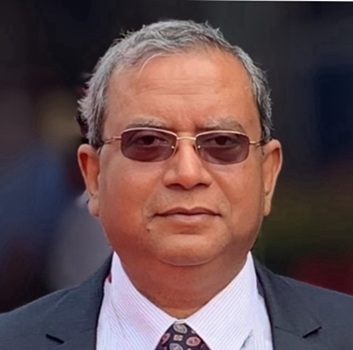
Shubhranshu, former Chief Administrative Officer at Rail Wheel Plant in Bela, has managed many engineering and manufacturing projects, including the Train-18, or the Vande Bharat Express.
July 31, 2026 at 11:37 AM IST
How many times have the Ministries of Education, Skill Development, Industry and Agriculture sat together with universities and industry leaders to design an integrated national talent strategy instead of working in isolated silos?
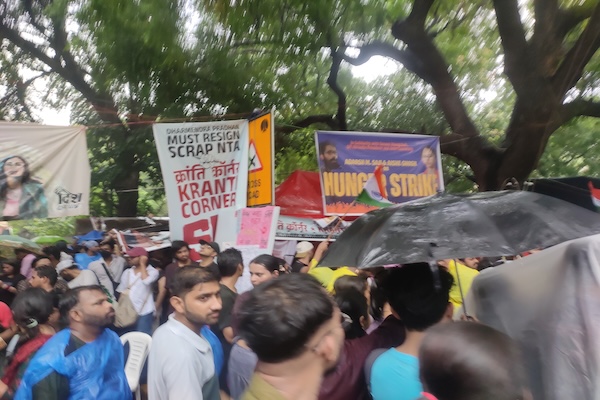
That question goes to the heart of India’s education crisis, which extends far beyond the controversy over alleged irregularities and paper leaks in the National Eligibility-cum-Entrance Test.
Calls for the resignation of Union Education Minister Dharmendra Pradhan are understandable. Yet a Cabinet minister cannot reasonably be expected to resign over every operational failure within the vast administrative machinery under him, just as the chief executive of a large corporation does not necessarily step down whenever one department fails.
The Ministry of Education is supported by secretaries, additional secretaries, joint secretaries and directors. Beneath it operate specialised bodies such as the National Testing Agency, University Grants Commission, All India Council for Technical Education, Central Board of Secondary Education, National Council of Educational Research and Training and Kendriya Vidyalaya Sangathan. Each has its own officers, procedures and responsibilities.
Conducting a national examination is not the minister’s day-to-day function. But that is not where ministerial accountability ends.
The real question is what lessons were learnt from repeated examination paper leaks in previous years. Were security audits conducted? Were vulnerabilities identified and corrected? Were examination systems redesigned? Or did every committee produce another report before the system returned to business as usual?
Officials directly responsible for conducting and securing examinations must be held accountable. But if failures recur despite repeated warnings, responsibility cannot stop at the lowest administrative level. The minister must explain why institutions entrusted with the futures of millions of young Indians remained unprepared.
The NEET controversy is a symptom. The deeper failure lies in an education system that increasingly confuses selection with education.
More than 2 million students appear for NEET each year, but only a small fraction secure medical seats. Public attention focuses on those who succeed. Far less is said about the overwhelming majority who walk away with disappointment, uncertainty and the belief that they have failed.
They have not failed. The system has failed to offer them enough credible alternatives.
Schools and colleges are producing examination candidates when they should be nurturing curious minds and useful capabilities. Students are encouraged to dream of medicine, engineering, the civil services and a narrow range of prestigious careers, even though the economy cannot create opportunities on the scale required to fulfil those aspirations.
There is nothing wrong with competition. There is something deeply wrong when failure in one examination is allowed to become a verdict on an entire life.
A generation ago, computer-training institutes such as NIIT, Aptech and numerous local centres helped prepare thousands of young Indians for the expansion of the software industry. They were not universities and did not depend on generous government support. Yet they responded quickly to an emerging economic opportunity that the formal education system had failed to anticipate.
Today’s coaching industry largely performs a different function. It refines examination technique rather than building skills with lasting economic value. Many coaching institutes work sincerely, but a student who does not clear the examination may leave with little that improves employability or creates an alternative career path.
Meanwhile, manufacturing companies report shortages of skilled technicians. Defence production is expanding, the space industry is opening to private enterprise and investments are rising in semiconductors, renewable energy, electronics, precision engineering and agritech. Yet the education system remains poorly aligned with these emerging opportunities.
The immediate task is to ensure that examination papers never leak again. That requires better technology, clear responsibility and uncompromising administrative reform. But preventing leaks will not by itself restore hope.
India does not merely need an education system capable of selecting the best among 2 million aspirants. It needs one that equips all of them with the knowledge, skills and confidence to build productive lives.
That is where the Education Minister bears responsibility—not only Dharmendra Pradhan, but every minister under whom examinations have been treated as the destination rather than education itself.
More From BasisPoint