.png)


Sagari Gupta is a public policy researcher.
November 12, 2026 at 4:33 AM IST
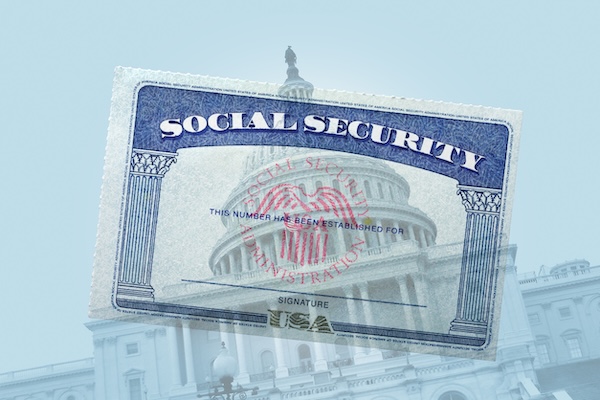
The US Social Security retirement fund will exhaust its reserves in the fourth quarter of 2032, according to the 2026 Trustees Report. From then, incoming payroll taxes will cover just 78% of scheduled retirement and survivor benefits. Unless Congress changes the law, benefits will face an across-the-board cut of 22%.
Washington treats this as a domestic problem. India should see it as an external risk. Congress has three options: more federal borrowing, lower benefits or higher payroll taxes. Each has consequences for India's balance of payments.
The Size of the Gap
The Old-Age and Survivors Insurance (OASI) trust fund paid $1,438.5 billion in benefits in 2025 to 62.3 million retirees and survivors. Social Security as a whole spent $1,609.5 billion and collected $1,449.3 billion, leaving a $160.2 billion shortfall. Combined reserves stood at $2.56 trillion at year-end. The Trustees put the 75-year actuarial deficit at 4.42% of taxable payroll, against a combined payroll tax rate of 12.4%.
The Trustees count about 2.6 workers for every beneficiary in 2025, falling to 1.9 by 2075.
The Congressional Budget Office (CBO) projects the same exhaustion year. Its long-term projections, released on September 17, 2026, put the OASI fund's depletion in fiscal 2032. In March 2026 testimony to the Senate Budget Committee, CBO said benefits would fall by 7% in 2032 and by an average of 28% a year from 2033 to 2036 if payments were limited to incoming revenue. It also estimates Social Security outlays will exceed dedicated tax revenue by $249 billion in fiscal 2026, adding to the federal deficit.
Option One: Borrow
Borrowing is the path of least political resistance, and CBO's baseline already assumes it. Federal debt held by the public is projected to rise from 101% of GDP in 2026 to 120% in 2036. If benefits were limited to payable amounts, CBO says debt "would be 8 percentage points lower in 2036 than in the agency's baseline projections." Financing full benefits through borrowing would therefore add 8 percentage points of GDP to US debt within a decade.
More Treasury borrowing means greater competition for global savings, and India is already on the losing side of that contest. RBI data show net foreign portfolio outflows of $16.4 billion in 2025-26, followed by another $3.7 billion in April-August 2026. Net FDI was just $6.9 billion in 2025-26.
The US is also India's second-largest source of fresh equity investment. DPIIT data show US equity inflows more than doubled to $11.17 billion in 2025-26, behind only Singapore. That gross inflow exceeded India's entire net FDI for the year. Higher US borrowing costs could make American firms more demanding about the returns they expect from investing in India.
India is a creditor too. US Treasury data put Indian holdings of Treasury securities at $219.7 billion in August 2026, up from $181.0 billion in April. A borrowing-led solution would increase India's exposure to US government debt and the fiscal choices behind it.
The dollar channel is already visible in RBI's accounts. India's reserves recorded a valuation gain of $46.4 billion in 2025-26, mainly due to higher gold prices and a weaker dollar against major currencies. That was nearly twice the $23.6 billion lost on a balance of payments basis. The direction reversed in April-June 2026, when RBI recorded a valuation loss of $14.4 billion, driven by lower gold prices and a stronger dollar. That exceeded the $8.1 billion drawdown through external transactions. In both periods, valuation changes outweighed balance of payments flows in determining the movement in reserves.
Option Two: Cut Benefits
A 22% reduction applied to 2025 payment levels would remove about $316 billion a year, by this author's arithmetic, from the incomes of 62.3 million Americans. Lower benefits mean weaker household consumption, which could feed into US corporate revenues and technology budgets.
That matters for India's services exports. RBI's survey on software and IT-enabled services exports, released in September 2026, puts total exports at $221.4 billion in 2025-26. The US accounted for 54.1%, or $119.7 billion (₹10.58 trillion), up from $108.3 billion a year earlier. Europe was next, at 31.8%.
The link is indirect. American retirees do not buy Indian IT services; US companies do. If household demand weakens, corporate spending could follow. A $316 billion annual income cut would hit the customers that account for more than half of India's software exports.
Option Three: Raise Payroll Taxes
The third option shifts the burden to current workers. Employees pay 6.2% of covered wages towards Social Security, matched by employers. Any increase reduces take-home pay, including for Indian professionals on temporary US work visas.
There is a particular cost for these workers. India and the US have no social security totalization agreement in force. Indian workers who leave before completing 40 quarters, or 10 years, of covered work do not qualify for US retirement benefits. India has a comparable arrangement with the UK: its Double Contribution Convention, signed in February 2026, came into force on July 15, 2026. Without a similar agreement with the US, a higher payroll tax could increase contributions that short-term Indian workers may never recover.
The remittance link is direct. RBI's Sixth Round of India's Remittances Survey found the US was the largest source of inward remittances in 2023-24, accounting for 27.7% of the $118.7 billion total. That works out to about $32.9 billion, by this author's arithmetic. Personal transfer receipts reached $42.9 billion in April-June 2026, up from $33.2 billion a year earlier. Higher payroll taxes would leave Indian workers with less income to remit.
The Counter-Argument
The deadline is not new. Congress faced a similar shortfall in 1983 and addressed it through faster payroll tax increases, a higher retirement age and income tax on part of benefits. A mixed package would spread the burden across all three channels. India's US-bound software exports also grew by more than $11 billion in 2025-26, suggesting demand remains resilient.
These points reduce the risk, but do not remove it. The uncertainty lies in the policy mix. Neither the Trustees nor CBO projects which combination Congress will choose, or when. The gap is also widening: the Trustees' actuarial deficit rose from 3.82% of taxable payroll in the 2025 report to 4.42% in 2026.
What It Means for India
India's US exposure runs through three channels: software receipts, personal transfers and foreign investment. Each responds to a different policy choice. Borrowing pressures capital flows and the dollar. Benefit cuts could weaken demand for Indian services. Payroll tax increases would squeeze the earnings of Indian workers in America.
The 2032 deadline is six years away. Washington will decide how to close the gap. India will feel the consequences in its exports, remittances and capital flows.
More From BasisPoint