.png)

A Pragmatic Hike With a Hawkish Tail
With price pressures broadening and growth holding up, attention turns to liquidity and expectations. How will oil, the rupee and global yields shape the decisions still to come?
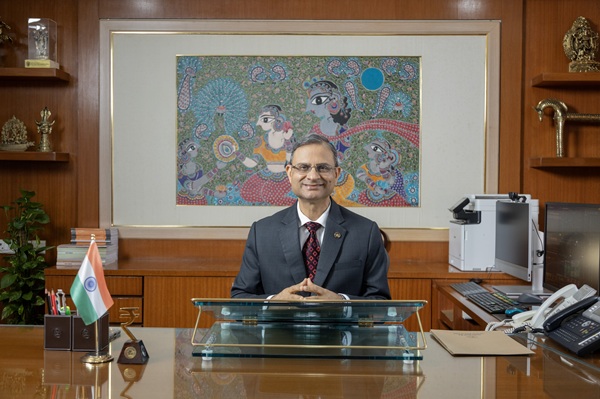

Radhika Piplani is Group Chief Economist at Motilal Oswal Financial Services Ltd
October 7, 2026 at 11:43 AM IST
The 25-basis-point hike was the least informative part of the RBI’s October policy. Markets had priced it in well before the MPC met, and the repo rate now stands at 5.50%. The rest of the liquidity adjustment facility corridor moved with it — the Standing Deposit Facility rate rose to 5.25%, and the Marginal Standing Facility rate and the Bank Rate rose to 5.75%. The real signal lay in the stance, which moved from neutral to calibrated tightening. That shift puts further rate increases and tighter liquidity on the table, with a pause as the softest outcome. Given our own inflation path and the RBI’s revised projections, we expect further hikes.
Inflation and the expectations problem
The Governor was candid at the post-policy press conference that global conditions weighed on the decision, at the margin, alongside domestic ones. That was the right call. Markets already see how external pressures reach the domestic economy through interest rate differentials, capital flows and, in turn, the rupee. Acknowledging them openly makes the policy response more credible.
The upward revision to the RBI’s inflation path came as no surprise. Food and fuel remain the main drivers, but the RBI now sees price pressures spreading into core inflation. Its quarterly projections are:
- July–September 2026-27: 4.9% (up 20 bps)
- October–December 2026-27: 6.0% (up 10 bps)
- January–March 2026-27: 5.7% (up 20 bps)
- April–June 2027-28: 5.6% (up 30 bps)
The 2026-27 forecast rose to 5.2% from 5.0% in the August policy. A 20-basis-point change in the annual figure looks modest at first glance. But three consecutive quarters above 5.5% hint at greater upside risks, even if the RBI has not said so. Our own estimates show headline inflation crossing 6%, the top of the tolerance band, in at least two months of October–December 2026-27.
The expectations-augmented Phillips curve explains the RBI’s wariness. Inflation depends heavily on what households and firms expect future inflation to be. A sustained rise in input costs can lift those expectations. Once they become unanchored, cost pressures can feed into wages and set off a wage-price spiral, which is far harder for monetary policy to reverse. Keeping expectations anchored is therefore central to the RBI’s task of bringing inflation back to the 4% target.
Growth holds up, with some moderation in October–March 2026-27
The RBI was comfortable with the outlook for growth. It flagged risks from global conditions and the impact of higher inflation on rural demand, but still raised its 2026-27 GDP growth forecast to 7.1% from 6.7%. Much of that upgrade reflects a strong first half. April–June 2026-27 growth came in 80 basis points above the RBI’s own projection. Early signs of strong corporate earnings suggest July–September 2026-27 will also beat the RBI’s quarterly growth estimate of 7.2%, putting our 2026-27 forecast slightly above the RBI’s, at 7.2% against 7.1%.
We remain confident in India’s growth outlook despite the RBI’s caution. The private capital expenditure cycle is picking up again, even with global headwinds and higher domestic rates. Strong bank credit growth should keep supporting large, medium and small enterprises. Services, led by banks, look set for robust growth.
Higher oil and exchange rate assumptions raise October–March 2026-27 risks
The half-yearly Monetary Policy Report, released alongside the MPC statement, shows the assumptions behind the forecasts. The RBI has raised its Brent crude assumption for October–March 2026-27 to $95 per barrel, from $85 per barrel in the April 2026 MPR. It has also moved its 2026-27 exchange rate assumption to ₹95 per US dollar from ₹94 per US dollar. By the RBI’s estimates, crude prices 10% above the baseline would add about 50 basis points to inflation and take about 15 basis points off GDP growth. That makes crude the biggest swing factor for policy. A sustained move above $95 per barrel would worsen the inflation-growth trade-off and strengthen the case for more tightening.
Liquidity is in surplus, but the RBI is tightening at the margin
System liquidity remains in sizeable surplus. Banking system liquidity, adjusted for the cash reserve ratio (CRR), stood at around ₹5.3 trillion in October, against ₹7.8 trillion in September. The decline came from the RBI’s variable rate reverse repo (VRRR) operations and quarterly advance-tax outflows, with open market operations (OMOs) and switch operations also used to manage liquidity. The Governor indicated that the surplus is likely to narrow over the rest of the fiscal year.
Outlook
We expect the repo rate to reach 6.25% over the next 12 months. The calibrated tightening stance keeps policy firmly data-dependent, so not every meeting will deliver a hike. We see hikes in December and February and a final 25-basis-point increase in April–September 2027-28. The inflation path drives this view, since price pressures are expected to peak over the next three quarters.
The 10-year government bond yield rose 7 basis points to 7.27% after the policy. We see further upside if inflation surprises on the upside, crude prices remain elevated and, above all, global bond yields rise. We expect the 10-year yield to move towards 7.5% over the next six months as the December and February hikes play out.
The rupee weakened to ₹96.80 per US dollar on the announcement, close to a five-month low. Foreign exchange and bond markets, along with the overnight indexed swap curve, are pricing in a steeper path of roughly 100 basis points of further hikes over a year, which would take the repo rate to 6.50%. We also recognise the risks to the rupee from a strong dollar, global risk-off sentiment and stubbornly high oil prices. But the RBI’s foreign exchange reserves should help it keep the depreciation path gradual and orderly.
*Views are personal.
More From BasisPoint