.png)

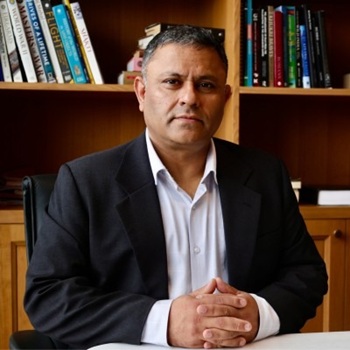
Ashutosh Tyagi is a Tata Administrative Service alumnus who held senior roles at Tata Industries and Tata Capital in investment management, strategy and private equity. He has been in the development sector for the last 8 years.
September 27, 2026 at 5:22 AM IST
I took a job at the Tata group in the previous millennium for a benefit that never appeared on my payslip: the quiet assurance that I belonged to something respectable. Stability. Decency. A brand my relatives recognised, which was more than they could say for my job title. Then came a lobbying scandal, a boardroom ouster and a fresh round of boardroom drama. Nobody has measured how this felt across the group, so what follows is a careful inference wearing a funny hat.
The Roots of Pride, or Why the Fall Hurts
I cannot explain the heartbreak without the résumé.
Since Jamsetji Tata founded the group in 1868, it has collected India's firsts the way other companies collect conference lanyards. The first luxury hotel, the first private steel plant, a whole planned city, an airline, India's first Indian-designed passenger car to name just a few. Tata Steel introduced the eight-hour day, a provident fund and maternity benefits when a lunch break was still considered a mild moral failing.
Charitable trusts own about 66% of Tata Sons, which makes it possibly the only company whose biggest shareholder is, technically, a good deed. We bought Air India back in 2022, group’s revenue reached $185 billion, and a chip plant in Dholera is past the halfway mark and hoping to be India's first commercial fab.
And then there is Titan. In 1984, when the Licence Raj turned every business effort into a huge challenge, the group teamed up with the Tamil Nadu Industrial Development Corporation, which held a licence to make watches, and India's wrists got quartz.
Titan then decided that telling people the time was not ambitious enough, moved into jewellery with Tanishq, and now brings in roughly ₹880 billion a year. A company that started by selling minutes now sells gold. I have mentioned all of this at parties, unprompted.
This matters because nobody holds a candlelit vigil over the ethics of a parking-lot company. High expectations are a wonderful thing until you have to live up to them.
The Radia Tapes, or Everything Is Private Until It Isn't
In November 2010, the group learned that a phone call is confidential only until it is not. Recordings of lobbyist Niira Radia's conversations with politicians, businessmen and journalists surfaced in the media, part of some 5,800 calls reportedly leaked from government agencies. The government denied leaking them, so the recordings appear to have arrived by that traditional route: no one knows, and everyone is very calm about it.
Ratan Tata went to the Supreme Court over his right to privacy.
Critics said the group with a reputation for ethical conduct should set the bar for transparency. Both arguments got a long airing over more than a decade.
Eventually the CBI reported that fourteen preliminary inquiries had found no criminality, a plot twist that arrived roughly when I had stopped watching.
Many of us faced awkward questions at family dinners and took part in what must be the most polite WhatsApp interrogations in history. "Is this the Tata way?" is a hard question to answer with a mouth full of Dhansak or is it Thayir Sadam.
Some of my colleagues rallied behind their chairman. Nobody surveyed us, so I am guessing.
The Ouster, or How to Lose a Chairmanship in 90 Minutes
In October 2016, Cyrus Mistry walked into what he thought was a routine board meeting and walked out as the former chairman of Tata Sons, removed after a reported four years in the job. Ratan Tata returned as interim chairman. What followed was a very public and very unusual sight for a group that prizes decorum. Open letters, duelling statements, and a legal battle that ran for years through the National Company Law Tribunal and eventually the Supreme Court, which in 2021 upheld the board's decision to remove him.
I remember colleagues genuinely unsure which "Tata" they were supposed to be loyal to that week, which is an odd thing to have to figure out at your desk. In 2022, Cyrus Mistry died in a car accident in Maharashtra, a tragedy that closed the human chapter of the story long before the corporate and legal one was fully resolved. I will not make a joke out of that part. Some things are just sad, and I'd rather say so plainly than dress it up.
What the episode left behind, for people like me, was a template: leadership fights at Tata are handled in public, they take years, and the rest of us keep coming to work through all of it. That template is getting a rerun right now.
The Boardroom, or a Family Disagreement With $185 Billion at Stake
As far as I can tell from the news, the cast is this: a charity collective that owns 66% of Tata Sons and holds a veto over who becomes chairman; the Shapoorji Pallonji Group at 18.4%; a board; and the RBI, the referee nobody invited.
The plot begins with the RBI telling Tata Sons to list on the stock market. Tata Sons applied for an exemption and was turned down earlier this month, the regulatory version of a teacher saying, "No, you cannot skip the exam." The Trusts oppose listing, while SP, which needs to raise funds, wants it. Two big shareholders, one exit door, and a lot of polite statements about "transparency."
Then the chairman, universally known as "Chandra," which is either an affectionate nickname or the shortest way to refer to someone whose reappointment took a month and a half of back-and-forth to finalise. N. Chandrasekaran announced on 12 August that he would not seek a third term, was unanimously asked to reconsider on 3 September, agreed on 17 September, and was reappointed 4-1. That is a retirement announcement with a shelf life shorter than most cricketers' farewell tours.
The one "yes" that made headlines belonged to Venu Srinivasan, the TVS Group veteran who has sat on the Tata Sons board since 2016 and serves as vice-chairman of Tata Trusts. For most of this saga he was squarely on Team Noel.
Then, at the 17 September meeting, he voted to reappoint Chandra and approve the listing plan anyway, brushing off a directive from one of the Trusts that had specifically tried to stop him from voting. A board member overruling his own Trust's instructions is the kind of plot device a soap opera would reject as too on the nose. Reports afterward noted that Chandra's family has its own TVS connections, which the internet found four days later and has not stopped discussing since.
Noel Tata, chair of the Trusts, remained the lone dissenter, and the Trusts call the reappointment illegal while Tata Sons says a majority vote is a majority vote. Srinivasan, for his part, says a board member's duty is to the company, not to whoever appointed him, which is either a principled stand or the most expensive interpretation of a job description I have ever read about.
The next round is the AGM, which has reportedly already been postponed once because the required quorum couldn't be met, and where the Trusts' 66% stake could still decide the chairman's fate. Meanwhile, commentators reassure me that day-to-day operations run separately at each company and the real risk is delayed big plans and new hires. So over a million employees are asked to keep the trains running while the family, and now the family friends, decide who owns the railway. This is a live story as of 26 September 2026 and may look different by the time you finish reading.
The Long Memory, or Why We Keep Reading the News
None of these boardroom episodes cost me my job, which is more than I can say for some corners of the group in other years. But watching leadership fights become a public spectacle, more than once, with a rotating cast that now apparently includes your vice-chairman defying his own Trust, has a cumulative effect. I have read the research of psychologist Joel Brockner on organisational upheaval, and one point stays with me — people who feel most loyal to an institution tend to feel a breach most sharply when that institution's own conduct falls short of what it promised. Tata has spent 150 years cultivating my loyalty. I can see where prolonged uncertainty, even without a pink slip attached, chips away at that.
Conclusion: The Contract Nobody Stamped
Psychologists call it the psychological contract, the unwritten expectation that loyalty earns security and fair treatment. Tata's real problem is that it has advertised this promise more loudly than anyone. The Radia tapes tested the ethical half, the Mistry episode tested how the family handles disagreement, and the current boardroom fight, Venu Srinivasan's swing vote included, is testing my patience.
To be fair, none of this happened quietly, and that transparency, however uncomfortable, is itself a kind of consistency. But whether the group has managed these moments as well as it manages its reputation is a question for proper analysis, not for an ex-employee with a hunch and a WhatsApp group.
More From BasisPoint