.png)

September 17, 2026 at 2:59 AM IST
The US Federal Open Market Committee unanimously voted to raise the federal funds target range by 25 bps to 3.75%-4.00%, with the decision aimed at supporting the Federal Reserve’s dual mandate as policymakers balance resilient growth against inflation that remains above the 2% goal.
The Committee’s statement said economic activity is expanding at a solid pace, while geopolitical developments continue to keep uncertainty elevated.
Domestic demand remains resilient despite the uncertainty. The Fed said productivity growth is strong and capital investment is robust, pointing to continued support from the supply side of the economy. Job gains have kept pace with the workforce, while the unemployment rate has changed little.
The inflation outlook remains the key constraint on policy. The Fed said inflation is still elevated and that the latest rate increase should support a timelier return to its 2% objective. The statement also reaffirmed the central bank’s commitment to maintaining ample reserves in the banking system.
Rate Path Moves Higher
The Fed’s September projections point to a higher policy-rate path than in June. The median projection for the federal funds rate at the end of 2026 rose to 4.1% from 3.8%, while the 2027 projection increased to 4.1% from 3.6%. The projections indicate that policymakers now envisage less policy accommodation over the next two years than previously expected.
The economic outlook, however, has improved. The median projection for 2026 GDP growth rose to 2.3% from 2.2%, while the 2027 forecast increased to 2.4% from 2.3%. The unemployment outlook also strengthened, with the median 2026 projection falling to 4.1% from 4.3% in June.
Inflation projections moved in the opposite direction. The Fed now sees 2026 PCE inflation at 3.7%, up from 3.6% in June. That combination of firmer growth, a stronger labour market and higher inflation helps explain the shift towards a higher projected policy rate.
Warsh Keeps Focus on Inflation
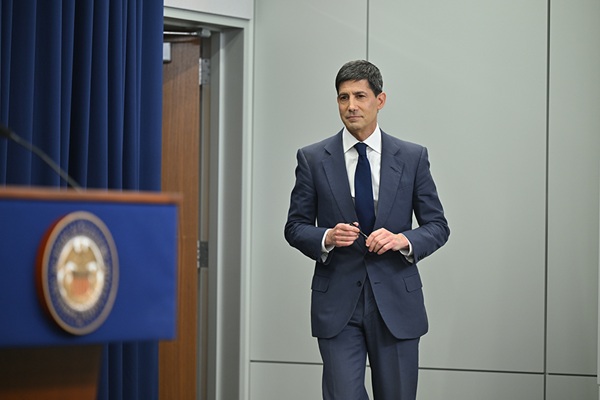
Fed Chairman Kevin Warsh said the US economy is strengthening, with new hiring, private-sector earnings and business capital investment improving in recent months. He also said credit flows have remained robust, particularly for businesses. Warsh said broad financial conditions were not restrictive, a view he said was widely shared by the Committee.
The labour market also remains supportive. Warsh said the jobless rate is around 4.1%, while job openings and weekly hours have increased. Unemployment claims, measured on a four-week moving average, are running at levels consistent with full employment.
But inflation remains the dominant concern. Warsh said inflation is “too high” and has been above target for too long, while recent CPI and PPI readings do not indicate that underlying inflation has meaningfully improved. He estimated August total PCE inflation at around 3.6%, with core PCE at about 3.2%.
Warsh said the Fed’s standard for further action had not been satisfied: policymakers need confidence that underlying inflation is moving towards the 2% objective clearly and at sufficient speed. The September projections also show inflation risks weighted to the upside, while labour-market risks are roughly balanced.
The policy message is therefore centred on price stability. With growth and employment showing resilience but inflation still elevated, the Fed’s higher rate projections point to a cautious policy path as officials assess whether price pressures are moving towards the 2% objective.
More From BasisPoint