India’s rural energy transition will remain incomplete if electricity connections do not translate into better lives and stronger livelihoods. Reliable, affordable and quality energy supply must enable households to improve agricultural productivity, run local enterprises and withstand economic and environmental disruptions.
These outcomes need to become central to rural energy planning.
However, rural energy planning often focuses on expanding infrastructure and deploying technologies, with less attention to how energy can support local economic transformation. Connecting a village to the grid or installing a renewable energy system is only part of the task. The larger challenge is to match supply with the services people need and establish arrangements capable of sustaining them.
Rural households often depend on multiple energy sources, including electricity, LPG, firewood and other forms of biomass. The choice depends on affordability, availability and the activity involved. Having an electricity connection, therefore, does not necessarily mean that all household and livelihood energy needs are adequately met.
Planning must consequently look beyond household consumption.
Energy is needed not only for lighting and domestic activities but also for agricultural operations, food processing and other livelihood-related work. Its availability and cost can influence the economic activities households undertake.
The relationship between energy consumption and income also needs closer attention. As incomes rise, energy use may increase, but how that energy is used matters. The question is whether it improves household well-being, supports productive activities or enables new livelihood opportunities. Understanding these connections is essential to designing rural energy interventions that respond to local needs.
Local Demand
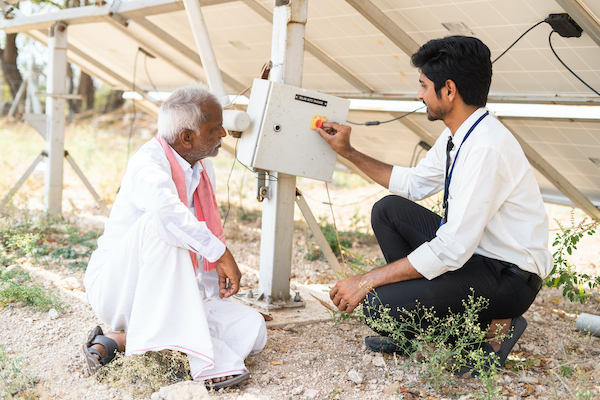
Renewable energy offers opportunities to address these needs, but its potential must be assessed in relation to local resources and actual demand. Solar power, including decentralised solar systems, is one option. Its suitability, however, will depend on the activities it is expected to support, local conditions, costs and maintenance requirements.
Locally available biomass and agricultural residues also warrant attention. For activities such as rice parboiling, alternative energy arrangements need to be assessed for their ability to improve efficiency and reduce the burden of fuel collection and use. Biogas and other biomass-based options may also merit consideration, subject to feedstock availability, regular supply and viable maintenance arrangements.
These possibilities underline a broader point that renewable energy deployment should not be driven by technology availability alone. It must begin with an understanding of the energy services people need and the resources available locally. A technology’s availability is a reason to examine it, but its ability to meet local demand and remain operational should determine whether it is adopted.
Shared Responsibility
The effectiveness of decentralised energy systems will also depend on who shapes and manages them. Energy communities offer one possible institutional framework. Rather than treating communities merely as consumers, this approach considers how local people, self-help groups, Gram Panchayats and other institutions might participate in identifying needs, choosing solutions and overseeing their operation.
However, community participation cannot substitute for technical and institutional support. Shared energy systems require clear arrangements for ownership, cost-sharing, maintenance and accountability. They must also establish who operates the infrastructure, how repairs are financed and how benefits are distributed.
The roles of electricity distribution companies, government departments, local institutions and private service providers must therefore be considered alongside community participation. The objective should be to strengthen existing institutions and build partnerships, rather than create parallel structures that communities may find difficult to sustain. These responsibilities need to be clearly defined as part of planning, because they determine whether an installation can become a dependable service.
Energy planning must also account for regional vulnerabilities. In disaster-prone regions, decentralised generation and energy storage may offer opportunities to support essential services during disruptions. Their contribution to resilience, however, will depend on system design, maintenance and preparedness. Resilience must therefore be built into the way a system is designed and managed. It cannot be assumed to follow from decentralisation alone.
In the long run, the question is not simply how much renewable energy can be installed in rural areas, but how energy can contribute to stronger local economies and more resilient communities. This requires connecting energy planning with agriculture, livelihoods, local enterprise and environmental priorities. The measure of success should be whether these systems sustain useful services and expand economic opportunity long after they are installed.
This essay draws on a roundtable on rural energy needs and energy communities held in Bhitarkanika, Kendrapada, Odisha, organised by Sustainable Futures Collaborative and its partners.
*Views are personal.
.png)