.png)

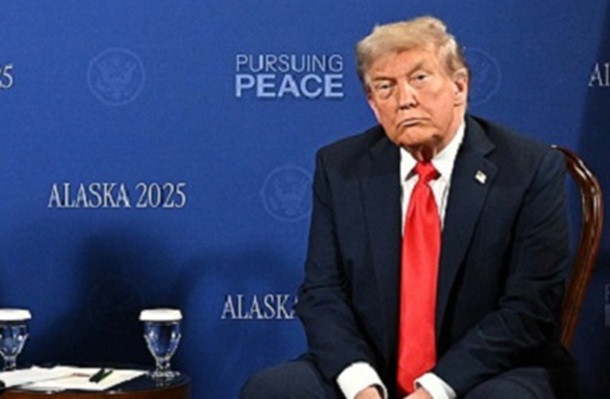

At a recent rally to tout his economic policies, US President Donald Trump suggested that voters’ growing concerns about affordability were a “hoax” created by the Democratic Party. Though he later attempted to offer a clarification, he still denied the problem: “Our prices are coming down tremendously from the highest prices in the history of our country.” And when asked on another occasion to grade the US economy, Trump gave himself an “A+++++.”
The American people would beg to differ. In fact, they are rightly worried about affordability. But despite the flood of commentary and analysis on the issue, the ratio of heat to light has been too high. To understand better what is driving these concerns, I find it helpful to break Americans’ worry about affordability into three distinct elements.
The first is the overall level of consumer prices, which is nearly 25% higher than it was five years ago. That is a huge increase over a short period – a psychological blow that will take years for consumers to internalize. In this case, Trump is right to pin much of the blame on his predecessor, Joe Biden. According to my calculations, the $1.9 trillion stimulus law that Biden signed in 2021 added around three percentage points to the underlying rate of inflation that year.
The second element is consumer price inflation: the rate of change in the overall price level. In September, overall consumer prices grew by 3% year on year, putting the average monthly inflation rate since Trump took office at 2.9%. That is apparently fast enough for people to notice.
While the responsibility for achieving low and stable consumer price inflation rests with the US Federal Reserve, Trump bears some of the blame because of his trade tariffs. In September, coffee prices were up 19% over the year, and bananas, beef, and frozen juice were up 7%, 15%, and 10%, respectively. These are prices that people notice, and Trump all but admitted that his tariffs were partly responsible when he rolled them back last month. (I am focusing on September prices because the inflation data since then have been affected by October’s government shutdown in ways economists are still sorting through. But the more recent data do not alter the qualitative conclusions.)
The third element comprises services that are widely considered important to a middle-class life: childcare, housing, health care, and higher education. While it is true that both parties have long failed to take these issues seriously enough, it is also true that Trump has not made them a high priority during his five years in the White House.
What could Trump do to address Americans’ affordability concerns? Quite obviously, he could start by rolling back most of his remaining tariffs.
Yes, there is a legitimate debate about the posture of US trade policy toward certain goods that are crucial for advancing national security or economic resiliency, and whose supply chains run through countries with which the US has an increasingly adversarial relationship, like China. But this describes a small fraction of the goods that Trump has tariffed. Get rid of the levies on imports, and the prices of many goods will drop.
But since the economy is experiencing inflationary pressure from other sources, lowering the tariffs will not be sufficient to bring inflation back down to the Fed’s 2% target. Another factor keeping inflation higher – and which might play an even larger role in 2026 – is the perception that Trump wants the Fed to take direction from him.
If investors, businesses, and households think the Fed will juice economic demand with low interest rates to accommodate the president’s near-term political goals, that will put upward pressure on prices today as businesses try to get out ahead of future inflation. Because so many Americans are worried about affordability, it is in Trump’s direct interest to ensure that the Fed is perceived as being free of political influence – most especially from him.
Finally, Trump should acknowledge that he has been president for a total of five years without focusing adequately on kitchen-table issues.
To be clear, Trump has done a lot for workers. By cutting corporate taxes, he will increase business investment, making workers more productive and increasing their wages. His deregulatory and energy policies will also increase productivity, putting downward pressure on many of the prices households face. Still, the cost of health care, childcare, and education have not been his focus.
Trump has (if you’ll forgive me) a golden opportunity to change that. Congressional Republicans are currently holding serious discussions about fixing the country’s health-care system. After at least a decade of the party lacking any coherent vision for reform, some Republican senators are advancing promising proposals. But real progress will require presidential leadership. Will Trump provide it by making health-care reform his priority in the run-up to the midterm elections? I’m skeptical. But Trump is nothing if not surprising.
In the meantime, Trump needs to stop running the failed Biden playbook of arguing with the American people about their own experience. In a Politico/Public First poll conducted last month, nearly half of Americans report finding basic necessities – groceries, utilities, housing, and transportation – difficult to afford. Around one-quarter have skipped a medical check-up or a dose of prescribed medication for the same reason. Over 33% said they couldn’t afford a night out for a sporting event, and nearly half said the same about a vacation that involves air travel.
Biden might still be president if he had handled the politics of inflation more adeptly. If Trump wants to avoid a blue wave in November 2026, he needs to learn from his predecessor’s mistake – quickly.