.png)


Datametricx is a veteran journalist tallying the macro game, keeping score of the numbers that shape India’s economy and policy.
December 13, 2025 at 1:01 PM IST
CPI inflation rose to 0.71% in November from a record low of 0.25% a month earlier, primarily due to higher food prices and the fading of favourable base effects. With this, retail inflation has remained below the medium-term target range of 2-6% for the third consecutive month and for the fourth time in the last five months.
Core inflation, excluding food and fuel, eased to 4.4% in November from 4.5% in October. However, core-core inflation — excluding gold and silver from core CPI — fell to a record low of 2.4%.
While the inflationary impulse from the GST rate cut is still playing out, its impact is diminishing. With the base effect turning unfavourable, inflation is likely to firm up from here. As inflation tracks the Reserve Bank of India’s projection of 2.0% for 2025-26, the central bank is unlikely to cut the repo rate further unless growth undershoots expectations.
Retail automobile sales slowed in November as the temporary boost from pent-up demand following GST rate cuts faded. Total retail sales grew just 2.1% year-on-year to 3.30 million units, weighed down by a 3.1% contraction in two-wheeler sales, according to the Federation of Automobile Dealers Associations. Passenger vehicle sales remained resilient, rising 19.7%, up from 10.7% in October. Inventories of passenger vehicles fell to 44-46 days from 53-55 days, indicating an improving demand-supply balance. Commercial vehicle sales increased 19.9%, supported by infrastructure activity and the impact of GST rate cuts, even as fleet utilisation remained uneven across regions.
Seasonal moderation after the festive period also contributed to the slowdown. On a sequential basis, total retail sales declined 18.0% in November. Year-on-year comparisons were further distorted by the timing of Diwali, which fell in mid-October this year versus early November last year, shifting part of festive demand into November 2024 and inflating the base.
In contrast, wholesale dispatch data from the Society of Indian Automobile Manufacturers painted a much stronger picture. Total dispatches rose 20.7% year-on-year to 2.43 million units in November, driven by gains in both passenger vehicles and two-wheelers.
Passenger vehicle dispatches increased 18.7% to 412,405 units, while two-wheeler wholesales rose 21.2% to 1.94 million units. Vehicle production climbed 22.3% to 2.94 million units, suggesting manufacturers are rebuilding inventories in anticipation of sustained demand in December.
E-way bill generation growth hit a two-year high in November, pointing to stronger goods movement following the GST rate cuts. E-way bills — a document required for transporting goods worth more than ₹50,000 — rose 27.6% year-on-year to 129.9 million, the third-highest monthly level on record.
Tractor sales remained strong in November. Domestic sales rose 30.1% year-on-year to 92,742 units. The sector benefited significantly from the GST rate cut, which reduced the tax on tractors with engines up to 1,800 cc to 5% from 12%. Including exports, total tractor sales rose 30.3% to 102,011 units, while production increased 37.5% to 102,915 units.
Inflows into open-ended mutual fund schemes fell sharply month-on-month, driven by large outflows from debt funds. Net inflows declined to ₹332 billion in November from ₹2.16 trillion in October and ₹603 billion a year ago. Debt-oriented schemes recorded outflows of ₹257 billion in November, reversing inflows of ₹1.60 trillion in the previous month and ₹129 billion a year ago.
Open-ended equity fund schemes, however, saw inflows of ₹299 billion, up from ₹247 billion in October. Flexi-cap funds attracted the highest inflows at ₹81 billion, followed by large- and mid-cap funds at ₹45 billion, mid-cap funds at ₹45 billion and small-cap funds at ₹44 billion. Mutual fund flows have continued to support Indian equities amid sustained foreign portfolio investor outflows since October 2024.
The mutual fund industry’s net assets under management declined 0.6% year-on-year to ₹80.80 trillion at the end of November. Of this, ₹19.35 trillion was held in open-ended debt schemes and ₹35.66 trillion in open-ended equity schemes.
New business premium of life insurers rose 23.0% year-on-year to ₹311 billion in November, led by the state-owned Life Insurance Corp of India. LIC’s premium income surged 35.0% to ₹159 billion, while premiums of private insurers rose 12.5% to ₹152 billion. During April-November, total premiums grew 9.8% year-on-year to ₹2.69 trillion, with private insurers’ income rising 12.2% and LIC's income increasing 8.1%. LIC sold 9.90 million policies during the period, down 6.3%, compared with 5.71 million policies sold by private insurers, up 4.2%.
Consumption of petroleum products increased 3.0% year-on-year to 21.27 million tonnes in November, driven by higher demand for high-speed diesel and liquefied petroleum gas. Diesel consumption rose 4.7% to 8.55 million tonnes, LPG increased 7.4% to 2.86 million tonnes, and petrol consumption grew 2.6% to 3.52 million tonnes.
India’s foreign exchange reserves rose $1.03 billion week-on-week to $687.26 billion as of December 5, largely due to higher gold prices. Foreign currency assets declined $151 million to $556.88 billion, while gold reserves increased $1.19 billion to $106.98 billion. Despite continued RBI intervention, reserves have risen $18.93 billion so far in 2025-26, mainly reflecting gains in gold valuation.
Reserve money growth moderated to 0.8% year-on-year as of December 5 from 1.6% a week earlier. The moderation was primarily due to a decline in banks’ deposits with the RBI, including the balances maintained under the cash reserve ratio.
Rabi acreage remains higher on the back of favourable rainfall and healthy reservoir levels. As of December 5, the area under Rabi crops stood at 47.90 million hectares, up 6.2% year-on-year. The area under wheat rose 10.8% to 24.14 million hectares, while pulses and oilseeds increased 0.4% to 10.62 million hectares and 2.9% to 8.41 million hectares, respectively.
Post-monsoon rainfall remained well above normal, largely due to heavy showers in October. As of December 12, cumulative rainfall stood at 132.6 mm, 19% above the long-period average of 111.4 mm. Rainfall during the season was more than 20% above normal across 62% of the country.
Reservoir storage recorded its sharpest week-on-week decline in 32 weeks as rains abated and Rabi sowing accelerated. As of December 11, 166 reservoirs held 155.23 billion cubic metres of water, down 3.40 billion cubic metres from the previous week. The storage level was 7% higher than a year ago and 22% above the 10-year average.
Coming up
- Dec 15 – Wholesale Price Index for November
- Dec 15 – Trade data for November
- Dec 15 – Periodic Labour Force Survey for November
- Dec 16 – HSBC India Flash PMI for December
Tailpiece
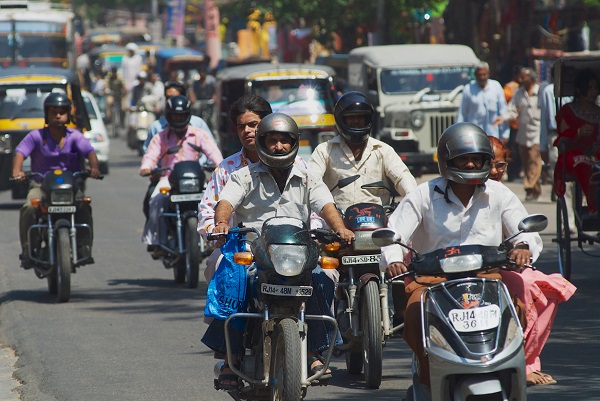
Two-wheeler sales showed divergent trends in November. Retail sales declined 3.1% year-on-year to 2.55 million units, while wholesale sales rose 21.2% to 1.94 million units.
More From BasisPoint