.png)

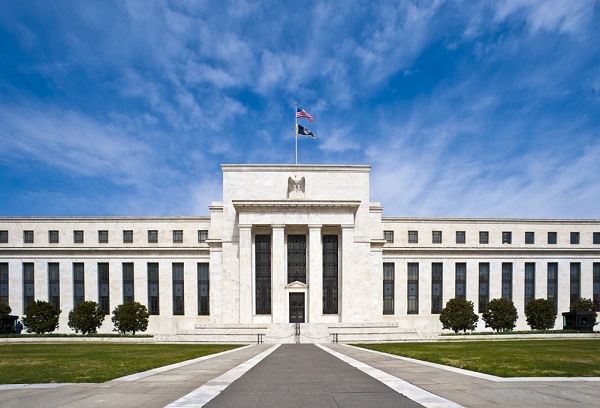
The proven independence of its market institutions has long made the United States the anchor of the global financial system. Even through tumultuous political cycles, the US Federal Reserve, the Securities and Exchange Commission (SEC), and the Federal Trade Commission (FTC) have been able to signal to the world that American markets operate under clear, impersonal, reliably enforced rules.
That independence, however, is now being weakened across all three institutions simultaneously, with dire implications for the global economy. The mechanisms may be different in each case – ranging from prosecutorial threats against central bankers to firing commissioners and gutting enforcement capacity; but the erosion of independence is the same.
Institutional independence can be evaluated using five tests drawn from the literature on corporate governance. The same principles that distinguish well-governed companies from poorly governed ones can be applied to the public institutions that underpin market confidence.
The first principle is that leadership selection should be merit-based, tied to a clear mission, and subject to fixed terms. Second, governance should be multi-stakeholder, accommodating independent voices with real veto power. Third, an institution should be accountable to the people it serves, not to the executive who appointed its leaders. Fourth, funding should be independent and insulated from appropriations pressure. And fifth, institutions should be committed to rigorous transparency.
No single test is dispositive. But when an institution begins failing across multiple dimensions simultaneously, the process of erosion is underway and likely to accelerate.
To see the scope of the weakening that has already happened under President Donald Trump, start with the Fed. On leadership, the Justice Department has threatened Chair Jerome Powell with a criminal indictment over his congressional testimony concerning renovation work. Powell has openly described this as a pretext to undermine the central bank’s rate-setting independence, and Trump has made clear that he wants Powell’s successor to lower rates immediately.
On governance, Trump’s attempt to fire Fed Governor Lisa Cook, combined with his administration’s assertion that for-cause removal protections are unconstitutional, is an attack on the structural autonomy that is meant to insulate monetary policy from political pressure. And on funding, Trump has signed an executive order requiring White House approval for regulatory policy decisions at independent agencies, with only a narrow exception for monetary policy. European Central Bank President Christine Lagarde and Bank of England Governor Andrew Bailey have both warned that these actions pose a serious danger to global financial stability.
The SEC is failing even more tests. Trump’s appointed chairman, Paul Atkins, has embraced an aggressively deregulatory posture, scrapping proposed rules and shifting toward lighter-touch oversight. Staffing is down approximately 17% from fiscal year 2024, with departures concentrated in enforcement and the Office of General Counsel. As a result, enforcement actions against public companies fell 30% in fiscal year 2025, with only four initiated under the new leadership.
Although the SEC retains its statutory authority on paper, it is losing the capacity to exercise it. The consequences could prove disastrous. Prominent securities-law professors have warned that weakened enforcement invites the kind of concealed fraud that produced the Bernie Madoff and Enron scandals.
Finally, the FTC reveals the pattern of institutional erosion most clearly. The Trump administration fired both Democratic commissioners in March 2025, despite the 1935 Supreme Court precedent set in Humphrey’s Executor (one that the Trump administration is working hard to persuade the court’s conservative majority to reverse), and the new chair, Andrew Ferguson, endorsed the firings. The FTC now operates with just two commissioners, both Republicans, down from the statutory five.
As William Kovacic, a former Republican FTC chair, has observed, the firings signal complete executive control over what is supposed to be an independent regulatory agency. Moreover, a 10% workforce reduction has brought the FTC’s headcount to approximately 1,100, the lowest in a decade, while proposed 2026 budget cuts would leave 51 fewer positions in the Bureau of Competition.
The bond market has registered its judgment on the integrity of America’s market institutions. After remaining negative for most of the 2010s, the ten-year Treasury term premium (following the Kim-Wright model) spiked above 80 basis points in January 2025, reaching its highest level since 2011, and remains elevated at around 50 basis points. According to the Federal Reserve Bank of St. Louis, this rise accounted for more than half the increase in long-term yields that occurred even as the Fed was cutting short-term rates. Likewise, Wells Fargo’s bond strategists have linked the elevated premium to concerns over central-bank independence.
Two scenarios are possible. In one, institutions prove resilient. The Federal Open Market Committee structure survives, the Supreme Court upholds for-cause removal protections, enforcement budgets stabilize, the term premium normalizes, and the US retains its role as the default jurisdiction for global capital allocation.
In the second scenario, politicization persists, executive control over monetary policy becomes normalized, securities enforcement remains weakened, and antitrust capacity erodes further. Accordingly, the dollar would weaken as foreign central banks diversify away from Treasuries, and capital markets would accumulate opaque risk as disclosure enforcement atrophies.
Making matters worse, oligarchic industry structures would become self-reinforcing as dominant firms face diminished competition. The cost of capital would rise for legitimate issuers, while falling for those willing to operate in the gaps left by weakened regulators.
The second scenario does not require a dramatic rupture, only a continuation of current trends. It is not inevitable – institutions can be rebuilt and norms restored – but it is certainly becoming more likely. From Latin American central banks in the 1980s to the regulatory failures preceding the 2008 financial crisis, one lesson about institutional decay stands out: erosion often compounds silently until a crisis erupts.
The next two years will determine which equilibrium prevails. Unless policymakers and investors reverse the creeping rot while there is still time, they will learn another lesson from past crises: the cost of repair is orders of magnitude higher than the cost of prevention.