.png)


Kirti Tarang Pande is a psychologist, researcher, and brand strategist specialising in the intersection of mental health, societal resilience, and organisational behaviour.
January 15, 2026 at 7:33 AM IST
Consider the spectacle. In quick succession came the arrest of Venezuela’s President in a Hollywood-style tableau, talk of buying Greenland, threats to withdraw from long-standing treaties, and hints of reviving a twenty-first-century Monroe Doctrine. Viewed in isolation, these actions resemble bullying. Viewed together, they signal something deeper. A psychological lens—not to excuse behaviour, but to contextualise it—helps explain why such tactics resonate.
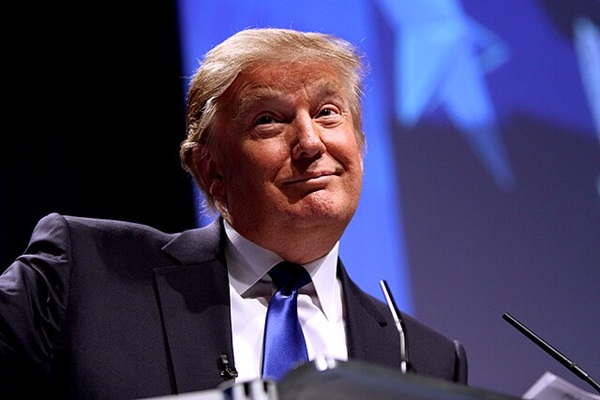
Donald Trump’s story begins in the long shadow of a highly successful father and an inherited business empire. Whatever wealth or fame he achieved, he would still be seen by many as a man who built upon what he was given. One way to escape that shadow was to pursue something symbolically larger than inheritance: the presidency of the United States—an achievement history would have to acknowledge on its own terms. To win and retain mass support, he reached for one of humanity’s oldest tools of influence: a simple, emotionally charged story, repeated until people gathered around it like our ancestors around a fire.
He won the presidency, but he also inherited unprecedented times. He is head of state, but what is “the state” now? Traditionally, states exercised power through governance, economic control, and information management. Today, each of these pillars is under strain. Globalisation and digital technologies have weakened the state’s monopoly over capital, production, and narrative.
Fractured Authority
Capital moves freely across borders. Supply chains stretch across jurisdictions. Digital platforms manage markets, labour, and attention at a scale no single government fully controls. Corporations and technology firms now command not only money, but data and attention—the psychological infrastructure of modern life. Once, states monopolised official secrets and mass broadcasting. Today, information circulates instantly on networks accountable to shareholders rather than parliaments. The contest is no longer only between states, but over what a “nation” even means when territory, capital, and information are no longer tightly bound together.
This is a dialectical moment. Old structures are losing coherence, while new ones have yet to stabilise.
Globally, we are in a political winter. Economic insecurity, technological disruption, and geopolitical rivalry have narrowed collective horizons. Psychological research shows that when people cannot see a clear path forward, they gravitate towards narratives that offer identity and certainty, even if those narratives oversimplify reality. When the future feels opaque, powerful stories become substitutes for policy clarity.
This helps explain the rise of alpha-style leadership across systems. Trump casts himself as the defender of American greatness. Putin frames Russia’s restored strength. Xi Jinping presents China as a disciplined alternative centre of power. India’s governing narrative emphasises nationalism and civilisational pride. These are not just slogans; they are organised myths in a time when facts feel fragmented and authority feels diluted. The question Indian policymakers need to ask is — how can we ensure that institutional capacity keeps pace with narrative ambition.
The roots of this shift lie in the post-Second World War social contract. States promised welfare, education, healthcare, and security in exchange for taxes and legitimacy. For decades, growth and a broadening middle class sustained this bargain. Over time, however, globalisation and financialisation concentrated wealth, strained public finances, and hollowed out state capacity. A new orthodoxy emerged: governments would prioritise growth, while individuals would shoulder more risk.
The result has been rising inequality and a widespread perception that the state has retreated from its foundational responsibilities.
Technology accelerated the rupture. Automation and digitalisation displaced jobs faster than political systems could adapt. The 2008 financial crisis exposed the fragility of the global economy, deepening distrust in elites and institutions alike. Across democracies, societies now grapple with stagnant wages, volatile employment, and a pervasive sense of lost control.
Into this vacuum rush simple stories: Make America Great Again, take back control, foreigners are stealing jobs, allies are freeloading. Villains shift—China, migrants, Venezuela—but the narrative structure remains constant. Complexity is reduced to cinematic storytelling with heroes and enemies. These stories mobilise support and win elections, even as underlying economic and technological drivers remain untouched.
Trump, Modi, Xi, Putin, Macron, Zelensky, Starmer and others are products of this transition as much as they are shapers of it. Their prominence reflects a reconfiguration of the nation-state itself. As states struggle to control economies, borders, and information flows, societies gravitate towards personalised leadership and nationalist identity. Anti-immigrant narratives flourish because they offer visible targets for diffuse structural anxieties.
For India, the choice is not between emulating Trump’s tantrums or rejecting them outright. The real lesson lies in institutional preparedness. In a world where leadership volatility is becoming normal rather than exceptional, the dividing line between resilient and fragile states will be the strength of their systems, not the charisma of their leaders.
India has narrative capital, demographic scale, and democratic legitimacy. But it also faces the same pressures hollowing out states elsewhere: automation-driven job disruption, platform concentration, labour informalisation, and rising citizen expectations amid fiscal constraints. If these pressures are met primarily with symbolism rather than system-building, nationalism risks becoming a substitute for governance rather than its foundation.
India must invest in institutional depth where citizens experience the state most directly through employment transitions, healthcare access, skills formation, and digital regulation. It must build durable regulatory capacity over data, platforms, and capital flows rather than relying on episodic interventions.
Trump’s theatrics are not the cause of global disorder. They are signals of a system struggling to govern. The old order is weakening; the new has yet to emerge. This gap gives India an opportunity—to demonstrate that a civilisational story can coexist with competent, restrained, and enduring institutions, and that strength need not shout to be effective.
More From BasisPoint