.png)

The ‘Art’ of Not Getting It and Why the Second Look Matters
The difference between confusion and clarity is often not intelligence but context. Sometimes understanding begins with the right frame.

Phynix is a seasoned journalist who revels in playful, unconventional narration, blending quirky storytelling with measured, precise editing. Her work embodies a dual mastery of creative flair and steadfast rigor.
June 1, 2026 at 2:37 AM IST
Dear Insighter,
For all my life, I filed art away under "other people's territory". The people who could sketch a flower without it resembling an amoeba, the ones who could explain Impressionism without Googling it, or who simply arrived in the world with some capacity for wonder that, somewhere in the distribution, skipped me entirely. I was prose, not poetry. I could calculate compound interest faster than I could stand in front of a painting for five minutes, and I had made a quiet peace with that. Art was for the elite, the educated, the creatively endowed. Not for someone who couldn't draw a proper flower to save their life, and who has spent years quietly haunted by the gap between the people who take to poetry and the people who don't.
Then Instagram began serving me something I hadn't realised I was missing: context.
A few months ago, the algorithm started slipping art-history accounts into my feed, the kind that explain paintings before asking you to admire them. My first reaction was scepticism. My second, as it always is when something snags my curiosity, was a rabbit hole at two in the morning that I had no business entering.
The paintings themselves were almost beside the point. What hooked me were the stories. Van Gogh returning again and again to the same asylum window. Goya filling his home with dark, unsettling images that no patron had commissioned and few people would ever see. The more I read, the less these works felt like art history and the more they felt like evidence left behind by complicated people.
The vulnerability involved felt extraordinary. These artists revealed things about themselves that many of us today would not permit even in therapy. I kept asking whether that kind of openness comes from an excess of self-worth or a total destruction of it. At the extremes, I guess, they converge.
And then I remembered the spectacle case.
About a decade ago, my partner returned from Vienna carrying a gift: a spectacle case printed with a painting I had never heard of, The Kiss by Gustav Klimt. I filed it away under "pretty things I own" and thought no more about it. Then one of those Instagram posts brought it back. Suddenly I was reading about conservative Vienna, about a couple surrendering to each other in a golden embrace, about debates over female agency and desire, about a work that scandalised parts of society precisely because it seemed so bold and ahead of its time.
The case is almost certainly in a box somewhere, in what I can only call some place called 'here', that mysterious dimension where missing socks, receipts and important possessions quietly migrate. I hope I find it. More than that, I hope I find the real The Kiss in Vienna someday.
The painting hadn't changed. Neither had the story. What changed was the distance between looking at something and actually seeing it.
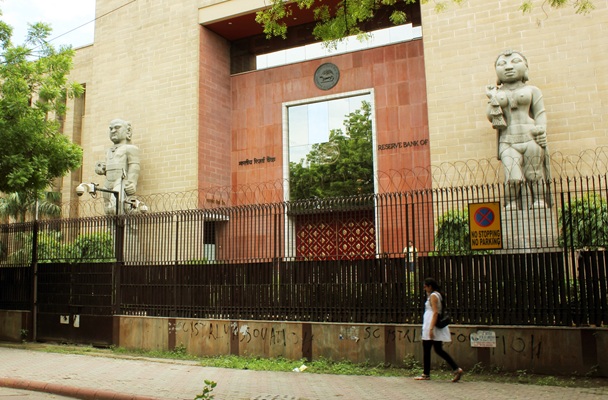
Michael Debabrata Patra, after four decades at the RBI, has stepped into a classroom at NIBM to provide exactly that frame for understanding central banking. His masterclass traces how institutions like the Fed and the ECB evolved not merely as policy machines but as custodians of trust. Suddenly, central banking feels less like a collection of acronyms and more like a story of compromises, design flaws and near misses.
The RBI's own story has become more complicated. Radhika Piplani argues that growth is slowing even as inflation risks and currency pressures build, making communication more important than immediate rate action. Abhiman Das and Smita Roy Trivedi are less forgiving, pointing to a surge in wholesale inflation and warning that increasingly hawkish language without corresponding action may eventually undermine credibility. Arvind Mayaram, writing on the rupee, reminds us that confidence cannot be manufactured through intervention alone. In a separate essay, he argues that India's bond market still lacks the mechanisms needed to recycle long-term capital efficiently through infrastructure assets.
R. Gurumurthy offers an interesting metaphor, comparing AT1 bonds to Trishanku, suspended between worlds and belonging fully to neither debt nor equity. The absurdity is evident in the Credit Suisse episode, where AT1 investors were wiped out while shareholders retained value. Australia has decided to phase out the instrument altogether, even as banks continue issuing it into Australian markets. The casino, it seems, remains open.
Utsav Saksena introduces another financial creature that defies easy categorisation: programmable CBDCs. In a Puducherry pilot, digital rupees can be spent only on foodgrains through authorised merchants. It is one of the world's most ambitious experiments in programmable money, yet it raises questions that existing frameworks were never designed to answer.
Vivek Kaul delivers a sharp lesson in financial humility. Between 2020 and 2024, countless market gurus declared that India no longer needed foreign investors because domestic flows would sustain valuations indefinitely. Two stagnant years later, many of the same voices are advocating tax incentives to bring those investors back. Bull markets often disguise conviction as wisdom. Difficult markets expose the difference.
Beyond markets, external risks are accumulating. K. Srinivasa Rao examines how the West Asia crisis could affect banking through inflation, currency pressures and supply chain disruptions. Sakshi Gupta adds the monsoon dimension, noting that below-normal rainfall and possible El Niño conditions could affect crops, rural demand and inflation simultaneously. The monsoon is not just weather in India, but macroeconomics disguised as weather.
The deeper concern, as Gurumurthy argues, is that India remains vulnerable because the institutional foundations required to absorb shocks are still incomplete. Avanti Bhati shows how electoral incentives often trump economic logic, citing fuel pricing decisions timed around elections rather than fundamentals. Sharmila Kantha extends the critique to NITI Aayog, arguing that it risks becoming irrelevant unless it evolves into a genuine centre for foresight, risk identification and strategic thinking.
The geopolitical stories are equally revealing. Rajesh Ramachandran argues that the most significant aspect of the US-Iran confrontation is not military but symbolic. For the first time in generations, questions surrounding the Strait of Hormuz are being discussed in ways that suggest a changing balance of power. Deep Pal reaches a similar conclusion through Marco Rubio's India visit, seeing a relationship increasingly governed by transactions and leverage rather than sentiment and goodwill.
Anshuman Gupta highlights a cost often ignored in discussions of trade fragmentation. Rebuilding supply chains across multiple geographies may reduce strategic dependence, but it also duplicates infrastructure, energy consumption and emissions.
Pranav Rai warns that India risks squandering an early advantage in AI copyright policy. A promising framework proposed last year sought to compensate creators whose work train AI systems. Momentum has faded, and inertia may prove more damaging than excessive regulation.
In capital markets, Chandrika Soyantar's story on SpaceX is really about power. NASDAQ reportedly adjusted its rules to accommodate one of the world's most coveted listings. The relationship between issuers and markets appears to be changing. Capital increasingly adapts itself to corporate power rather than disciplining it.
Krishnadevan V notes that TSMC now commands a larger weight in the MSCI Emerging Markets Index than all listed Indian companies combined, a concentration risk many investors barely recognise. He also examines Swiggy's failed governance resolution, where a proposal secured 72.36% support but fell short of the 75% threshold required. The message is subtle but important: institutional investors are beginning to behave more like owners and less like spectators.
Dev Chandrasekhar's analysis of ITC explores another visibility problem. The company's digital commerce platform now contributes a significant share of FMCG sales, yet the market struggles to value what it cannot clearly see because the story remains buried within a conglomerate structure. Sometimes valuation gaps are really information gaps.
They are all reminders that the obvious surface is rarely the whole story. The structural weakness, the policy dilemma, the hidden risk, the governance shift, the climate cost and the geopolitical realignment were all there long before they became visible.
I still cannot draw a flower and I’ll continue to feel like a fraud in art galleries. But I know now that the challenge is not seeing; it is understanding what we are looking at.
Until next week, the painting always rewards the second look.
Phynix
Also Read:
Flawed Design, Poor Planning Make Extreme Heat Conditions Worse For Indian Cities by Rajesh Mahapatra: Urban planner and analyst Tikendra Singh Panwar on why India’s 50 hottest cities are a design failure, not just a weather report.
Tamil Nadu's Wager: Can TVK Marry Anticorruption to Welfare? by Satya Mohanty: Voters just bet that clean politics and welfare can coexist — the experiment is now live.
Can Accepted Practices Become Governance Risks? by Srinath Sridharan: When “marketing expenses” become a polite term, governance risks become a silent guest at the table.
Childhood loading… Please Wait by Kalyani Srinath: A brief return to a world where the hardest achievement was reaching the next game level, not navigating a planet on fire.
Sarci-Sense: We Don’t Reply, We Compose by Srinath Sridharan: We no longer reply; we compose, edit, and hesitate — a quiet art of middle-aged communication.
The Bay Of Bengal And The Return Of Civilisational Connectivity by Lt Gen Syed Ata Hasnain: The Bay was never just water; it was a highway of monks, merchants, and ideas — India’s forgotten bridge to its eastern self.
More From BasisPoint