.png)

RBI MPC Dials Down Market Anxiety; Retains Policy Flexibility
Even as war disruptions may have peaked, uncertainty on supply shocks and their second-round impact remains high, making any knee-jerk policy action potentially counterproductive.

Upasna Bhardwaj is Chief Economist at Kotak Mahindra Bank
April 9, 2026 at 8:49 AM IST
As widely anticipated, the Reserve Bank of India’s MPC voted unanimously to hold the policy repo rate and retain a neutral stance. The positive surprise lay in the Governor’s communication, which leaned neutral‑to‑dovish, implicitly signaling the persistence of easy financial conditions in the foreseeable future. The emphasis on being proactive and pre‑emptive on liquidity, while ensuring surplus systemic liquidity, helped reinforce expectations that financial conditions will remain accommodative despite elevated uncertainty.
The announcement of a ceasefire on the day of the policy announcement proved timely, offering the MPC some breathing room to stay the course and helping cool markets that had begun to price in an aggressive policy reaction. The 1‑year overnight indexed swap had climbed to a peak of 6.37% in early April—nearly 90 basis points above pre‑West Asia crisis levels—implying expectations of at least 100 bps of cumulative tightening. Following the dovish pause, the 1‑year OIS has retraced sharply by around 35 bps to around 5.87%, though it continues to embed expectations of 2–3 rate hikes by the RBI in 2026-27.
However, the RBI is expected to maintain status quo through 2026-27, as it banks on the flexible inflation‑targeting framework, even as inflation trajectory gravitates more towards the 5% handle given the risks from El Nino conditions and elevated input prices. Importantly, uncertainty around the persistence and magnitude of supply shocks, despite assuming the peak of war‑related disruptions may be behind us, remains high, with limited visibility on their second‑round impact on growth and prices. In such an environment, any knee‑jerk policy tightening would risk being counter‑productive.
The RBI’s forward guidance thus remained neutral to marginally dovish, reflecting concerns around medium‑term growth, comfort on core inflation dynamics, and confidence in maintaining adequate liquidity. Notably, the RBI published its core inflation forecast for the first time, pegging 2026-27 core inflation at 4.4%—below the headline projection of 4.6%—while indicating that core inflation excluding precious metals is also expected to stay benign. Meanwhile, there is downside risks to the RBI’s 2026-27 real GDP growth forecast of 6.9% (Kotak: 6.5%), stemming from second‑order effects of ongoing supply‑side disruptions.
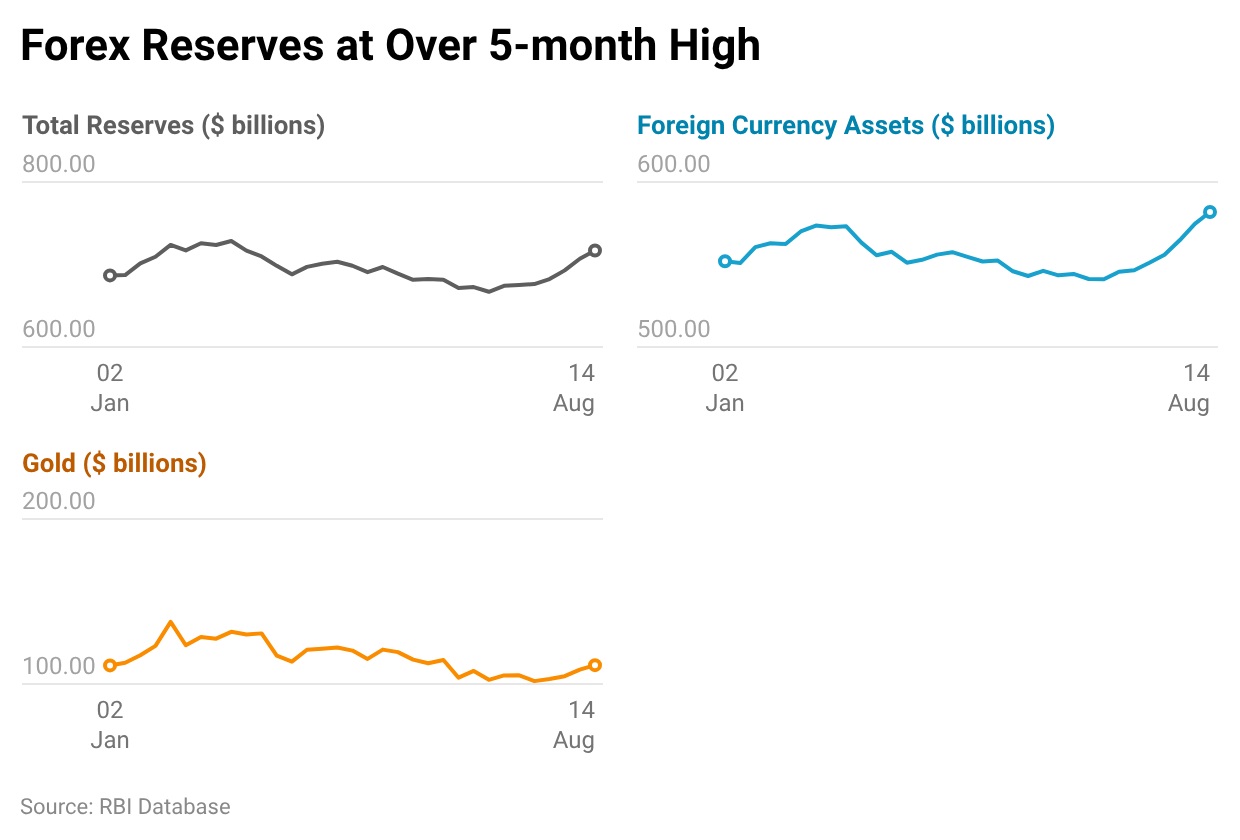
As the growth-inflation uncertainties evolve, there are vulnerabilities emanating from the external balance. While the RBI’s steps to rein in forex speculation, alongside an improvement in global risk sentiment, have provided near‑term relief to the rupee, the absence of a meaningful revival in capital inflows could see depreciation pressures re‑emerge. This risk is accentuated by a wider current account deficit amid unfavorable terms of trade. Although a portion of dollar demand—from oil marketing companies, importers and foreign portfolio investors—appears to have been front‑loaded over the past fortnight providing support to Indian rupee in the near term, fundamentals to reassert themselves over time. That said, recent RBI measures are likely to temper the pace, if not the direction, of rupee weakness.
In a backdrop marked by heightened geopolitical uncertainty, evolving supply‑side risks and fragile global risk appetite, the RBI has opted for prudence by prioritising stability. While near‑term market volatility may persist as policy, geopolitics and capital flows remain in flux, the central bank’s steady hand on rates, proactive liquidity management and targeted FX measures provide an important anchor. Ultimately, as fundamentals reassert themselves, policy credibility and agility will remain critical in navigating an uncertain macro and market environment.
More From BasisPoint