.png)

Gurumurthy, ex-central banker and a Wharton alum, managed the rupee and forex reserves, government debt and played a key role in drafting India's Financial Stability Reports.
September 14, 2026 at 4:36 AM IST
There are few better illustrations of the brutality—and the beauty—of capitalism than Micron Technology. Stepping out of Changi, the news of Micron offering 35 to 68 months of pay as bonus to its employees attracted my attention.
A couple of years ago, the memory-chip maker was cutting jobs, reducing production and warning of a sharply weakened market outlook. Today, after an extraordinary turnaround, more than 60,000 Micron employees worldwide are being rewarded with the company's largest-ever employee payout.
The distance between the two is not merely a few years of corporate history. It is the distance between oversupply and scarcity, losses and supernormal profits. In Ricardian terms, the emergence of economic rent.
For years, Micron was almost the textbook example of the semiconductor cycle. Too much capacity pushed memory prices down; manufacturers cut production; shortages followed; prices recovered; capacity was added again; and the cycle repeated. When the cycle turned vicious in 2022–23, Micron responded with production and spending cuts and workforce reductions as the memory market deteriorated.
Then artificial intelligence arrived.
AI did not merely increase semiconductor demand. It changed the economics of memory. High-bandwidth memory, or HBM, required by AI accelerators, consumes scarce manufacturing capacity, while demand for conventional DRAM has also surged. Micron suddenly found itself selling a product that customers desperately wanted but could not immediately obtain in sufficient quantities.
The transformation in profitability has been extraordinary. In fiscal 2026's third quarter, Micron reported record revenue of $41.46 billion up from $9.30 during the same period a year ago and net income of $28.24 billion.
The stock has reflected that transformation. A company whose shares traded around $40 a couple of years ago has become a trillion-dollar-plus company, with the market effectively repricing Micron from a cyclical memory manufacturer into a strategic supplier to the AI economy.
But now comes the really interesting part.
The employees have noticed.
The immediate flashpoint is Taiwan. Unions representing around 10,000 of Micron's 15,000 Taiwan employees have threatened strike action, demanding a more transparent, profit-linked bonus system. They have sought a future mechanism allocating 15% of operating profit to employee bonuses.
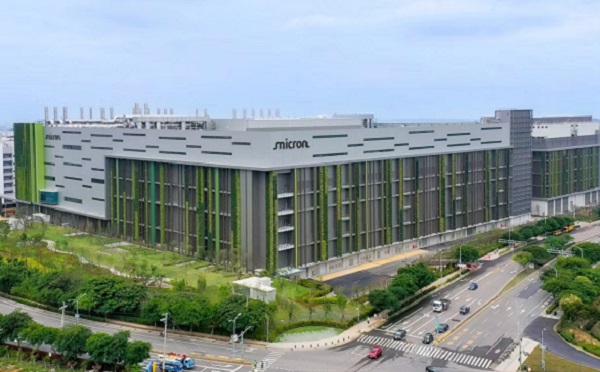
Micron's response has been extraordinary. It announced rewards equivalent to 35–68 months of salary for direct-labour employees in Taiwan, with minimum cash compensation of NT$1.7 million. But this should not be mistaken for a Taiwan-only payout: Micron says more than 60,000 employees globally will receive 2025-26 rewards, and every employee will receive an annual equity grant.
The irony is delicious.
Only a few years ago, employees were being asked to accept the consequences of a collapsing memory cycle. Today, the entire workforce is being invited to share in the extraordinary success of the opposite phase of that cycle.
The Taiwan dispute simply makes the underlying question impossible to ignore:
If the economics of the company have changed so dramatically, who should capture the windfall?
Scarcity Rent
Ricardo's theory of rent was built around scarcity. When a productive resource becomes scarce relative to demand, it can generate a rent not necessarily because more effort has suddenly been applied, but because scarcity itself creates an economic advantage.
Something similar is happening in AI memory.
HBM capacity is scarce. Advanced semiconductor manufacturing capacity is scarce. Skilled semiconductor workers are scarce. And the fabs required to expand supply take years and billions of dollars to build.
The result is scarcity rent.
And once scarcity rent appears, the economic question changes.
It is no longer simply: How much profit can Micron make?
It becomes:
Who gets to capture the rent?
Initially, shareholders capture much of it through higher profits and a spectacularly higher share price. Then employees arrive, seeking higher wages and bonuses. Suppliers can demand better prices. Governments can seek taxes and subsidies. Customers eventually push back against high prices. And, most importantly, competitors begin investing to eliminate the scarcity.
This is the beauty of the market mechanism.
High rents are capitalism's invitation to competitors.
When Rent Erodes
The company is spending aggressively to expand capacity. Competitors are doing the same. New fabs will eventually bring additional supply. The very prices that make today's economics so attractive make tomorrow's capacity expansion worthwhile.
But labour is another claimant.
The Micron payout is therefore much more than an industrial-relations story. It is a small but fascinating example of rent distribution.
A worker can reasonably say: when the company was losing money, I shared the pain through retrenchment and uncertainty. When the company earns extraordinary profits because my skills and the scarce capacity I operate are suddenly enormously valuable, why shouldn't I share the gain?
The shareholder can ask an equally reasonable question: if extraordinary profitability increasingly becomes distributed through bonuses, equity awards and eventually contractual profit-sharing, how much of today's exceptional margin is actually available to shareholders?
That brings us to the stock.
The immediate employee payout is unlikely to destroy Micron's economics. Paying generously may be entirely rational if it retains scarce talent and prevents a production-disrupting strike. Indeed, the global equity awards may align employees with shareholders rather than merely increase cash costs.
The greater risk is institutionalising the claim on future profits.
At $40, investors were buying Micron as a cyclical semiconductor company whose profits would eventually revert towards the mean.
At today's vastly higher valuation, investors are effectively betting that the mean itself has shifted, that AI has made memory structurally more valuable and that scarcity can persist long enough to justify today's earnings expectations.
That may prove correct.
But investors should remember Ricardo.
Economic rents attract claimants, and persistent rents attract competition.
The worker wants a share. The competitor wants the market. The customer wants a lower price. The government wants a tax. And the shareholder wants the extraordinary margin to continue.
There is therefore a delicious symmetry to Micron's journey.
Yesterday, the company was telling workers that the cycle was so bad that jobs had to go. Today, the company is telling more than 60,000 employees that the cycle is so good that they can share in the bounty. Tomorrow, new fabs may tell everyone that the scarcity has begun to disappear.
For the stock, that is the central tension.
The spectacular rise from around $40 to above $1,250 is not simply a bet on AI. It is a bet on the duration of scarcity rent.
And whenever everybody discovers a rent, the Ricardian question inevitably follows:
How long before someone competes it away?
More From BasisPoint