.png)

India at the Edge of a Harder World
As global norms erode, hard power returns, and advanced economies fracture under social and political stress, India’s ascent is unfolding in a far less forgiving international order. Can India sustain economic credibility, institutional confidence, and strategic autonomy as power increasingly shapes global outcomes?

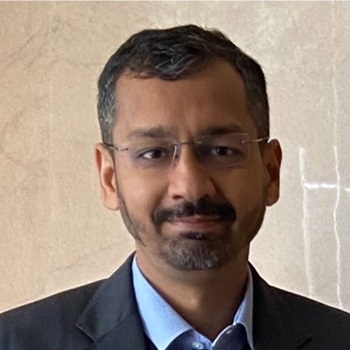
Dr. Srinath Sridharan is a Corporate Advisor & Independent Director on Corporate Boards. He is the author of ‘Family and Dhanda’.
January 7, 2026 at 5:30 AM IST
The global order is no longer fraying at the edges. It is hardening at the core.
Power today is asserted less through persuasion and norms, and more through coercion, leverage, and the credible threat of force. Institutions once designed to civilise competition between states now struggle to restrain it. Norms erode not because they are challenged rhetorically, but because they are ignored operationally. In this world, India’s rise is unfolding not in an age of accommodation, but in an era of confrontation.
The most recent and unsettling illustration of this shift was the United States’ military action in Venezuela in early January, culminating in the capture of President Nicolás Maduro. Whatever legal justifications were advanced, the signal to the rest of the world was unambiguous.
Sovereignty is now conditional. International law applies selectively. Power, when available, will be exercised first and explained later. This is not an isolated episode. It is part of a broader pattern that includes Russia’s prolonged war in Ukraine, Israel’s continuing conflict in Gaza with wider regional spillovers, and China’s increasing willingness to test boundaries across Taiwan, the South China Sea, and through persistent skirmishes along India’s borders.
Hard power is back in fashion. The deeper concern is whether it will now become the organising principle of international politics.
This return of raw power is coinciding with deep political stress within advanced economies themselves. Immigration-led social unrest, electoral volatility, and ideological fragmentation are reshaping politics across Europe and parts of the West. The liberal order that once absorbed shocks through consensus and institutional buffers now transmits them through polarisation and policy paralysis.
For countries like India, this matters profoundly. Our external environment is becoming more volatile at precisely the moment when our global exposure — across trade, capital flows, and technology dependence — is expanding.
Against this backdrop, India’s headline growth numbers inspire confidence but also invite scrutiny. Sustained high growth in a turbulent world is no small achievement. Yet growth quality matters as much as growth velocity. Employment elasticity remains weak. Informality continues to dominate livelihoods. Consumption resilience masks underlying fragility in income security. For policymakers and investors alike, the central question is whether India’s growth can translate into durable social stability and fiscal resilience under external stress. In a world of recurring geopolitical shocks, countries without internal economic ballast will find their strategic ambitions constrained.
This is where India’s much-invoked demographic dividend deserves a more sober assessment. Demography is not destiny. A large young population is an asset only if it is productively employed in work that is economically value-additive and socially stabilising. Absent that, it becomes a pressure point. The challenge before India is not merely job creation in numerical terms, but the creation of livelihoods that raise productivity, incomes, and skills at scale. Manufacturing depth, services sophistication, and technological absorption must converge to absorb this demographic cohort meaningfully. Without a robust economic home base that provides dignity, income security, and upward mobility, India cannot sustain either soft influence or hard power ambitions.
Technology, particularly artificial intelligence, will increasingly determine whether that anchor holds. AI is not merely another productivity tool. It is becoming an organising layer of economic power, military capability, and state capacity. While India has articulated intent and seeded innovation ecosystems, its relative lag in foundational AI capabilities remains a strategic vulnerability. Compute infrastructure, advanced research capacity, talent pipelines, and data governance frameworks are still uneven. In a world where AI increasingly shapes defence systems, intelligence, financial markets, and industrial competitiveness, dependency itself becomes risk.
India’s neighbourhood compounds these pressures. Instability radiating from Afghanistan, the persistent unpredictability of Pakistan, and intensifying strategic competition in the Indian Ocean Region mean that India’s external security environment is unlikely to offer respite. Meanwhile, China’s long-term strategic patience combined with tactical assertiveness continues to test India’s deterrence posture and diplomatic agility. Strategic autonomy in such an environment is not maintained by posture alone, but through sustained investment in defence capability, diplomatic credibility, and economic strength.
This brings us to a necessary re-examination of India’s long-standing comfort with soft power narratives. Indian cuisine, cinema, yoga, and cultural visibility have enhanced global familiarity with India. They have value. But soft power does not substitute for hard power. Cultural affection does not deter coercion. Visibility does not guarantee influence when strategic decisions are made. For too long, India has appeared hesitant — almost apologetic — about articulating its claim to a larger global role. History of nations shows that great powers assert it, calibrate it, and defend it. In a world governed increasingly by force and leverage, moral standing without material capability offers limited protection.
For portfolio managers and risk professionals, this evolving landscape demands a recalibration of assumptions. India remains one of the most compelling long-term growth stories globally. Yet it is embedded in a system where geopolitical risk, technology competition, and institutional credibility increasingly shape capital allocation. Events such as the forcible removal of a sovereign leader by a major power reprice political risk globally. They challenge assumptions about predictability, legal continuity, and crisis containment.
For investors and policymakers alike, India in 2026 should be priced neither as a simple high-growth story nor as a geopolitical hedge by default, but as a complex sovereign with asymmetric strengths and latent risks. Markets must price in higher regional volatility, episodic external shocks, and the fiscal and institutional costs of strategic autonomy in a hard-power world. Growth will likely remain resilient, but its translation into employment, productivity, and social stability will be uneven. Technology capability — particularly in artificial intelligence and critical infrastructure — will increasingly differentiate sectors and firms rather than lift the economy uniformly. Institutional credibility, from regulatory consistency to judicial efficacy and Centre-state coordination, will matter as much as macro indicators in determining capital durability. Climate stress, demographic absorption capacity, and execution risk around long-term transitions will surface as compounding drags if left under-addressed.
The last time the world spoke of a “new normal” was after Covid, when disruption was framed as temporary dislocation within a still-coherent system. That illusion has now collapsed. What we are confronting is not volatility within order, but the erosion of order itself. Multilateral institutions increasingly function as theatres of legitimacy rather than instruments of constraint.
One asset India still carries — and must guard carefully — is its behavioural posture in an increasingly coarse global environment. At a time when many states are normalising belligerence, theatrical nationalism, and transactional diplomacy, India’s comparative advantage has been its restraint, predictability, and adherence to process even while defending core interests. Countries, markets, and institutions gravitate toward actors whose conduct reduces uncertainty rather than amplifies it. The risk for India lies not in being firm, but in being tempted to mirror the excesses of a hard-power world.
There is also a more immediate vulnerability that warrants candid acknowledgement. India’s growth and strategic trajectory remain sensitive to global capital cycles and external financing conditions. Portfolio flows, currency stability, and access to long-term capital are increasingly shaped by geopolitical shocks, sanctions regimes, and abrupt shifts in risk sentiment. In a world where crises cascade faster than policy responses, even fundamentally strong economies can face sudden tightening of financial conditions. For India, maintaining macroeconomic discipline, regulatory credibility, and policy continuity is therefore not optional but essential. External confidence is fragile and, once unsettled, difficult to restore quickly. As global volatility intensifies, India’s margin for policy error narrows, making institutional steadiness and fiscal prudence central to sustaining both growth and strategic autonomy.
As comity among nations weakens and standards of political decency erode, India’s challenge is not merely to grow, but to govern its rise with clarity, confidence, and purpose. In a world rediscovering hard power, India’s choices will shape not only its own trajectory, but the kind of power it believes is worth building — and the kind of order it intends to help define.
More From BasisPoint