.png)



Dr. Sachchidanand Shukla is Group Chief Economist at Larsen and Toubro.
July 20, 2026 at 4:12 AM IST
The question everyone seems to be asking these days is: how many billions of dollars can the RBI’s overseas-funding window pull in? However, the trickier and more important question is what those dollars do once they arrive and, eventually, leave. A big inflow can steady the rupee today, but it also leaves footprints across liquidity, rates and the RBI’s future balance sheet when the deposits mature and the swaps unwind.
Estimates vary widely, ranging from $30 billion to more than $100 billion, depending on how effectively banks use the structure and how supportive market conditions remain. But this is not just a deposit drive. It is a balance sheet operation of consequence, touching RBI liabilities, bank funding, systemic liquidity, credit growth and, ultimately, the rupee.
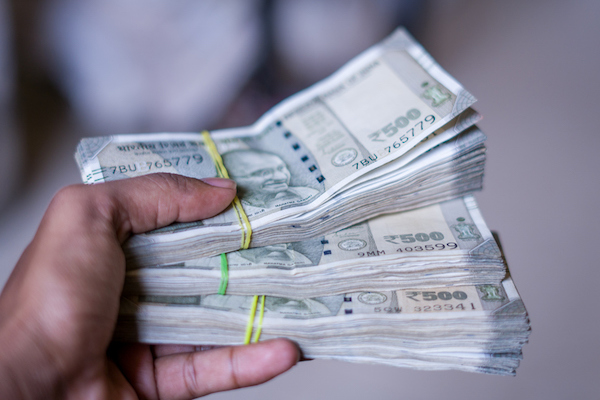
Start with the near term. If mobilisation reaches $80 billion to $100 billion over the next few months and the RBI buys most of those dollars in the spot market to resist rupee appreciation, it could inject roughly ₹7.7 trillion–₹9.6 trillion into the banking system. Without sterilisation, the WACR would drift toward the corridor floor. Let the rupee absorb the full shock, and the risks shift elsewhere: faster credit growth, greater capital misallocation, sharper REER appreciation, pressure on exporters and a one-way carry trade that could reverse violently when global conditions change. The RBI has handled this before, and its toolkit is broader now: CRR, OMOs, VRR and reverse repos, alongside FX swap auctions. That also argues against a single “hero” instrument in favour of a calibrated mix.
Future Costs
The longer-term economics are even more pertinent. Foreign currency deposits look safe, familiar and liquid, but the swap subsidy is not free. If the depositor sees a zero cost swap, the cost has merely moved elsewhere — typically onto the RBI’s balance sheet and future obligations. At market funding costs of around 3.5% over the swap’s life, a hypothetical $100 billion of mobilisation implies an annual opportunity cost of roughly $3.5 billion, or about ₹360 billion. This may not show up as a headline accounting loss, but it is still a deferred burden, particularly because it sits atop an already large swap book of the RBI.
That existing book is substantial: the outstanding short dollar forward swap position is estimated at about $110 billion as of June 2026. The risk, therefore, is not just fresh inflows. It is the cumulative stock of contingent obligations the RBI may be carrying three years from now.
But that is not automatically a crisis-in-waiting. The Indian economy is larger, has higher reserves and is financially deeper than in earlier episodes. Scale, however, does not eliminate rollover risk. It only gives policymakers more room to manage it.
That distinction is crucial. A ‘stock’ of say $100 billion maturity three years from now will not land in today’s economy. Nominal GDP will be higher, bank balance sheets larger and market depth possibly better. Relative to the economy, the burden should look smaller. But redemption risk is a ‘flow’ problem, not a stock problem—and flows can overwhelm markets even when balance sheets look comfortable.
History is instructive. India has used versions of this playbook before, most notably in 2013, when the RBI opened a swap window to attract foreign currency at a fragile moment. It was the least bad option. It bought time, calmed markets and gave policymakers breathing space. But it also planted a future obligation. The 2016 FCNR redemption episode carries the sharper lesson. Markets feared that large maturities would trigger a sudden rupee fall and a liquidity squeeze. There were worries about call money rates, bank funding and simultaneous RBI intervention in FX and money markets. In the end, the system absorbed the shock. There was volatility, but no disorder. Past episodes show that volatility rises when the exit is concentrated, but it can be contained when the central bank is prepared.
That should be the template for the next three years.
The RBI’s first task is to avoid surprises. The worst outcome is not a large maturity; it is a large maturity that ambushes the market. Once the flows arrive, the central bank should map the maturity profile, stress test the redemption calendar and identify months of concentration risk. If maturities are bunched, banks should be nudged toward staggered rollovers and diversified maturity buckets. A redemption wall can be managed. A redemption cliff is harder.
The second task is communication. The RBI need not pre-commit to a rescue, but it must show that it understands the risk and has the tools to contain it. Markets fear ambiguity more than size. Clear signalling can reduce the incentive to front-run the exit.
The third task is liquidity pre-positioning. When dollars are redeemed and rupees return to the system, the RBI will need to decide whether to absorb, sterilise or let liquidity pass through. Inaction could jolt short-term rates; overreaction could blur the policy signal. The answer will likely be a calibrated blend of FX sales, repo operations, reverse repos and OMOs, shaped by conditions at the time.
There is a broader policy question too: should such windows be used if they merely defer the problem? Yes—but only with discipline on scale and pricing. These structures can be valuable in stress. They buy time, support the currency and widen external financing. But they are not permanent funding channels. They are emergency bridges, and every bridge has an exit ramp.
The lesson is simple but uncomfortable: this window can buy calm, but not at zero cost. In the short run, it can ease pressure on the rupee and the banking system. In the long run, it creates a dated claim on future liquidity and reserves. The policy challenge is not to pretend the trade-off does not exist. It is to ensure that when the bill comes due, India is stronger, markets are prepared and the exit is managed—not endured.
* Views are personal
More From BasisPoint