.png)

Central Banking 101: RBI and the Safeguarding of Confidence
Michael Patra traces the evolution of the RBI and its role in safeguarding trust, stability and confidence in India’s financial system in his NIBM lecture. This is part two of the Masterclass series.

Michael Patra is an economist, a career central banker, and a former RBI Deputy Governor who led monetary policy and helped shape India’s inflation targeting framework.
June 4, 2026 at 8:12 AM IST
There are national central banks like the Reserve Bank of India, supranational central banks comprising national central banks like the European Central Bank, and federations of central banks comprised of regional central banks like the US Fed. Some central banks are called monetary authorities, like the Monetary Authority of Singapore or the Hong Kong Monetary Authority, which control money supply, reserves and interest rates, but do not conduct other central banking functions like regulation and supervision.
They resemble the colonial currency boards that peg a country’s currency to a foreign "anchor" currency like the US dollar, guaranteeing 100% backing of the monetary base with foreign reserves. Currency boards ensure absolute, unlimited convertibility at a fixed rate, providing high exchange rate stability, but by design, they eliminate independent monetary policy.
There are now more than 180 central banks and monetary authorities in the world. They have diverse histories and structures, but one thing in common. All of them are vested with the responsibility of conducting monetary policy under one regime or another.
Against that backdrop, we turn to India.
The Reserve Bank of India predates independent India, having been formally established in 1935, though its ancestry stretches back to the three Presidency banks established by the British East India Company at Calcutta, Bombay and Madras in the 19th century. They were essentially regional banks that merged in 1921 to form the Imperial Bank of India, which acted as a quasi-central bank until the RBI was established on April 1, 1935, by extracting its central banking aspects. The Imperial Bank was nationalised and renamed the State Bank of India, which was owned by the RBI until 2007.
Originally a private shareholders' bank located on Calcutta’s (now Kolkata) Council House Street, the RBI was nationalised in 1949. Its headquarters had shifted to Mumbai’s Mint Street, now Shahid Bhagat Singh Marg, in 1937. India was the first British colony to have its own central bank. Others, like Singapore, Hong Kong and Sri Lanka, had currency boards. The RBI also served as the central bank of Pakistan, Bangladesh and Burma (now Myanmar).
Its objectives were greatly influenced by the views of B. R. Ambedkar, who was critical of British colonial financial policies, particularly the instability caused by the silver standard. He proposed a stable monetary framework, emphasised the need for financial inclusion, ensuring equitable access to banking services, a managed currency system, and an independent central bank to regulate credit and control inflation. Accordingly, the Hilton Young Commission recommended that the RBI should regulate currency, maintain reserves, and manage credit. This is reflected in its Preamble.
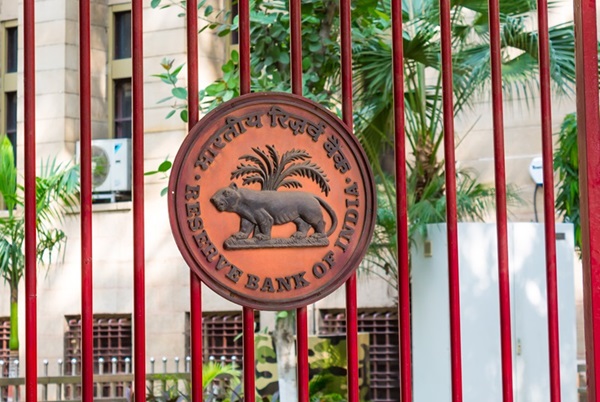
The original choice for the RBI’s seal was the East India Company Double Mohur, with a sketch of the lion and the palm tree. However, it was decided to replace the lion with the tiger, the national animal of India.
Evolving Mandate
The founding fathers wisely decided that the RBI was still at a formative stage, like the Indian economy, and that its functions would evolve as India evolved. Hence, a paragraph just below the Preamble left the establishment of the objectives of the RBI to future generations. This paragraph was eventually substituted by a modern Preamble when the RBI Act was amended in 2016.
The new Preamble, for the first time, assigned the conduct of monetary policy to the RBI. Before that, there was no such assignment; only specific sections in the RBI Act that empowered the RBI to apply the cash reserve ratio, regulate credit, and use the Bank Rate to discount/rediscount bills of exchange.
Most importantly, the amended RBI Act gave monetary policy in India specific goals. Price stability became the principal objective, and growth the secondary objective — essentially a dual mandate. In the regulations that enacted the RBI Act, only price stability is assigned a specific number. There is no number for the growth objective.
Over the years, the RBI’s role and functions have expanded considerably. It has combined regulation with a developmental role, creating the institutional architecture of India’s financial sector, educating the public, setting up the digital public infrastructure, engaging in deposit insurance and consumer protection, creating a conducive environment for fintechs, spearheading the digital revolution, undertaking research, compiling statistics for the nation and real-time information dissemination. Today, the RBI likes to refer to itself as a full-service central bank.
History is replete with instances (Sweden, the UK) when manipulation of the central bank by the king or the government led to high inflation, financial crises, debasement of currencies and erosion of public trust. Hence, elaborate processes, including legal, legislative and statutory, are provided to ensure central bank autonomy.
There are different types of autonomy: goal autonomy like the US Fed which sets its own goals; instrument autonomy, where the government sets the goal but the central bank chooses the means to achieve it, as with the Bank of England; personnel autonomy, where the central bank is free to choose its functionaries like the governor – illustratively, during 2013 to 2020, Mark Carney, a Canadian economist and former governor of the Bank of Canada was chosen as the governor of the Bank of England, breaking over 300 years of tradition to hire the first non-Briton as governor; and financial autonomy, where the central bank is free to conduct its finances in pursuit of its goals.
Here, the case of ad hoc treasury bills in India is an interesting example. Originating during World War II, ad hoc Treasury Bills were created for the temporary financing of sterling debt repayments, and retired by the government’s subsequent dated securities programme. In 1955, ad hoc accounts began to be automatically created when the government’s cash balances fell below ₹500 million on Fridays and ₹40 million on other days, and were cancelled once balances were replenished.
By 1958, ad hocs became a regular feature and were being funded by dated securities. From 1982, large amounts of ad hoc treasury bills were rolled over and converted into undated securities with a fixed coupon of 4.6%. By the end of March 1997, the total stock of ad hocs converted into special or undated securities stood at ₹1.22 trillion.
Autonomy Debate
What began as a temporary bridging-finance mechanism became, by the 1980s, a permanent monetisation of the fiscal deficit. This severely constrained the RBI’s conduct of monetary policy. Unable to contain the expansionary effects of fiscal monetisation, the RBI started using reserve requirements and statutory pre-emptions to curtail credit to the private sector, stunting the growth of the economy.
Eventually, a memorandum of understanding was reached with the government and ad hocs were phased out over a three-year period beginning in 1995.
For me, though, as I told my students, there is only one type of central bank autonomy: the independence to choose a rate of inflation and growth appropriate for the country —one that remains independent of global inflation and growth trends.
At a defining moment of my career, I was once asked whether the RBI was an independent central bank. I had replied in the words of Dr C. Rangarajan, at whose feet I had learnt the craft and who ordained the phase-out of ad hocs: the RBI does not consider itself independent from the government; it considers itself independent within the government.
Against this backdrop of the establishment and evolution of central banking, it is apposite to turn to the unfolding of monetary policy regimes worldwide and in India.
(This is part two of the series Policy Masterclass with Michael Patra. In part one, Patra wrote about how central banks evolved to safeguard trust, stability and confidence. Here is the link to that piece. Part III follows.)
Masterclass with Michael Patra: Previous Sessions
Part 1:
Central Banking 101: Origins, Ideas and Institutions
Michael Patra begins the masterclass by tracing how central banks evolved from fragile monetary experiments into institutions entrusted with preserving trust, stability and confidence.
More From BasisPoint