.png)

Asian Markets Mixed as Oil Near $100 Keeps Investors on Edge
Here’s your quick read to start the day: a chatty, no-fuss look at overnight moves, the big story, what’s on the docket, and the tickers you need to watch.
Richard is an independent financial journalist who tracks financial markets and macroeconomic developments
March 16, 2026 at 1:57 AM IST
GLOBAL MOOD: Risk-Off
Drivers: Escalating US–Iran conflict, US–China trade negotiations
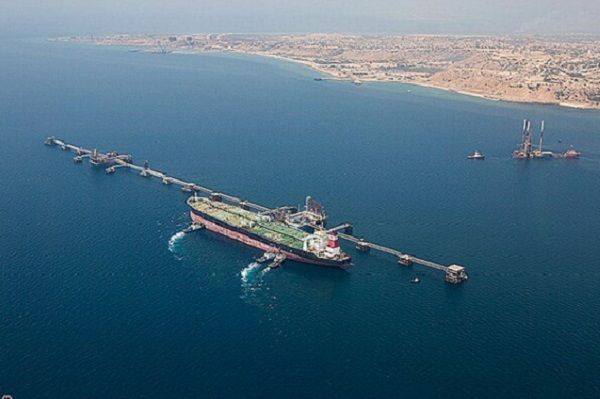
Asian markets opened mixed on Monday as investors remained cautious amid elevated oil prices and intensifying US-Iran tensions. WTI Crude hovered near the $100 mark, with Brent above $103 a barrel, keeping energy-driven inflation risks in focus. Sentiment stayed fragile after Washington threatened additional strikes on Iran’s Kharg Island, a critical oil export hub handling about 1.5 million barrels per day.
Markets are increasingly wary that any disruption to the terminal could provoke retaliation in the Strait of Hormuz, potentially triggering a broader supply shock and prolonging volatility across global assets.
TODAY’S WATCHLIST
THE BIG STORY
The renewed rhetoric has complicated diplomatic efforts, with Washington reportedly dismissing mediation attempts by regional allies even as Trump said Iran may still be willing to negotiate if better terms are offered.
Separately, US and Chinese economic officials opened a new round of talks in Paris aimed at stabilising their trade truce ahead of a planned meeting between Trump and Chinese President Xi Jinping later in March. Discussions are expected to cover tariff adjustments, rare earth exports, US technology restrictions and Chinese purchases of American agricultural products.
Data Spotlight
Higher gasoline prices emerged as the most immediate pressure point. Survey director Joanne Hsu noted that sentiment weakened, and inflation expectations picked up after the US military conflict with Iran began on February 28, highlighting the sensitivity of consumer outlook to energy costs.
Despite the deterioration in sentiment, inflation expectations remained relatively contained. Year-ahead inflation expectations held steady at 3.4%, ending six consecutive months of declines, while long-term expectations edged down to 3.2% from 3.3%.
Takeaway:
Energy-driven price pressures are weighing on consumer confidence, but longer-term inflation expectations remain anchored, suggesting households are not yet anticipating a sustained shift to structurally higher inflation.
WHAT HAPPENED OVERNIGHT
- US stocks end week lower as oil volatility, escalating strikes and stagflation fears weigh
- The S&P 500 fell 0.6%, Dow lost 0.3%, and Nasdaq 100 shed 0.7%, all three posting third straight weekly declines.
- The Russell 2000 hit its lowest close of the year, signalling broad-based risk aversion beyond mega-cap names.
- Defense Secretary Hegseth announced the largest wave of US strikes on Iranian targets yet, cementing Hormuz blockade fears and triggering fresh stagflation pricing.
- Trump's temporary easing of Russian oil sanctions failed to stem crude's rise or restore equity confidence.
- Adobe plunged 7.6% after a guidance miss and surprise CEO departure, the session's biggest single-stock shock.
- Meta, Palantir, and Oracle fell between 1.7% and 3.8%, with software leading to the decline as AI monetisation optimism faded.
- The S&P 500 fell 0.6%, Dow lost 0.3%, and Nasdaq 100 shed 0.7%, all three posting third straight weekly declines.
- US Treasury yield holds at 4.27%, up 13bps on the week, as war escalation and fiscal fears dominate
- The 10-year Treasury yield held at 4.27%, near four-week highs after briefly dipping before recovering as Hegseth announced the largest US strike wave yet on Iran.
- The benchmark yield was up nearly 13 bps for the week, driven by energy inflation fears, war-related fiscal deterioration, and a Fed with no room to ease.
- Oil recovering after an early dip kept inflation expectations anchored at elevated levels, preventing any sustained yield pullback.
- War-related spending concerns are adding a fiscal premium to yields, defence budgets are expanding rapidly with no clear endpoint.
- The 10-year has now climbed nearly 40 bps from its sub-4% lows hit just three weeks ago, one of the sharpest short-term moves in recent memory.
- The 10-year Treasury yield held at 4.27%, near four-week highs after briefly dipping before recovering as Hegseth announced the largest US strike wave yet on Iran.
- US Dollar breaks above 100 for first time since May 2025 as war escalation drives safe-haven surge
- The US dollar index climbed above 100.3, its highest since mid-May 2025 on track for a second consecutive weekly gain.
- Breaking above 100 is a significant psychological milestone, reflecting the depth of safe-haven demand as the West Asia conflict intensifies.
- Hegseth's announcement of the largest US strike wave yet on Iran directly reinforced the greenback's safe-haven bid on Friday.
- No imminent resolution in sight with Khamenei vowing Hormuz shut and Netanyahu threatening further leadership strikes, traders see no catalyst to reduce dollar exposure.
- Oil recovering after an early dip kept energy-driven inflation fears alive, adding an inflation-hedge dimension to the dollar's safe-haven appeal.
- The US dollar index climbed above 100.3, its highest since mid-May 2025 on track for a second consecutive weekly gain.
- Crude oil climbs above $103 as Hormuz closure holds; false tanker report triggers brief dip
- Brent crude settled up 2.67% at $103.14/barrel and WTI gained 3.11% to $98.71/barrel as the Hormuz closure showed no signs of easing.
- Prices dipped early on a false report that an Indian-flagged tanker had transited the Strait, the swift correction underscores how sensitive markets are to any Hormuz navigation news.
- The erroneous report and its rapid reversal highlight a market trading on razor-thin information with enormous price implications for every headline.
- Analysts claimed that the weekend could bring surprise developments, two weeks into the war, a ceasefire or escalation over the next 48 hours remains equally plausible.
- With Brent above $103 and WTI approaching $100, the Iran $200 warning is no longer being dismissed by energy market participants.
- Brent crude settled up 2.67% at $103.14/barrel and WTI gained 3.11% to $98.71/barrel as the Hormuz closure showed no signs of easing.
Day’s Ledger*
Economic Data
- India WPI Inflation Data
- India Trade Data
- India employment Data
- US Industrial Production
Corporate Actions
- Satin Creditcare board to consider fund raising
- Regal Entertainment board to consider rights share issue
Tickers to Watch
- Hindalco halts production of extruded aluminium products due to Iran war
- RCom files review plea against SC ruling that spectrum not asset under IBC
- Lupin bets on complex generics, biosimilars to power next US growth phase
- Adani Power gets LoA from MSEDCL for 1,600 MW long-term power supply
- Adani Total Gas cuts natural gas price for certain industrial users
- Vedanta to raise ₹2,575 cr via NCDs; ICICI, Kotak among key investors
- Zydus drug Desidustat for renal anaemia gets regulatory nod in China
Must Read
- Services sectors feel ripple effects as West Asian crisis hits operations
- FPIs pull out ₹52,704 crore in early March amid West Asia conflict
- India gains most from US nod to Russian oil imports, but concerns remain
- IRGC threatens to hunt Netanyahu as Israel denies assassination rumours
- Industry seeks duty concessions to sell goods from SEZs to domestic market
- Costlier oil could lift inflation, slow India's growth in H1FY27: Fitch
See you tomorrow with another edition of The Morning Edge.
Have a great trading day
Oil for Infrastructure? The Risks of Long-Term Supply Compacts
India spends over $130 billion each year importing crude oil. What if part of that recurring outflow could be converted into long-term infrastructure finance?
Arvind Mayaram examines a policy idea now circulating in strategic and economic discussions: whether India could convert part of its oil import bill into 𝐜𝐨𝐧𝐜𝐞𝐬𝐬𝐢𝐨𝐧𝐚𝐥 𝐢𝐧𝐟𝐫𝐚𝐬𝐭𝐫𝐮𝐜𝐭𝐮𝐫𝐞 𝐟𝐢𝐧𝐚𝐧𝐜𝐢𝐧𝐠 𝐭𝐡𝐫𝐨𝐮𝐠𝐡 𝐥𝐨𝐧𝐠-𝐭𝐞𝐫𝐦 𝐬𝐮𝐩𝐩𝐥𝐲 𝐚𝐠𝐫𝐞𝐞𝐦𝐞𝐧𝐭𝐬 𝐰𝐢𝐭𝐡 𝐦𝐚𝐣𝐨𝐫 𝐨𝐢𝐥 𝐞𝐱𝐩𝐨𝐫𝐭𝐞𝐫𝐬.
(*Compiled from various media sources)
More From BasisPoint