.png)

Dr Arvind Mayaram is a former Finance Secretary to the Government of India, a senior policy advisor, and teaches public policy. He is also Chairman of the Institute of Development Studies, Jaipur.
March 14, 2026 at 3:54 AM IST
An idea circulating in policy circles suggests that India could convert part of its large oil import bill into long-term infrastructure finance. The proposal—an exchange of long-term oil purchase commitments for concessional financing—seeks to transform a recurring external payment into development capital.
Given India’s vast infrastructure requirements and its continuing dependence on hydrocarbon imports, the idea carries intuitive appeal.
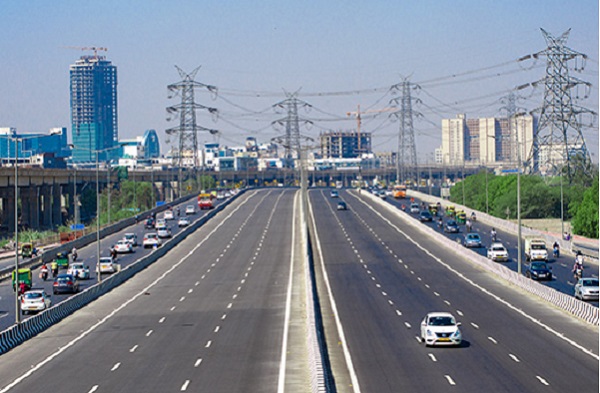
India’s development trajectory will be shaped by two structural realities: the scale of infrastructure investment required to sustain high growth and the country’s dependence on imported energy.
This uncertainty becomes sharper when India’s own energy transition is taken into account. India has set a target of 500 GW of non-fossil electricity capacity by 2030. Renewable capacity has already expanded rapidly—from 76 GW in 2014 to more than 226 GW by 2025. Solar alone could reach 280 GW by 2030, while wind potential is estimated at nearly 700 GW.
The interaction among renewable energy expansion, energy storage technologies, and electrified transport could gradually reduce petroleum demand. Integrating large volumes of solar and wind generation may require more than 230 GWh of battery storage capacity by 2030, while advances in storage technologies continue to reduce balancing costs.
Electrification of Transport
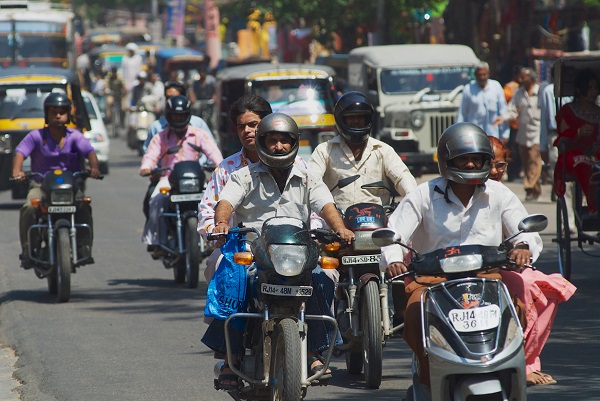
Electric two-wheelers already account for over 5% of new vehicle sales, and policy scenarios envisage deeper penetration, including 30% electrification of private cars and near-complete electrification of two- and three-wheelers by 2030. Large-scale electrification of these segments could displace hundreds of thousands of barrels per day of petrol demand.
Together, these trends introduce significant uncertainty into long-term oil demand projections.
Price and Currency Risks
Currency risk presents a further challenge. Infrastructure loans linked to long-term oil agreements would likely be denominated in foreign currency, exposing India to exchange-rate movements over several decades. Even moderate rupee depreciation compounded over 20–30 years could significantly increase repayment costs.
Local Currency Trade and Infrastructure Finance
Indian importers pay in rupees deposited into Vostro accounts maintained by Russian banks in India. Because the rupee is not freely convertible globally, these balances accumulate within India’s financial system.
These balances could be deployed into infrastructure investments through instruments such as infrastructure bonds or infrastructure investment trusts (InvITs). Since the financing would be rupee-denominated, India would avoid immediate exchange-rate exposure. Over time, however, redemption would create contingent foreign-exchange liabilities. In any case, the scale of such financing remains constrained by bilateral trade flows
Geopolitical Risks and Strategic Caution
For an import-dependent economy such as India, disruptions in these routes can quickly translate into inflationary pressures, widening current account deficits and fiscal stress.
The idea of linking long-term oil purchase commitments with concessional infrastructure finance is imaginative. It attempts to address two structural challenges simultaneously—India’s oil import bill and its infrastructure financing needs. Yet the long horizon of such agreements introduces substantial uncertainty.
India’s infrastructure ambitions require innovative financing. But such strategies must expand financial capacity without constraining strategic flexibility—as the concept of circular finance through instruments such as InvIT attempts to do. In a rapidly evolving energy landscape, financial innovation is desirable; locking India’s future energy choices into decades-long oil supply commitments may prove far costlier than it appears today.
More From BasisPoint