.png)

Asia equities mixed as AI spending fears overshadow diplomatic progress with Iran
Here’s your quick read to start the day: a chatty, no-fuss look at overnight moves, the big story, what’s on the docket, and the tickers you need to watch.

June 24, 2026 at 2:29 AM IST
GLOBAL MOOD: Cautiously Risk-On
Drivers: US–Iran Inspection Dispute, Questions Over Peace Deal Terms
Asian equities traded mixed on Wednesday as investors digested a sharp global selloff in technology and semiconductor stocks. MSCI's Asia-Pacific index outside Japan slipped 0.02%.
South Korea's market rebounded 2.2% after Tuesday's 10% plunge, its sharpest one-day decline since March. Japan's Nikkei swung between gains and losses before trading 0.8% lower.
Risk sentiment remained fragile after Wall Street declined on concerns over rising debt-funded AI spending and the possibility of a more hawkish Federal Reserve. Treasury yields fell as investors rotated into safer assets.
Markets drew some support from ongoing US–Iran negotiations and the continuation of the ceasefire framework, helping contain broader risk aversion. However, conflicting messages on nuclear inspections and growing political opposition in Washington highlighted the fragility of the peace process.
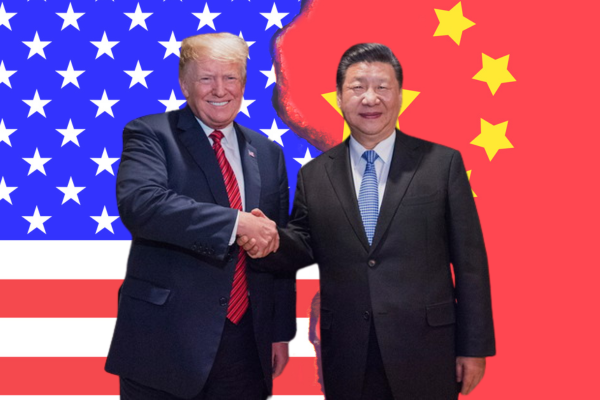
Fresh tensions surfaced around the fledgling US–Iran peace agreement after President Donald Trump said Tehran had agreed to allow nuclear inspections "into infinity," a claim swiftly rejected by Iranian officials. The conflicting statements exposed growing differences over several key elements of the framework deal signed last week, including nuclear oversight, financial incentives, access through the Strait of Hormuz and the relationship between the agreement and Israel’s ongoing conflict in Lebanon. Despite the disagreements, Trump maintained that negotiations were progressing well and that both sides remained engaged in the diplomatic process.
Political pressure is also building in Washington. The US Senate voted 50-48 in favour of legislation directing Trump to halt military action against Iran, marking a significant bipartisan rebuke of the administration’s handling of the conflict. The vote highlights growing concern within Congress over the costs and risks of continued military involvement, even as negotiators work toward a permanent settlement. Separately, the US eased travel restrictions on Iran’s World Cup squad, a small but symbolic gesture suggesting channels of engagement remain open despite the diplomatic friction.
Data Spotlight
The S&P Global US Manufacturing PMI rose to 55.7 in June from 55.1 in May, its highest since May 2022, as production and new orders surged amid client front-running ahead of further West Asia supply disruptions. Employment, however, fell sharply, the steepest drop since May 2020, as firms looked to cut costs.
The US Composite PMI climbed to 52.2 in June from 51.5 in May, the sharpest pace of private-sector growth since January, supported by the fastest manufacturing output expansion in six years and a modest pickup in services activity partly linked to the FIFA World Cup. Employment fell for a second consecutive month even as supply chain delays continued to drive price pressures.
The US Services PMI edged up to 51.3 in June from 50.7 in May, with firms citing high prices, elevated interest rates and weak confidence as constraints on growth. Input cost inflation hit a six-month high and selling price inflation reached an 11-month high, driven by West Asia shipping disruptions and tariffs, while business sentiment remained well below its long-run average.
Takeaway: US private sector activity picked up in June, led by front-running manufacturing demand ahead of West Asia disruptions. However, falling employment, intensifying price pressures and subdued business confidence point to a fragile growth outlook amid persistent inflation and trade uncertainty.
WHAT HAPPENED OVERNIGHT
- US stocks fall to one-week lows as chip stocks tumble on AI spending concerns
- The Dow slipped 0.09%, S&P 500 lost 1.44%, and Nasdaq dropped 2.21% as semiconductor stocks bore the brunt of the selloff.
- The Philadelphia Semiconductor Index tumbled 7.9% and the S&P 500 tech sector fell 3.7%, with Intel, Marvell, and AMD losing between 5.8% and 9.4%.
- Micron and SanDisk, among the S&P 500's best performers this year, both fell 13% ahead of Micron's earnings on Wednesday.
- Nvidia dropped 4.1% as investors questioned the returns on debt-funded AI infrastructure spending by hyperscalers.
- The VIX climbed 2.23 points to 19.52, hitting an over-one-week high, as risk sentiment deteriorated.
- Traders are now pricing in two Fed rate hikes by December, up from one just two weeks ago, as Warsh's hawkish stance reshapes rate expectations.
- Consumer staples led sector gainers with a 1.8% rise as investors rotated out of richly valued tech stocks.
- The US Senate voted to halt military action against Iran, though the impact on ongoing peace negotiations remains unclear.
- Thursday's PCE data, the Fed's preferred inflation gauge, is the next key focus for markets.
- The Dow slipped 0.09%, S&P 500 lost 1.44%, and Nasdaq dropped 2.21% as semiconductor stocks bore the brunt of the selloff.
- US Treasury yields dip as Iran deal progress and tech selloff boost bond demand
- The 10-year yield fell to 4.48% as signs of a durable US-Iran resolution and a flight to safety from the tech selloff supported bonds.
- The US issued a 60-day license allowing Iran to sell oil on international markets, contributing to further oil price declines and modest inflation relief.
- Despite easing energy prices, inflation remains elevated, keeping rate hike expectations firmly in place.
- Markets now price a 68% probability of a Fed hike in September, up sharply from 29% last week, following Warsh's hawkish tone.
- The 10-year yield fell to 4.48% as signs of a durable US-Iran resolution and a flight to safety from the tech selloff supported bonds.
- Dollar extends winning streak to four sessions, hitting highest since April 2024
- The dollar index rose to 101.3, its highest since April last year, as Fed rate hike bets and a tech-driven flight to safety boosted the greenback.
- Markets now price a 68% probability of a September Fed hike following Warsh's hawkish stance.
- Stronger-than-expected flash S&P Global PMI data added to dollar support, pointing to resilient US economic activity in June.
- Thursday's PCE inflation report is the next key focus for clues on the rate path ahead.
- The dollar posted its strongest gains against the Australian dollar and the euro.
- The dollar index rose to 101.3, its highest since April last year, as Fed rate hike bets and a tech-driven flight to safety boosted the greenback.
- Oil settles 1% lower as Hormuz traffic picks up and Iran sanctions waiver takes effect
- Brent crude settled at $77.08 per barrel, down 1.1%, and WTI at $73.21, down 0.9%, with both benchmarks touching near four-month lows during the session.
- Prices have now fallen 4% over two sessions following the US granting Iran a 60-day sanctions waiver and a reported lull in Lebanon hostilities.
- Oman and Iran agreed to continue talks on administering Hormuz navigation, while Rubio said Iran would not be permitted to charge tolls under any final deal.
- Three stranded supertankers passed through the strait on Tuesday, with Iran allowing a limited number of vessels through daily under Revolutionary Guards Navy coordination.
- Trump said 19 million barrels of oil flowed out of the strait on Monday, pointing to falling prices as evidence of deal progress.
- Ship owners remain cautious over mines, damaged ports, debris, and congestion, with analysts warning that a full traffic ramp-up faces significant obstacles.
- Iraq raised southern oilfield output to 2.1 million bpd as more tankers queued at Gulf export terminals, though Saudi exports fell to a record low for a second straight month in April.
- Historically low US SPR levels, now at their lowest since June 1983, are expected to provide a structural floor under prices in the near term.
- Brent crude settled at $77.08 per barrel, down 1.1%, and WTI at $73.21, down 0.9%, with both benchmarks touching near four-month lows during the session.
Day’s Ledger*
Economic Data
- German June Ifo Business Climate Index
- US May New Home Sales Data
- US weekly Cushing Crude Oil Inventories Data
- RBI weekly T-bills Auction
Corporate Actions
- Equitas Small Finance Bank to consider fund raising plans
- Finkurve Financial Services to consider fund raising plans
- OnMobile Global to consider fund raising plans
Policy
- German Buba President Nagel Speaks
- Bank of Canada Senior Deputy Governor Rogers Speaks
- German Buba Balz Speaks
- Bank of England MPC Member Pill Speaks
Tickers to Watch
- INFOSYS expanded its multi-year partnership with GlobalFoundries to deliver AI-led managed services across the semiconductor maker’s enterprise IT operations.
- INDIAN RAILWAY FINANCE CORP (IRFC) will see the government divest up to a 2% stake through an OFS on June 24-25, comprising a base offer of 1% and a 1% greenshoe option, with a floor price of ₹91 per share.
- HONASA CONSUMER acquired a 58% stake in Fluence Pharma for an enterprise value of ₹1.35 billion, marking its entry into the nutraceuticals segment, and incorporated a new subsidiary, Honasa Health.
- RASHI PERIPHERALS signed definitive agreements to acquire a 67% stake in VDA Infosolutions for ₹3.69 billion, with the remaining 33% to be acquired in phases by August 2029, while also approving a QIP fund raise of up to ₹5 billion.
- SIS said its board will meet on June 29 to consider a proposal for a share buyback.
- HPCL announced commercial operations at the HPCL Rajasthan Refinery from June 22, marking a major milestone in its refining and petrochemicals expansion.
- NLC INDIA signed an MoU with Indian Oil Corp to establish a joint venture for developing large-scale renewable energy projects in Tamil Nadu.
Must Read
- Alan Greenspan (1926–2026): The Godfather of the Modern Bubble
- Warsh and Greenspan: The Maestro’s Playbook for the AI Age
- India-US BTA: Negotiating in the Shadow of a Collapsing Bargain
- The Rupee Is Asking Questions GDP Cannot Answer
- RBI’s Capital Flows Strategy Faces Risks in a Rising Rate World
- The Right to Gravy and Entitlement
- Hormuz relief may not ease the economic toll that’s already ‘baked in,’ analysts warn
- Brexit 10 years on: How the UK has changed, in charts
(*Compiled from various media sources)
See you tomorrow with another edition of The Morning Edge.
Have a great trading day
A weak start to the monsoon does not necessarily determine how the season will end.
But it does raise an important economic question.
With reservoirs depleted, kharif sowing off to a slow start, and El Niño expected to strengthen, the bigger concern may not be agricultural output alone—it may be food inflation.
History suggests that deficient rainfall tends to push prices up far more sharply than surplus rainfall pulls them down.
If the monsoon underperforms, could the real test be not how much rain falls, but how quickly the shortfall shows up in food prices?
More From BasisPoint