.png)

When Private Credit Becomes India’s Financial Morphine
Private credit is emerging as India’s fast-growing financial instrument at a time when global equity capital is cautious, and exits are under sharper scrutiny.


Dr. Srinath Sridharan is a Corporate Advisor & Independent Director on Corporate Boards. He is the author of ‘Family and Dhanda’.
January 22, 2026 at 7:52 AM IST
Private credit is the newest financial morphine circulating through India’s financial and corporate markets. It offers immediate relief where traditional lending hesitates, dulls the pain of credit scarcity, and arrives wrapped in the language of sophistication and flexibility. For borrowers constrained by bank balance sheets and investors seeking yield with predictability, its appeal is undeniable. Yet morphine is effective precisely because it suppresses pain signals, and when overused, it delays diagnosis rather than delivering a cure.
The rapid rise of private credit is not a failure of policy. It is the consequence of deliberate choices. After a bruising credit cycle, regulators tightened prudential norms, strengthened insolvency enforcement, and forced discipline into balance sheets that had grown complacent. Banks and non-bank lenders became safer, but also more selective. Credit demand did not vanish. It migrated. What could not pass through regulated channels found expression in alternative ones.
Credit itself predates every modern institution now tasked with supervising it, being the second-oldest business. Long before sovereigns, guilds, banks and regulators, human societies relied on deferred exchange and trust extended across time. Clay tablets from ancient Mesopotamia recorded loans of grain and silver. Medieval merchants financed trade through personal credit long before formal banking emerged. Credit has always adapted faster than regulation, and history suggests it always will.
India’s private credit expansion belongs to that lineage. What distinguishes this phase is not novelty, but velocity. Alternative Investment Funds and private debt platforms have grown rapidly by filling gaps left by traditional lenders. Mid-sized enterprises, promoter-led groups and firms with uneven cash flows increasingly turn to private credit not by preference but by necessity. This is financial deepening, but it is also risk relocation.
The Rise
Private credit offers an alternative. It promises speed, structuring flexibility and pricing that reflects borrower-specific risk rather than regulatory averages. For investors, it offers returns that appear insulated from public market volatility. Yet insulation should not be mistaken for immunity. Most private credit borrowers are smaller, more leveraged and more sensitive to rate movements. Loans are predominantly floating rate, which means stress can compound quickly when conditions tighten.
Global institutions have begun to warn against complacency. The International Monetary Fund has highlighted the opacity of private credit markets, their limited disclosure, and their lack of stress testing across full cycles. India’s financial system remains resilient, but opacity is precisely what converts isolated risk into systemic surprise.
Competition from other asset classes adds another layer. As equity markets revive and debt mutual funds regain traction, private credit managers face pressure to protect yields. In benign cycles, this appears manageable. In downturns, it can encourage riskier underwriting and thinner margins of safety.
What has changed in the current cycle is not merely the availability of credit, but the tightening of equity discipline. As exits become harder, slower and more scrutinised, leverage begins to look like a substitute for patience. That substitution carries consequences.
Companies that might otherwise absorb volatility through equity dilution instead accumulate fixed obligations. Over time, this hardens balance sheets and narrows the room for adjustment. What appears flexible in good times becomes brittle when cash flows falter.
Regulatory Gap
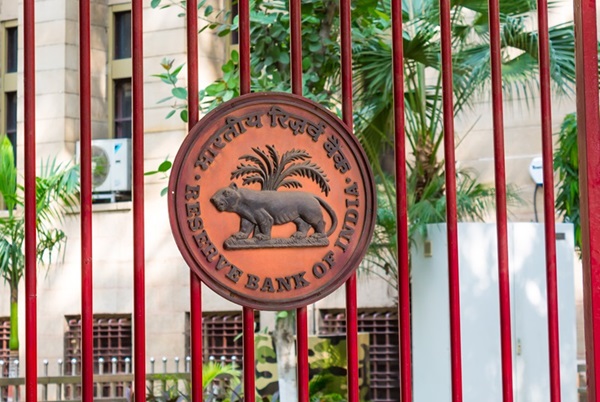
At the core of this moment lies a regulatory asymmetry that can no longer be ignored. The distinction between private credit AIFs and RBI-regulated lenders reflects different regulatory philosophies. SEBI is a disclosure-driven regulator that relies on transparency, governance and informed investor choice. The RBI is a prudential regulator charged with preserving systemic stability through capital buffers, exposure limits and intrusive supervision.
Private credit AIFs operate within SEBI’s lighter framework. Banks and NBFCs operate under the RBI’s conservative perimeter. This difference does not automatically imply regulatory arbitrage, but it does allow significant credit activity to accumulate outside prudential oversight. At a small scale, this is manageable. At a large scale, it becomes consequential.
The answer is not to suppress private credit. It is to recognise thresholds. As the ecosystem grows, inter-regulatory coordination becomes essential. Shared reporting standards, harmonised stress testing and clearer visibility into leverage and interconnectedness would preserve innovation while reducing blind spots. Flexibility and stability are not opposing goals. They require institutional alignment.
Private credit will play a role in India’s growth. The challenge is to ensure that it complements, rather than substitutes for, structural strength. Financial morphine relieves pain, but it cannot rebuild muscle.
India’s financial stability has been hard-won through discipline, not indulgence. As credit migrates beyond traditional balance sheets, the task is not to chase it back, but to ensure that risk does not become invisible in the process. That is how durable financial systems endure, not by suppressing innovation, but by refusing to be anaesthetised by it.
More From BasisPoint