.png)


Datametricx is a veteran journalist tallying the macro game, keeping score of the numbers that shape India’s economy and policy.
September 12, 2026 at 12:26 PM IST
Growth in automobile retail sales remained robust in August, although it moderated sharply from a month earlier. The slowdown came despite a low base in August last year, as buyers had deferred purchases awaiting goods and services tax rate cuts.
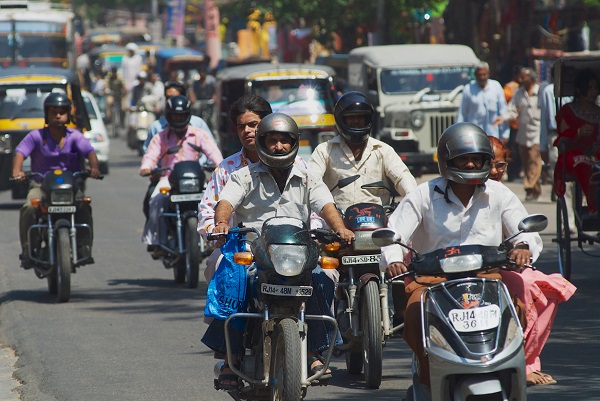
Total automobile sales rose 17.5% year-on-year to 2.42 million units in August, slowing from 25.9% growth in July.
Sequentially, total automobile sales declined 6.5% due to a lull in monsoon activity and the festival calendar. Ganesh Chaturthi falls in September this year, while Onam-related buying spilled over into September.
The key development of the month was a shift in consumer preference. For the first time, combined sales of passenger vehicles running on alternative powertrains — CNG, hybrid and electric — overtook petrol, accounting for 42.0% of sales, compared with 40.9% for petrol. A little over a year ago, petrol had a lead of nearly 11 percentage points over alternative powertrains; that lead has now been erased.
Two-wheeler sales growth fell to 19.7% from 28.3% a month earlier, while passenger vehicle sales growth slowed to 16.1% from 19.1%. Retail sales of two-wheelers and passenger vehicles in August were 1.71 million units and 402,398 units, respectively. Commercial vehicle sales slowed to 14.5% from 24.0%. In absolute terms, commercial vehicle sales were 90,769 units in August.
Rural passenger vehicle sales rose 25.0%, against 10.9% in urban areas, suggesting that rural demand is decoupling from the monsoon. At the end of August, average southwest monsoon rainfall across the country was 86% of the long-period average, indicating a 14% deficiency.
Tractor sales slowed sharply in August as monsoon rainfall remained erratic. Growth in domestic tractor sales fell to a 16-month low of 7.7% year-on-year in August from 20.5% in July. This is the first time in 13 months that the year-on-year growth in domestic sales has fallen to single digits. The tractor industry, among the biggest beneficiaries of the GST rate cuts introduced in September 2025, has recorded double-digit growth in domestic sales from August 2025 to July 2026. Domestic tractor sales in August were 69,250 units compared with 77,482 units in July. Total sales, including exports, rose 8.3% to 79,250 units.
Notwithstanding the slowdown, tractor production grew 13.6% in August, compared with 6.7% a month earlier, suggesting manufacturers expect sales to improve in the coming months. Total production at 115,808 units in August was the second highest on record.
Open-ended mutual fund schemes saw net inflows fall to ₹425 billion in August from ₹2.366 trillion in July, driven by a sharp decline in inflows into debt schemes. Open-ended mutual fund schemes had seen net inflows of ₹525 billion in August last year. Debt schemes saw an outflow of ₹81 billion in August compared with inflows of ₹1.875 trillion a month earlier.
Inflows into equity schemes increased to ₹293 billion in August from ₹247 billion a month earlier. Inflows into equity schemes have remained positive for more than five years. Flows into gold exchange-traded funds increased to ₹26 billion in August from ₹16 billion a month earlier.
Systematic investment plan inflows remained robust despite stock market volatility. SIP inflows rose to a record ₹323 billion in August, up from ₹320 billion a month earlier. The mutual fund industry’s net assets under management were at ₹87.08 trillion at the end of August, up from ₹85.76 trillion a month earlier.
New business premiums of life insurers rose 33.1% year-on-year to ₹412 billion in August, led by a sharp rise in premium income of state-owned Life Insurance Corporation of India. LIC’s premium income rose 45.3% to ₹233 billion, while that of private life insurers increased 20.0% to ₹179 billion. In April-August, new business premiums grew 20.4% to ₹1.968 trillion, with private insurers’ premium income rising 22.3% and LIC's premium income increasing 19.1%. LIC sold 5.81 million policies in April-August compared with 3.68 million by private insurers.
Petroleum product consumption fell 2.8% year-on-year to 18.61 million tonnes in August, primarily on account of a sharp decline in liquefied petroleum gas and petroleum coke consumption. Barring July, petroleum product consumption has fallen year-on-year since the war began in West Asia. Consumption of LPG declined 17.2% to 2.35 million tonnes in August, while sales of petroleum coke declined 28.6% to 1.60 million tonnes. However, petrol and diesel consumption continued to grow at a robust pace. Consumption of petrol rose 8.2% to 3.84 million tonnes, while diesel increased 6.8% to 7.02 million tonnes.
India’s foreign exchange reserves rose to a record $785.71 billion as of September 4 on the back of strong inflows into the special schemes announced by the Reserve Bank of India to attract foreign exchange. Through August 31, banks had raised $136.38 billion through the special swap facility.
Foreign exchange reserves rose by $44.90 billion from a week earlier, led by a $47.50 billion increase in foreign currency assets to $648.17 billion. This is the highest week-on-week increase on record in both foreign exchange reserves and foreign currency assets. Gold reserves declined by $2.59 billion to $113.82 billion due to a fall in gold prices.
Reservoir storage increased marginally from a week ago, but the gaps with last year’s level and the 10-year average increased. As of September 10, live storage in 178 reservoirs increased by 0.68 billion cubic metres from a week earlier, compared with an increase of 4.25 billion cubic metres in the corresponding week last year and an average increase of 6.04 billion cubic metres during the week over the previous 10 years. Live storage rose to 130.55 billion cubic metres, accounting for 71% of total reservoir capacity. Storage was 20% below last year’s level and 7% below the 10-year average. Reservoirs are typically replenished during the southwest monsoon.
India’s southwest monsoon continued to be deficient. As of September 11, cumulative rainfall across the country was 655.6 millimetres, or 85% of the long-period average. Among the four regions, rainfall was 72% of the long-period average over the South Peninsula, 75% over East and Northeast India, 91% over Northwest India, and 93% over Central India. Rainfall was 65% of the long-period average in June, 101% in July, and 84% in August and 72% of the long-period average so far in September.
Coming up
- September 14: Consumer Price Index for August
- September 14: Wholesale Price Index for August
- September 15: Balance of Payments for July
Tailpiece
Of the 770-odd districts in the country, the top 10 districts by number of unincorporated establishments accounted for about one-third of the sector’s total establishments, workforce and gross value added.
More From BasisPoint