.png)

Venezuela, Power, and Precedent in the Western Hemisphere
India is expected to stick to cautious neutrality, wary of interventionist precedents but invested in stability, international law and predictable energy markets.
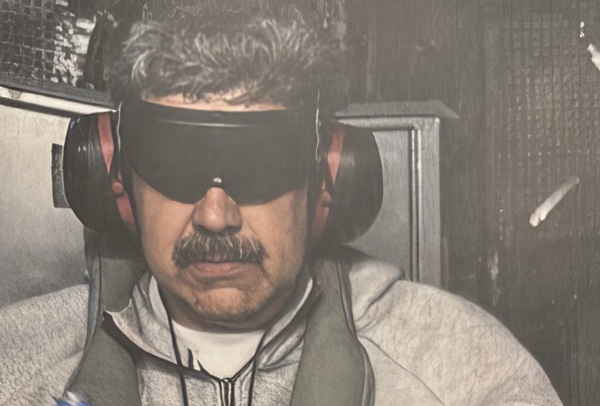

Lt Gen Syed Ata Hasnain is Governor, the State of Bihar, and Former Commander of India's Srinagar-based Chinar Corps.
January 4, 2026 at 5:04 AM IST
Recent developments involving Venezuela have once again drawn attention to the long and complicated relationship between the US and political change in Latin America. While details remain fluid and official confirmation limited, the broader context in which Washington views Venezuela is neither new nor episodic. It is rooted in history, geography, security perceptions, and the enduring sensitivities of great powers regarding influence close to their borders.
For decades, the US has remained deeply uncomfortable with strong leftist or anti-American governments in the Western Hemisphere. This discomfort has translated, at various points, into overt military intervention, covert political action, economic pressure, and sustained diplomatic isolation. From Chile in 1973, to Grenada in 1983, and Panama in 1989, the pattern is well documented. These interventions differed in scale and justification, but they were unified by one central logic; the US has historically treated the Western Hemisphere as a core strategic space where hostile political alignment is unacceptable.
Venezuela’s political trajectory since the late 1990s must be understood against this backdrop. Under Hugo Chávez, and later Nicolás Maduro, the country adopted an explicitly anti-US posture, combining leftist ideological positioning with a narrative of resistance to American influence in the Western Hemisphere. Chávez’s rise coincided with a broader resurgence of left-leaning governments in Latin America, which the US viewed with caution, particularly when accompanied by nationalisation of US-linked assets and sustained political hostility. Over time, concerns also grew over Venezuela’s role in narcotics trafficking, organised crime and the erosion of institutional controls, adding a security dimension to what had initially been an ideological disagreement.
At the same time, Venezuela’s vast oil wealth—located uncomfortably close to the US mainland—introduced a strategic concern that went beyond politics. The prospect of such resources falling under the influence of adversarial powers was never viewed lightly by successive US administrations. Yet for a considerable period, the US chose to contain rather than confront this defiance directly. Economic sanctions, diplomatic pressure and regional isolation were preferred over forceful intervention.
That restraint was not a sign of indifference. It reflected a calculation that Venezuela’s internal weaknesses—economic mismanagement, institutional decay and political polarisation—would limit its ability to challenge US interests in a sustained way. Over time, however, those assumptions came under strain. Venezuela’s leadership compensated for domestic fragility by deepening external relationships, particularly with Russia, China, Iran and Cuba. This externalisation of regime survival altered the strategic picture and increasingly led Washington to treat Venezuela as part of its broader “rogue state” framework.
From a geostrategic perspective, proximity matters. The Caribbean basin and northern South America lie uncomfortably close to the US mainland. For American policymakers, instability in this region has always carried implications far beyond ideology. Concerns over mass migration, narcotics trafficking, illegal arms flows and organised crime intersect directly with domestic political pressures inside the US. In addition, the possibility, however remote, of hostile military infrastructure emerging close to US territory has historically been treated as a red line. The construction of long-range airfields, port facilities capable of supporting foreign naval assets, or intelligence and surveillance infrastructure tied to rival powers inevitably draws scrutiny.
In this sense, Venezuela occupies a strategic space similar to that which Eastern Europe occupies for Russia. Moscow’s actions in Ukraine were driven in part by its opposition to NATO expansion into what it considers its near abroad. The United States has long articulated a comparable logic for the Western Hemisphere, even if it frames that logic differently. Both powers seek to prevent adversarial military or political influence from consolidating near their borders. The similarity is structural rather than ideological.
This comparison inevitably raises uncomfortable questions about the so-called rules-based international order. The phrase, frequently used in Western diplomatic discourse, suggests a system governed by shared norms, sovereignty and restraint. Yet history demonstrates that the application of these rules has rarely been uniform. Where core national interests of major powers are involved, exceptions are often made. The US interventions in Afghanistan and Iraq, alongside sustained pressure on Iran, are frequently cited examples. Venezuela now appears to sit within this same category of strategic exception.
This inconsistency complicates Washington’s moral authority when opposing Chinese actions in the South China Sea or condemning Russian military intervention in Ukraine. Beijing and Moscow have been quick to point out that international norms are often enforced selectively. While such arguments do not legitimise their actions, they do expose the conditional nature of global rule-making. Increasingly, international coexistence appears governed less by universal rules than by power-weighted interpretations of them.
At present, there remains no clarity on the future political administration of Venezuela. Leadership continuity, transition arrangements, or external oversight mechanisms, if any, have not been publicly articulated. What is clear is that Venezuela’s population, estimated at around 27 million, faces continuing uncertainty. Years of economic collapse have already driven mass emigration, straining neighbouring states and regional systems. Any further destabilisation risks worsening humanitarian conditions.
This places a measure of responsibility on the international community, particularly those shaping events on the ground. Economic recovery, restoration of basic services and stabilisation of governance will be essential if Venezuela is to avoid prolonged disorder. Past interventions in the region suggest that regime disruption without sustained post-crisis engagement often produces instability rather than resolution.
There is also no guarantee that Venezuela has accepted a new strategic reality. The country has a long history of politicised armed forces and irregular mobilisation. If alternative leadership emerges, whether ideological, nationalist or externally supported, the conditions for resistance or insurgency could develop. Latin American history offers numerous examples of prolonged instability following external intervention, even when initial objectives were achieved quickly.
Against this backdrop, India’s interests merit careful consideration. India has traditionally maintained a pragmatic relationship with Venezuela, focused largely on energy cooperation. Indian public sector companies invested in Venezuelan oil projects during periods of high production, and Venezuela served as a diversification option for India’s energy imports. Politically, New Delhi avoided ideological alignment and refrained from interference in Venezuela’s internal affairs.
As Venezuela’s crisis deepened and sanctions intensified, India’s engagement naturally declined. Payment mechanisms, insurance constraints and logistical risks reduced commercial viability. India adjusted quietly, without public confrontation or endorsement of regime narratives. This approach remains instructive.
Going forward, India is likely to maintain a position of cautious neutrality. It has little interest in endorsing interventionist precedents, yet it also values stability, international law and predictable energy markets. India’s response will likely emphasise humanitarian concerns, support for peaceful transition, and respect for sovereignty, while avoiding alignment with any particular power bloc.
For now, Venezuela stands at an uncertain juncture. The full implications of recent developments will become clearer in the coming days and weeks. What can already be said is that Venezuela has once again become a stage on which broader questions of power, precedent and influence are being played out. Understanding those dynamics is essential before drawing conclusions about outcomes, responsibility or legitimacy.
More From BasisPoint