.png)

Unlocking India's Idle Gold: How to Turn Household Wealth into Productive Capital
Indians love their gold, but the current account deficit does not. It is time for policymakers to look beyond asking Indians to postpone gold purchases and actively put this dormant wealth to active use.


Dr K. S Sujit, Professor at the School of Business and Management, Christ University, Bangalore
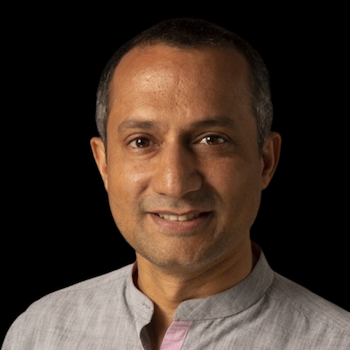
Sachin Pande is an Associate Professor of Marketing at Christ University with more than 27 years of extensive global leadership experience in the consumer industry across India & Europe.
July 31, 2026 at 4:30 AM IST
Indian households are estimated to hold more than 25,000 tonnes of gold, worth well over $3 trillion at current market prices, making them among the largest private repositories of the precious metal in the world. Yet, much of this immense wealth remains economically idle, locked away in homes, bank lockers, and family vaults. The real policy question, therefore, is not how to reduce India's appetite for gold, but how to transform this dormant asset into productive national capital. Mobilising even a small fraction of this dormant wealth could reduce import dependence, deepen domestic capital markets, and provide a new source of long-term investment for India's development.
This question has acquired renewed urgency as geopolitical tensions in West Asia continue to disrupt global trade routes and energy markets. India once again finds itself confronting the familiar vulnerability of its dependence on imports. While crude oil remains the immediate concern, gold has quietly emerged as another strategic challenge. The Prime Minister's recent appeal urging citizens to postpone gold purchases sparked widespread discussion and reflected a broader macroeconomic concern: India's growing import bill, and the pressure it places on foreign exchange reserves.
Gold occupies a unique place in India's economic and social landscape. It is woven into family traditions, weddings, festivals and religious celebrations, while also serving as a trusted store of wealth across generations. This deep-rooted relationship is a source of economic strength rather than a weakness. The challenge for policymakers, therefore, is not to change people's affinity for gold, but to harness its immense economic potential by creating innovative markets and financial instruments that put dormant gold to productive use.
The policy objective should shift from discouraging ownership to creating innovative financial markets and policy instruments that unlock the economic value of dormant gold.
Bringing Dormant Gold into the Formal Economy
Mobilising dormant household gold requires policies that encourage voluntary participation rather than coercion. The objective should be to make it attractive for households to bring their idle gold into the formal financial system through incentives, simplified procedures, and innovative financial products. A combination of regulatory reforms and market-based instruments can improve the circulation of gold, without disrupting long-standing cultural preferences.
A practical starting point would be a redesigned Gold Bond Conversion Scheme. Instead of encouraging households to purchase fresh Sovereign Gold Bonds, the Government and the RBI could allow individuals to voluntarily convert their existing physical gold into RBI-backed financial instruments. Simplified procedures, attractive tax treatment, and flexibility in redemption could encourage wider participation.
As a complementary measure, policymakers could also consider a time-bound Gold Amnesty Scheme. A significant quantity of household gold remains outside the formal financial system, and existing disclosure provisions are often constrained by quantity limits and tax considerations. A carefully designed amnesty, implemented for a limited period with appropriate safeguards, transparency, and legal certainty, could encourage voluntary declaration and bring dormant gold into the formal economy. Such a scheme should be viewed as an exceptional policy intervention, rather than a recurring fiscal measure, thereby minimising concerns regarding misuse or moral hazard.
Making Gold Financially Productive
India's challenge is not a shortage of gold, but the lack of financial products that enable households to derive economic value from their existing holdings without sacrificing ownership. Financial innovation should, therefore, focus on transforming dormant gold from a passive store of wealth into an income-generating and investment-supporting asset.
One innovative option is to recognise gold and silver as eligible assets under Systematic Withdrawal Plans (SWPs). Many retirees possess substantial gold holdings but lack efficient mechanisms to convert these assets into a steady stream of income without distress sales. Allowing regulated financial institutions to design SWP products backed by precious metals would provide households with greater financial flexibility while gradually bringing dormant gold back into productive circulation.
Another promising initiative could be the creation of Gold-backed Education, Healthcare and Retirement Accounts. Households could temporarily pledge certified gold holdings as collateral for higher education, medical expenses or retirement planning, enabling families to meet major financial commitments while retaining long-term ownership of treasured family assets. Such products would convert idle wealth into a source of financial security without undermining the cultural significance attached to gold.
This concept could be extended further through regulated investment platforms that allow households to allocate a portion of their gold holdings to start-up funds, infrastructure bonds and SME investment vehicles. By linking dormant household wealth with productive investment opportunities, these instruments would support entrepreneurship, infrastructure development and economic growth while reducing reliance on fresh gold imports. The Reserve Bank of India, SEBI, banks, mutual funds and fintech firms will need to work together to develop these innovative financial products under an appropriate regulatory framework.
Building Smarter Gold Markets
Mobilising idle household gold requires efficient markets that connect households possessing dormant assets with businesses that require physical gold. Rather than relying exclusively on government schemes, India should develop a deeper and more competitive gold ecosystem involving the RBI, commercial banks, authorised bullion traders and financial institutions.
A promising market-based innovation could be an RBI-regulated Gold Leasing Marketplace. Instead of selling family jewellery, households could deposit certified gold through authorised intermediaries and earn periodic lease income while retaining ownership. Jewellers, refiners and bullion traders would, in turn, gain access to reliable domestic supplies of gold, reducing their dependence on imported bullion. Similar leasing mechanisms already exist in international commodity markets and demonstrate how dormant assets can be transformed into productive economic resources.
Alongside this, the existing Gold Monetisation Scheme should be expanded through a wider network of participating banks and authorised bullion traders, simplified procedures and greater public awareness. Improving accessibility and convenience would encourage more households to participate voluntarily.
Private-sector innovation should complement these public initiatives. Fintech companies, banks and jewellery retailers could collaborate to develop regulated digital gold products, accumulation plans and flexible investment platforms that make gold ownership more productive while preserving consumer choice.
Together, these initiatives can help transform India's gold market from one driven primarily by imports to one powered increasingly by the productive circulation of existing domestic gold.
The Next Frontier: A Circular Gold Economy
While immediate policy interventions can help mobilise dormant household gold, the larger opportunity lies in creating a National Gold Circular Economy Strategy. Rather than relying predominantly on imported bullion, India should promote jewellery recycling hubs, certified recycling exchanges, reverse logistics networks and urban mining initiatives that recover precious metals from discarded electronic waste and industrial sources. A well-designed circular gold ecosystem would reduce import dependence, improve resource efficiency, strengthen domestic refining capabilities and create new opportunities for businesses engaged in recycling, logistics and financial services.
Alongside these initiatives, India should invest more aggressively in domestic exploration, refining and recycling infrastructure. Although environmental safeguards must remain paramount, responsible development of domestic resources can complement efforts to mobilise existing household gold and enhance the country's long-term resource security.
Ultimately, India does not need its citizens to stop valuing gold. Gold will continue to occupy a unique place in the country's social, cultural and financial landscape. The real policy challenge is not to suppress demand, but to ensure that the vast stock of idle household gold contributes more actively to national development. Through financial innovation, efficient markets and a robust circular economy, dormant household wealth can become a powerful source of productive capital for investment, entrepreneurship and infrastructure.
The time has come for the Government, the RBI, financial institutions, bullion traders and the industry to jointly develop a national roadmap for mobilising household gold. A broad national consultation on innovative and market-based solutions would be an appropriate first step. India's largest gold reserve is not hidden underground; it already rests in millions of homes. The challenge now is to unlock that wealth responsibly and transform it into an enduring source of economic resilience and sustainable growth.
* The views expressed are personal.
More From BasisPoint