.png)

Yield Scribe is a bond trader with a macro lens and a habit of writing between trades. He follows cycles, rates, and the long arc of monetary intent.
July 20, 2026 at 2:48 AM IST
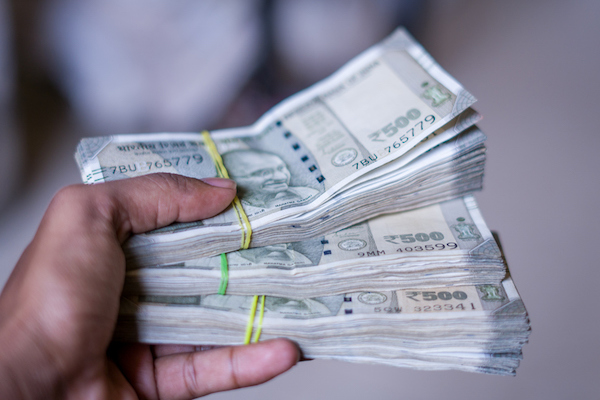
The rupee’s performance looks like a standard macro story. After the Reserve Bank of India’s June policy announcements, the rupee rose from about 95.75 per dollar to 94.15 as traders anticipated foreign-currency inflows. Some forecasts pointed to 92-93 by year-end. Instead, the rupee has fallen to around 96.30, close to its 96.96 record low.
Renewed US-Iran tensions have lifted crude oil, a negative for an oil-importing economy. The dollar has strengthened, while the Federal Reserve’s hawkish stance has kept US yields elevated. Yet these forces may not explain everything. The rupee’s decline has also coincided with a conspicuous absence of RBI resistance.
That absence could reflect deliberate tolerance and some shrewd calculus.
Strategic Tolerance
The RBI has offered banks a zero-cost swap linked to Foreign Currency Non-Resident, or FCNR, deposits, alongside partial hedging support for foreign-currency borrowings, including external commercial borrowings. The aim is to attract dollars and lower the cost of bringing them into India.
But the subsidised arrangements may leave the RBI’s swap book with exposure resembling a short position in dollar/rupee. Put simply, the central bank may commit to returning dollars later at a predetermined price.
A weaker rupee at maturity could raise the economic cost of that commitment.
This creates a possible incentive.
In this way, the RBI may be trying to reduce the eventual subsidy bill. By allowing the rupee to remain weak while the swaps are booked, the RBI could secure a more favourable starting exchange rate. If the rupee later recovers, its position improves; if it weakens further, the loss may be smaller than it would have been had the contracts been written when the currency was stronger.
A simple illustration: Assume the RBI effectively books an exposure at ₹96.30 per dollar rather than ₹95.00. If the rupee is at ₹98.00 at maturity, the adverse gap is ₹1.70 per dollar rather than ₹3.00—a saving of ₹1.30 per dollar. If the rupee instead strengthens to ₹94.00, the higher starting level provides a ₹2.30 cushion rather than ₹1.00. Actual results would also depend on forward premiums, tenure, sterilisation costs and reserve income.
A base case of about $50 billion in FCNR deposits would be substantial. Flows linked to subsidised hedging for foreign-currency borrowings could add $15 billion to $20 billion by December 31. If these estimates are right, the RBI may have reason to prevent the rupee from appreciating too quickly while exposures accumulate.
This reading helps explain a puzzle.
Foreign portfolio flows in June and July month-to-date are estimated at roughly $3 billion, while market reports suggest around $10 billion has entered through the FCNR window. Such inflows would normally support the rupee. Their limited visible impact on the rupee may suggest the RBI is absorbing dollars or allowing external pressures to dominate.
The real effective exchange rate, cited at 89, also indicates that the rupee is undervalued on a trade-weighted basis. That cannot guarantee appreciation, but it complicates the argument that the move merely corrects an overvalued currency.
September Signal
The 2013 episode offers some, albeit imperfect, precedent. The rupee had remained near 63.8/$1 until the FCNR scheme closed on November 30, 2013, then strengthened towards 60 by March 2014. Crude oil traded broadly between $105 and $110 a barrel, making the subsequent currency move difficult to attribute to oil alone.
Banks mobilised about $26 billion, or 3.2% of system deposits. About $4 billion arrived in September and $5.5 billion in October, while approximately $15 billion came in November. Nearly 60% was collected in the final month.
That history argues against calling the present scheme weak after only a few weeks. The reported $10 billion collected so far may look encouraging or disappointing, but it is too early to map initial collections directly onto the rupee. High global rates and geopolitical risk may delay commitments, with larger flows arriving nearer the deadline.
For foreign investors, current levels could be attractive. A lower rupee rate provides more rupees for each dollar invested and may enhance returns if the currency later appreciates. Indian equities could also diversify portfolios away from a global artificial-intelligence trade whose aggressive growth assumptions are being questioned. Domestic valuations have undergone a two-year time correction, while first-quarter 2026-27 earnings have been firm. July month-to-date equity inflows of about $2 billion may be an early sign of that appeal.
The conclusion is not that the rupee must fall or that the RBI has a fixed target. Rather, its incentives may differ while the FCNR and hedging windows remain active. The central bank could be comfortable with a suppressed rate through September 30, and perhaps with limited appreciation until related support expires on December 31.
The crowded post-announcement bet on rupee strength appears largely unwound, leaving positioning lighter. A decisive break below 95.80 could be the first sign that the RBI’s tolerance is changing. On the upside, 96.95 remains the key boundary.
After the FCNR window closes, the underlying direction should become clearer. An optimistic end-2026 scenario could take the dollar/rupee towards its 200-day moving average near 91.85; a more moderate outcome could point to the 100-day moving average near 94.10. Until then, rupee weakness may be less an accident than a temporary part of the RBI’s balance-sheet game plan.
More From BasisPoint