.png)


Dr Arvind Mayaram is a former Finance Secretary to the Government of India, a senior policy advisor, and teaches public policy. He is also Chairman of the Institute of Development Studies, Jaipur.
June 23, 2026 at 3:37 AM IST
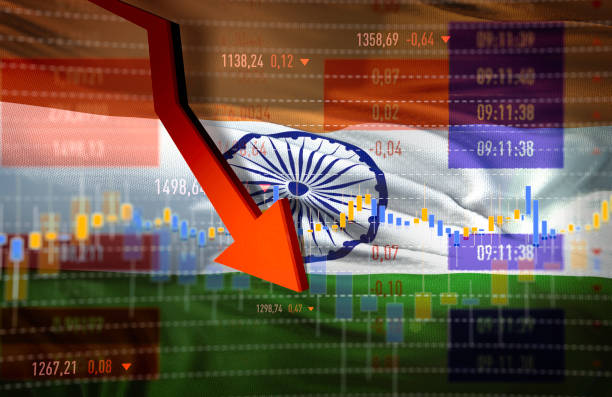
India is today a nearly $4 trillion economy and is expected to become the world's third-largest economy within the next few years. Yet another number deserves attention. In 1993, one US dollar was worth about ₹31. Today it is worth around ₹95.
These two facts tell very different stories about India's economic journey.
Exchange rates are influenced by many factors—oil prices, capital flows, interest rates and global uncertainty. A depreciating currency is not necessarily a sign of economic weakness. But when a country celebrated as the world's fastest-growing major economy sees its currency steadily lose value over long periods, it is worth asking whether we are measuring economic success correctly.
The problem may not be the rupee. The problem may be that India has confused economic scale with economic strength.
For years, public discourse has been dominated by aggregate GDP. Every milestone is celebrated. Crossing $1 trillion, then $2 trillion, then $3 trillion, and now approaching $4 trillion. The prospect of becoming the world's third-largest economy is presented almost as a national destination.
Yet size and strength are not the same thing.
A large population can produce a large GDP, a large market and even a large number of billionaires. It does not automatically produce prosperity.
That is why GDP rankings, by themselves, tell us surprisingly little. For a country of 1.4 billion people, the more revealing measure is whether ordinary citizens are becoming more prosperous.
On that score, the picture is less impressive. India's per capita income is around $3,000. China's exceeds $13,000, and South Korea's is above $35,000. Aggregate GDP may place India among the world's largest economies, but average living standards remain far below those of the countries India increasingly compares itself with.
Economic strength comes from productivity and prosperity, not size alone.
Economic Security
Investors ultimately care about the durability of growth. Economies that rely on broad-based increases in productivity and incomes tend to generate stronger domestic demand, larger pools of savings and greater social stability. Economies where prosperity remains narrowly concentrated often struggle to sustain momentum over long periods. GDP measures how much an economy produces. It does not necessarily measure how secure, productive or prosperous its citizens have become.
The second question GDP cannot answer is whether growth is creating economic security. India adds millions of people to its labour force every year, yet a large share of workers remains in informal employment characterised by low productivity, uncertain incomes and limited social protection. Estimates suggest that more than four-fifths of India's workforce continues to operate outside the formal economy.
Growth without secure and productive employment eventually runs into limits. A nation cannot build a resilient consumer economy when large numbers of citizens remain economically vulnerable.
The third question concerns the distribution of growth. India has undoubtedly created wealth over the past three decades. But income and wealth have also become increasingly concentrated. India today is among the more unequal major economies in the world.
This is not an ideological concern. It is an economic one.
Strong economies are sustained by a broad middle class with rising purchasing power. An excessive concentration of income may boost asset prices and corporate profitability, but it can also weaken consumption, constrain social mobility, and create deeper economic fragilities. GDP measures the size of the pie. It tells us far less about who gets to eat it.
The fourth question is whether India is prepared for the future.
Much has been written about India's demographic dividend. The assumption has been that a young population will automatically translate into economic strength. But demographics are not destiny. A young population becomes an asset only when it is healthy, skilled and productively employed.
That assumption is becoming less certain in the age of artificial intelligence.
Trust, Confidence
India may be the first major economy to experience its demographic dividend in an age of labour-displacing artificial intelligence. Demography alone can no longer guarantee prosperity.
Behind all these questions lies an issue that economists often struggle to quantify but investors instinctively understand: trust.
Currencies are ultimately a measure of confidence. Investors place long-term bets where institutions are predictable, regulations are stable, contracts are enforceable and public data is credible. Economic fundamentals include institutions, no less than inflation rates and fiscal deficits.
When institutions weaken, uncertainty rises. And when uncertainty rises, confidence eventually suffers.
This brings us back to the rupee.
Currencies are not simply reflections of trade balances or interest-rate differentials. They are also assessments of a country's future. Every day, investors, businesses and households make judgments about productivity, competitiveness, social stability and institutional credibility. Exchange rates aggregate those judgments.
The rupee's long-term trajectory may therefore be telling us something that headline GDP figures cannot. It may be signalling that investors are looking beyond growth rates and asking harder questions about prosperity, employment, inequality, productivity and trust.
India will almost certainly become the world's third-largest economy. The question is whether that achievement will be accompanied by rising prosperity, productive employment, stronger institutions and broader economic security.
More From BasisPoint