.png)

Saas, Beti Aur Sensex: Power Beyond Women’s Day
In many homes the money drawer exists, but who actually understands what is inside it? And why are women still missing when the real financial decisions are made?
Kalyani Srinath, a food curator at www.sizzlingtastebuds.com, is a curious learner and a keen observer of life.
March 7, 2026 at 8:52 AM IST
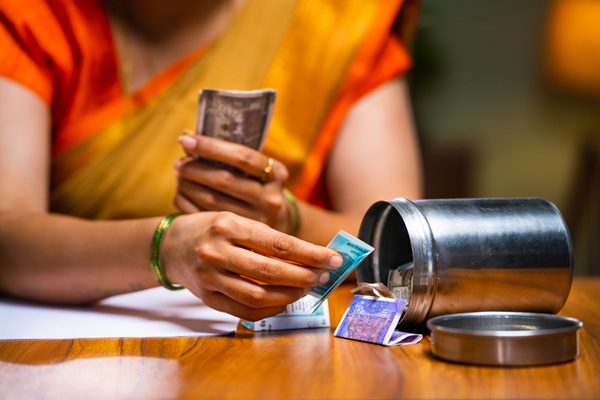
Every Indian household has that one drawer. You know the one—stuffed full of the real secrets of family money. Property papers wrapped in plastic, thick insurance policies, mutual fund statements, old gold loan slips, and even wills that have seen better days. Everyone in the family knows this drawer exists, but hardly anyone actually understands what’s inside. Usually, there’s just one person in charge of all of it: maybe it is the dad who knows his investments, the husband who’s always at the lawyer’s office, or the older brother who chats with the accountant. People call it “efficient”—let the expert handle it.
But really, it’s just another way to keep everyone else out. “Papa will handle it.” “Ask bhaiya, he gets these things.” And just like that, managing the family’s money becomes a one-man show.
But India is changing fast, way faster than anyone expected even a generation ago. In 2026, women are staying in school longer, joining the workforce in bigger numbers, and they’re not just earning—they’re actually contributing real money at home.
And then we have 8th March - International Women’s Day celebrated as freebies, pub crawls, PR events and photo-op moments. Probably throw in an NGO or two.
The gap between the two shows up clearly in financial literacy data. The OECD’s 2026 International Survey of Adult Financial Literacy found that only 37% of Indian women meet minimum financial literacy benchmarks, compared with 48% of men. In other words, even as women increasingly earn and save, their participation in financial decision-making often remains limited.
Still, earning money isn’t the same as knowing how to make it grow—or keep it safe. That’s the catch. That’s the gap nobody talks about.
Take Priya, for example. She is a marketing professional in Mumbai. For years, she split household bills and paid her share of the home loan EMIs. But when her dad landed in the hospital, she was lost. She couldn’t find the insurance details. She did not even know the basic bank account info. “I’d paid the EMI for so long but never seen the actual loan papers,” she told me, her voice still shaky from the whole ordeal. Stories like Priya’s aren’t rare. Middle-class families coast along fine—until something goes wrong. That’s when you discover the hidden personal loans, the extra credit cards, the paperwork nobody else ever saw.
Out in rural areas, things look different but the story is the same. Under the Pradhan Mantri Jan Dhan Yojana, women now account for more than 55% of bank account holders, according to the Department of Financial Services’ PMJDY progress reports.
But access does not always translate into control. But when it comes to land deals, gold loans, or even basic borrowing, the men still run the show.
I remember a village tailor in Maharashtra telling me her gold jewellery was used to secure a family loan during a tough harvest. She only found out about the repayment terms months later, piecing together the details from hushed conversations in the kitchen.
The S&P Global Financial Literacy Survey, conducted by the Global Financial Literacy Excellence Center, has consistently placed financial literacy among Indian women in the 20–25% range for nearly a decade.
These numbers are not abstract statistics buried in policy reports. They show up in how households actually function.
You see it every day. Women run the show when it comes to daily money stuff—stretching every rupee at the grocery store, paying school fees on time, keeping an eye on the electricity bill. But when it’s time for the big decisions—investments, debt, inheritance—the action shifts behind closed doors. Sure, families list out equity funds, FDs, and health plans, but when it’s time to write a will, only the family head is in the room. Daughters end up signing forms during tax season, but rarely get the full picture.
Trouble hits hardest during a crisis. No one knows the family’s debt situation, so risks sneak up. Missing out on investment talks means missing out on long-term growth. Vague nominations set the stage for fights down the road. And if the one person who knows it all falls ill or passes away, the whole system shakes.
The numbers back this up. Only 37% of Indian women meet basic financial literacy benchmarks, compared to 48% of men, according to the OECD’s 2026 survey. The RBI’s index has crept up—53.7 in 2023 from 45.9 in 2020—but women’s share remains stuck around 20-25% in global S&P surveys. Take gold loans: 25 million families rely on them, often using women’s jewellery as collateral, but someone else usually tracks the details. Credit cards and phone-based loans are booming, more women are joining in, but without financial know-how, it is a slippery slope.
Even women in big cities, who run household budgets like pros, hesitate when it comes to investing. Many confuse stocks and bonds or avoid investing altogether because the products seem too complex. So, they handle the spending, but someone else manages the balance sheet.
That is why women need a real financial shift, starting small and personal. It’s about taking charge of your own earnings, saving smart, and building safety nets. It breaks old habits of dependency and makes families stronger. Rural literacy programmes, like those from the ADB, help women escape debt traps and kick off small businesses. Financial inclusion programmes have expanded women’s access to banking dramatically. Under the Pradhan Mantri Jan Dhan Yojana, women now account for more than 55% of bank account holders, according to the Department of Financial Services’ PMJDY progress reports.
But access does not always translate into control.
The obstacles aren’t just numbers—they’re personal. Old ideas say money is a man’s job. Pay gaps and stereotypes pile up. Rural schools skip real-world money lessons. Still, women now hold 38% of accounts and 40% of deposits. But they’re less likely to invest, which means families lose out.
If you ask me, International Women’s Day makes the most sense at home, not just on office panels. Pull everyone together at the dining table and have the real talk—how much is saved, what loans are out, which insurance policies are active, who is named on the accounts, what’s in the will. Forget just chatting about the Sensex; focus on the everyday stuff that matters.
The mother-in-law who has stretched every rupee for years needs to know about the investments. The daughter helping with EMIs deserves to see the loan details. The homemaker whose jewellery backs a loan should get a clear repayment schedule.
Real power comes when the whole family opens that drawer together. Everyone—Saas (MIL), Beti (daughter), all of them—learns the basics and knows their own money story. It’s not glamorous, but it’s real freedom. With every shared fact, women go from being on the sidelines to steady hands, helping secure the future for everyone.
More From BasisPoint