.png)

Paytm Payments Bank — Neither Alive Nor Shut
More than two years after the RBI’s action, Paytm Payments Bank remains in limbo, its licence alive but operations effectively frozen, raising questions about regulatory finality.
T. Bijoy Idicheriah is a senior central banking journalist and communications strategist with extensive experience analysing monetary policy, financial regulation and banking governance. He previously served as a consultant to the Reserve Bank of India.
April 20, 2026 at 7:57 AM IST
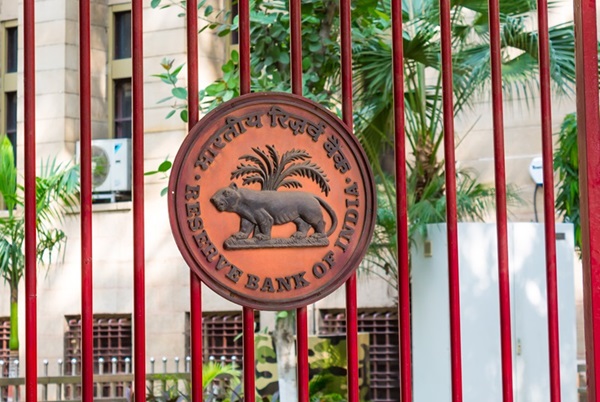
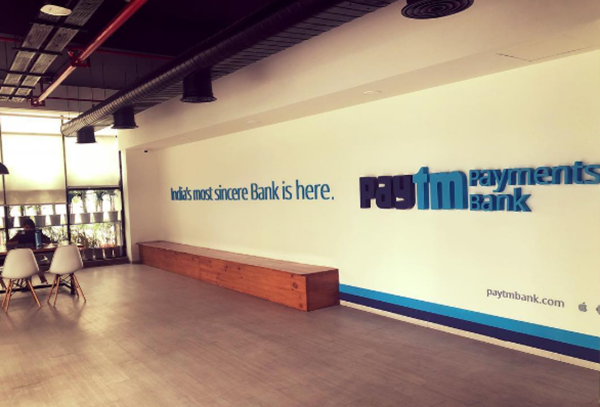
In a country where a bank licence is a prized possession, Paytm Payments Bank presents a clear anomaly. It holds a specialised licence, yet has been directed by the Reserve Bank of India to stop taking deposits and unwind operations. This is neither a failed bank nor a functioning one, but something in between, a licensed entity in regulatory suspension.
On January 31, 2024, the RBI barred Paytm Payments Bank from onboarding new customers and carrying out most banking activities, later extending the timeline to March 15, 2024, to settle pending transactions.
One97 Communications holds a 49% stake in the payments bank, while the controlling 51% rests with founder Vijay Shekhar Sharma.
The bank’s short history is a pattern of repeated regulatory action. In 2018, the RBI halted new account openings over KYC deficiencies. In October 2021, it imposed a ₹10 million penalty for inaccurate disclosures. In March 2022, it again barred customer onboarding and ordered an external IT audit. Subsequent findings pointed to inadequate separation between group entities, personnel, and systems, culminating in a ₹53.9 million penalty in October 2023.
The January 2024 action followed what the central bank described as persistent non-compliance and material supervisory concerns.
Even as the bank’s operations were curtailed, One97 Communications continued to secure approvals for related payments businesses, including Unified Payments Interface services. The RBI’s approach appeared aimed at avoiding disruption to the broader payments ecosystem, where Paytm remains a significant participant.
This creates a structural inconsistency. Banking licences carry a higher regulatory threshold than payments permissions, yet multiple licences continue to coexist within the same group despite serious supervisory concerns in one entity. This raises questions about regulatory signalling and internal consistency.
Under RBI guidelines, entities within the same group are generally not permitted to offer overlapping payment services. In practice, while the payments bank has ceased meaningful operations, its licence remains active. It has neither been revived nor formally wound down.
In effect, the bank persists in a suspended state, neither operational nor formally closed, an outcome that sits uneasily with the finality typically associated with banking supervision.
Keeping the licence alive does more to defer closure. A banking licence conveys regulatory confidence that extends beyond the entity itself. Left unresolved, that signal risks dilution.
The implications extend beyond a single institution. If such outcomes become precedents, they introduce ambiguity into the lifecycle of a banking licence, weakening the clarity with which markets interpret supervisory action and regulatory intent.
The regulatory stance appears incomplete. If the supervisory concerns warranted such stringent restrictions, the absence of a final resolution is difficult to justify. Conversely, if there remains scope for rehabilitation, the severity of the original action begins to look disproportionate.
Two years on, the issue is less about closure and more about classification. Is this deferred resolution, implicit forbearance, or an emerging category that sits between exit and revival?
At some point, the system must decide whether such a licence is to be restored with clear conditions or wound down in an orderly manner. Until then, Paytm Payments Bank remains an unresolved case, and an example of how regulatory outcomes risk drifting without closure.
(This article is part of Unusual Banks, a series on institutions in India’s financial system that do not fit neatly into conventional categories.)
Also Read:
More From BasisPoint