.png)


Prakash Nanda is a veteran editor, author and strategic-affairs commentator with over three decades in media, academia and policy consulting.
June 28, 2026 at 5:15 AM IST
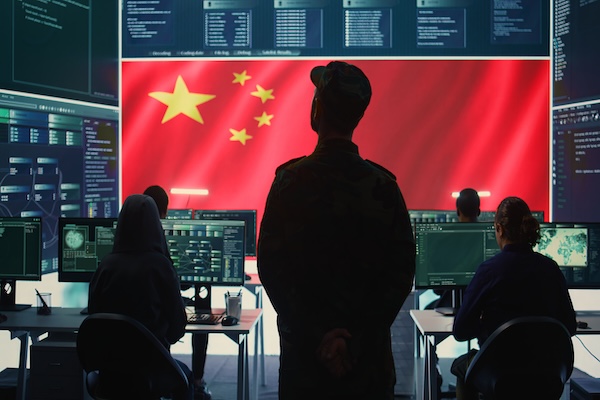
With the Chinese military firmly moving from “informatisation” to “intelligentisation” — that is, from information-guided and network-centric warfare to Artificial Intelligence-enabled and automation-driven operations — India faces a new class of strategic challenges. This is not merely a technological upgrade. It is a shift in the speed, scale and character of military decision-making.
The Chinese transition, coupled with Beijing’s military-civil fusion strategy, is likely to affect India’s approach to border management, cybersecurity, maritime security, nuclear deterrence and defence spending across the Line of Actual Control and the Indian Ocean.
AI has become a central feature of modern military operations because it compresses the time between sensing, deciding and striking. Recent conflicts, including the 2026 US-Israeli war with Iran, have shown how AI-supported targeting, data fusion and intelligence processing can increase the tempo of operations, even if not every operational detail is publicly verifiable. Chatham House has warned that the Iran conflict amplified concerns about AI-supported targeting in warfare, while other reporting has pointed to classified AI platforms being used to sift large volumes of intelligence data for leadership targeting.
By processing massive datasets, AI enhances situational awareness, accelerates threat detection, assists target identification and gives commanders decision-support tools in high-pressure combat environments. Its most important military function may not be replacing the human commander, but reshaping the conditions under which human commanders make decisions.
As Jingdong Yuan, Associate Senior Fellow at SIPRI, has pointed out in a recent APLN study, the PLA is increasing its efforts in command and control, especially AI-enabled decision-support systems; predictive algorithms for multi-domain situational awareness; target selection in air, sea and space domains; tracking of moving objects; AI-enabled synthesis of open-source and text-based intelligence; cyber security; communications interference; and electronic warfare.
What is more worrying is the possible integration of AI into nuclear-related military systems. Yuan notes that Chinese debates increasingly examine how AI could affect nuclear command, control and communications, decision-making and even autonomous nuclear weapon systems. The danger is not only technological malfunction. The danger is that improved AI-enabled search, tracking and targeting could threaten an adversary’s nuclear forces, weaken second-strike confidence and compress decision-making time in a crisis.
For India, this is particularly significant. India’s nuclear doctrine rests on credible minimum deterrence, no first use and massive retaliation after a nuclear first strike. The 2003 formulation says nuclear weapons will be used only in retaliation against a nuclear attack on Indian territory or Indian forces anywhere, and that retaliation to a first strike will be massive and designed to inflict serious damage. If AI-enabled ISR, cyber operations or anti-submarine capabilities appear to threaten India’s retaliatory forces, crisis stability could be weakened.
The PLA’s military AI push has received support from top leadership, dedicated research and development resources, and a whole-of-government approach. Its aim is to prepare for wars that are increasingly “intelligent, intangible and silent” — wars in which autonomous vehicles, ISR, electronic warfare, simulation, command systems and automated target recognition matter as much as traditional platforms.
Recognising this, the PLA has prioritised intelligentisation alongside mechanisation and informatisation. Its 2027 centennial building goals seek to strengthen readiness and integrate mechanised, informatised and intelligentised capabilities, while the longer-term objective remains deeper defence modernisation by 2035.
There is, however, a need for balance in assessing China’s advantages.
China’s military-civil fusion gives the party-state an ability to mobilise universities, laboratories, state firms and private companies in ways that democratic systems find harder to replicate. But it would be inaccurate to say that China has already overtaken the United States in military AI. The US still has formidable advantages in frontier models, cloud infrastructure, compute, semiconductors and private-sector innovation. The Pentagon, too, is now trying to leverage commercial AI more directly through partnerships with major frontier AI companies
Similarly, it is better not to say that every Chinese commercial AI firm is simply legally required to share its work with the PLA. The reality is subtler but still troubling. Chinese companies operate in a political and legal ecosystem where the party-state can incentivise, direct, pressure or compel cooperation. Military-civil fusion is not only a law; it is a strategic environment.
What, then, are the implications for India?
The first is on the Line of Actual Control. In Ladakh and Arunachal Pradesh, AI-enabled surveillance, autonomous sensors, drones, satellite analytics and predictive patrol systems could give the PLA faster local awareness and shorter reaction times. This may allow China to maintain pressure with fewer visible troops while retaining the capacity to mobilise quickly. India’s response cannot be manpower alone. It must include persistent ISR, counter-drone systems, electronic warfare, secure communications and AI-enabled fusion of satellite, UAV, ground sensor and patrol data.
The second implication is maritime. Chinese unmanned underwater vehicles, AI-supported sonar, seabed sensors and data-fusion platforms could complicate the Indian Navy’s ability to preserve undersea stealth. India’s maritime economy is strategically vulnerable: nearly 95% of India’s trade by volume and around 70% by value is handled through ports. The future risk is not only a conventional naval blockade. It is AI-enabled maritime coercion — cyberattacks on ports, disruption of logistics software, tracking of shipping, manipulation of insurance risks, undersea monitoring and pressure on chokepoints.
The third implication is nuclear stability. An AI-powered China could challenge India’s confidence in its survivable second-strike capability by improving the PLA’s ability to locate, track or target strategic assets. Even if China does not intend nuclear escalation, AI-enabled systems may shorten decision cycles and increase worst-case assumptions. In a crisis, speed can be dangerous. Nuclear stability requires not only deterrent capability, but also time, confidence and communication.
The fourth implication is economic, as India already faces a large defence-spending gap with China. SIPRI estimates that China’s military spending in 2025 was about $336 billion, compared with India’s $92.1 billion. India cannot and need not match China dollar for dollar. But it must spend more intelligently on asymmetric capabilities, especially AI-enabled surveillance, cyber defence, electronic warfare, undersea awareness, logistics automation and decision-support systems.
Publicly available figures show both the challenge and the opportunity. The Department of Defence Production had earlier earmarked ₹1 billon per year for AI projects for the armed forces. (Press Information Bureau) More recent official data shows that India’s overall defence budget has risen to ₹7.85 trillion for 2026–27, while defence R&D allocation has increased to ₹291 billion. The point is clear: AI cannot remain a small experimental line item. It must become part of mainstream acquisition, R&D, training and doctrine.
This does not mean ignoring the guns-versus-butter debate. Every rupee spent on military AI is a rupee not spent elsewhere. But every rupee not spent on resilience, deterrence and technological preparedness may impose a much higher cost in a future crisis. The answer is not indiscriminate defence spending, but targeted investment in capabilities that reduce risk and dependence.
There is also an opportunity. India’s defence-AI startup ecosystem, supported by iDEX and ADITI, can generate high-skill jobs, reduce import dependence and produce civilian technology spillovers. By March 2026, iDEX had engaged hundreds of startups, MSMEs and innovators, while hundreds of design and development contracts had been signed. Indigenous drones, logistics AI, electronic warfare tools, battlefield analytics and secure communications systems can strengthen both national security and domestic industry. The question is scale and speed.
India needs an Atmanirbhar AI stack for defence, and that means trusted compute, secure cloud infrastructure, indigenous or trusted edge chips, curated military datasets, battlefield-tested algorithms, AI models trained or fine-tuned for defence use, cyber-secure networks and strict human-machine teaming protocols. It also means testing AI systems against spoofing, deception, data poisoning and adversarial manipulation.
Equally important is institutional reform. India needs service-level AI cells, AI sandboxes for the armed forces, joint testing ranges, faster procurement pathways and closer collaboration among IITs, DRDO laboratories, startups, private defence firms and the services. The goal should not be technology demonstration alone. The goal should be deployable capability.
India must also liberalise dual-use regulations where possible. China’s military-civil fusion model cannot and should not be copied wholesale in a democracy. But India can learn one lesson from it: civilian innovation must be made easier to translate into military capability. The private sector should not have to fight the system to serve national security.
Finally, India should use partnerships without surrendering autonomy. The Quad technology network, India-Israel defence technology cooperation and the US-India TRUST initiative can all be useful. TRUST, which has replaced and upgraded iCET, includes cooperation in defence, AI, semiconductors, quantum, biotechnology, energy and space, along with an AI infrastructure roadmap. For India, the objective should be clear: access to trusted compute, semiconductor supply chains, AI safety standards, undersea sensing, cyber ranges and interoperable but sovereign military technologies.
China’s militarisation of AI is not a magic weapon. It will face limits: data quality, command culture, battlefield validation, chip constraints, cyber vulnerabilities and the risk of machine error. But it is a serious strategic accelerator. It could help the PLA see faster, decide faster, move faster and strike faster.
India’s task is therefore not to imitate China blindly. It is to deny the PLA decision superiority. That requires resilient C4ISR, assured second-strike survivability, AI-enabled border surveillance, undersea awareness, cyber defence, electronic warfare, rapid procurement and trusted technology partnerships.
In the age of intelligentised warfare, deterrence will not rest only on missiles, ships and soldiers. It will also rest on data, algorithms, sensors, compute and the ability to keep humans in control while machines accelerate the battlefield around them.
More From BasisPoint