.png)

Markets Cheer Possible US-Iran Talks; Oil Prices Retreat
Here’s your quick read to start the day: a chatty, no-fuss look at overnight moves, the big story, what’s on the docket, and the tickers you need to watch.
Richard is an independent financial journalist who tracks financial markets and macroeconomic developments
March 25, 2026 at 1:55 AM IST
GLOBAL MOOD: Risk-On
Drivers: Iran War De-escalation, Oil below $100
Asia-Pacific markets opened in a clear risk-on mood on Wednesday, supported by signs of possible de-escalation in the Middle East after Donald Trump said the United States and Iran were in negotiations.
The comments helped lift equities across the region, including Japan, South Korea and Australia, while oil prices fell sharply, easing inflation concerns. Investor sentiment also improved ahead of speeches by the US Federal Reserve and the European Central Bank, with markets positioning for softer geopolitical risks and a more stable global outlook.
TODAY’S WATCHLIST
- US Fed Barr Speech
-
According to a report by The New York Times, the US has already shared a 15-point proposal with Iran aimed at ending the conflict. The plan was reportedly conveyed through Pakistan, although it remains unclear how widely it has been circulated among Iranian leaders or whether Israel would support such an arrangement.
Trump also repeated his claim that the US has already achieved its primary objective in the war — ensuring Iran does not develop a nuclear weapon — and suggested Tehran has agreed to that position. However, the administration is still preparing a large war-related funding request to Congress, reportedly worth around $200 billion, while the Pentagon is also considering deploying additional troops to the region.
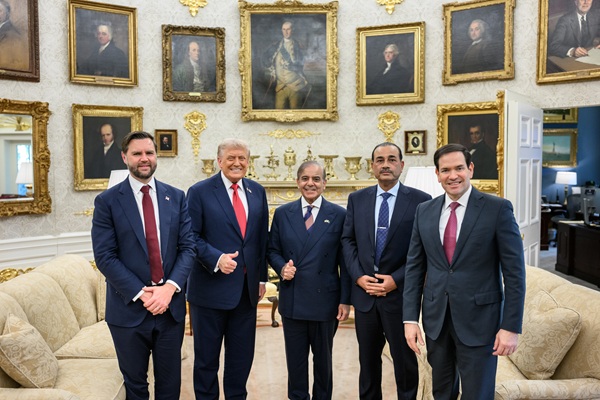
Meanwhile, Shehbaz Sharif said Pakistan is ready to host talks between Washington and Tehran to help secure a comprehensive peace settlement.
Data Spotlight
The slowdown was largely driven by weaker services activity, which recorded its softest growth in nearly a year. At the same time, input costs rose sharply, with the survey’s prices-paid gauge jumping more than three points to its highest level since May. Services firms saw the steepest rise in input costs, while manufacturers also faced higher raw-material prices.
Companies increasingly passed on these costs to customers, resulting in the strongest increase in selling prices in more than three and a half years. Employment fell for the first time in a year, mainly in services, though manufacturing showed modest improvement.
Takeaway:
- US Stock markets slipped as Middle East tensions remained unresolved.
- S&P 500 fell 0.37%; Nasdaq dropped 0.84%; Dow edged lower
- Confusion over US–Iran talks kept investors cautious
- Energy stocks outperformed as crude rallied sharply
- S&P 500 fell 0.37%; Nasdaq dropped 0.84%; Dow edged lower
- US Treasury yields surged after weak demand in a $69 billion 2-year auction
- 2-year yield jumped above 3.9%; 10-year rose to around 4.39%
- Higher oil prices and inflation worries pushed bond yields higher
- 2-year yield jumped above 3.9%; 10-year rose to around 4.39%
- US dollar strengthened as investors doubted a quick end to the conflict
- Dollar index rose as safe-haven demand returned
- Weak US business activity data added to inflation concerns
- Dollar index rose as safe-haven demand returned
- Crude oil prices swung sharply amid mixed signals on US–Iran negotiations
- Brent briefly rallied above $104 before falling below $100
- Markets reacting to both renewed tensions and talk of a possible deal
- Brent briefly rallied above $104 before falling below $100
Day’s Ledger*
Economic Data
- US API Crude Oil Stock Change
- India M3 Money Supply
- US Current Account
Corporate Actions
- Avro India board to consider stock split
- HFCL board to consider fund raising
- Kerala Ayurveda board to consider fund raising
- NHPC board to consider fund raising
- Regency Fincorp board to consider fund raising
- REC board to consider market borrowing programme
Policy
- Fed Barr Speech
- BoJ Monetary Policy Meeting Minutes
- RBA Jones Speech
- ECB President Lagarde Speech
- ECB Lane Speech
Tickers to Watch
- SBI Card's share in credit card spends rises to 17.6% in Apr-Feb 2026
- West Asia crisis: Jindal Steel doubles Angul complex capacity to 12 MTPA
- HDFC Bank appoints law firms to review Chakraborty's resignation letter
- Aditya Birla Fashion names Suraj Bahirwani as Pantaloons' CEO-designate
- Coal India plans two washeries, ammonium nitrate plant in Odisha
- Jindal Stainless commissions Indonesia melt shop, plans ₹900 cr capex
- Maruti Suzuki India to establish first phase of Khoraj plant by 2029
- Mahanagar Gas offers free fuel, bill adjustment for PNG customers
- NCLAT declines Vedanta's plea to stay Adani Group's bid to acquire JAL
Must Read
- Centre forms seven official panels to tackle impact of West Asia crisis
- Iran strikes Israel with fresh wave of missiles, mocks Trump's talks claim
- West Asia conflict likely to dent Q4 earnings of listed hotel majors
- Govt trying to procure gas, crude oil from all possible sources: PM Modi
- The Housing Bargain Hiding in Plain Sight
- Trump Argues to Keep JPMorgan ‘Debanking’ Lawsuit in Florida
See you tomorrow with another edition of The Morning Edge.
Have a great trading day
India's Best-Run Banks May Have a Governance Debt Coming Due
HDFC Bank chairman's resignation reveals structural flaw.
A chairman's exit rarely breaks a bank.
Krishnadevan V writes, what it can reveal is the comfortable silence around a question nobody in the boardroom wanted to ask.
India's private banks were built on stock-linked management compensation. It worked - until institutions matured, the growth phase ended, and the same equity that once aligned incentives began concentrating influence in ways governance frameworks weren't designed to counterbalance.
That's the HDFC Bank story. Not just a personality clash. A structural drift, years in the making.
This episode will pass. The question it raises, almost certainly, will not.
(*Compiled from various media sources)
More From BasisPoint