.png)

Gurumurthy, ex-central banker and a Wharton alum, managed the rupee and forex reserves, government debt and played a key role in drafting India's Financial Stability Reports.
January 7, 2026 at 6:23 AM IST
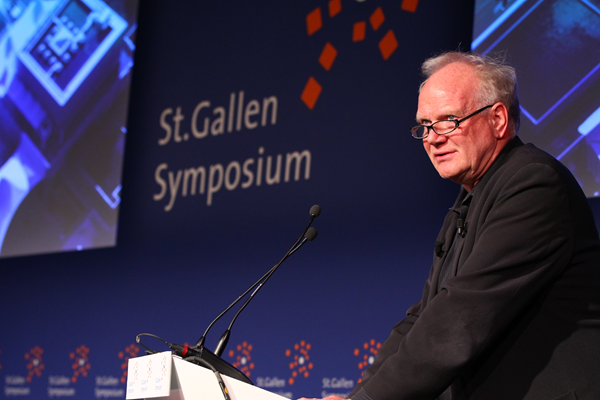
On 1 January this year, ten years passed since Ulrich Beck died. The date went largely unnoticed. The world had little patience for anniversaries: wars grind on without endgames, climate shocks arrive with unsettling regularity, markets swing between faith and fear, and democratic trust continues to erode. Yet few thinkers feel as present in this disorder as Beck, the German sociologist who argued that modern societies are increasingly defined not by prosperity, but by risk.
Beck’s central claim in Risk Society (1986) was deceptively simple. Advanced modernity, he argued, had crossed a threshold. Societies were no longer organised primarily around the production and distribution of wealth, but around the management and distribution of risks—risks that were not accidental or natural but manufactured by human progress itself.
Four decades later, the world seems less to have debated Beck than to have quietly confirmed him.
Beck believed modernity had become reflexive: forced to confront the unintended consequences of its own success. Industrial society promised mastery over nature and uncertainty. Its advanced form produces dangers that are systemic, invisible, and often irreversible. Nuclear energy, chemical agriculture, global supply chains, financial engineering, digital platforms — each was designed to optimise efficiency or growth. Each also generated vulnerabilities that cannot be neatly insured, regulated, or geographically contained. This is progress turned inward.
These risks differ from those of earlier eras. They are probabilistic rather than visible, mediated by expertise rather than common sense, and global rather than local. Responsibility becomes diffuse. Accountability elusive. Institutions are left managing outcomes they neither fully understand nor can credibly prevent.
Beck was not alone in sensing this shift. His contemporary Anthony Giddens, known for his theory of “structuration” and later for shaping Britain’s Third Way politics, also described late modernity as a period of heightened uncertainty and global interdependence. Giddens spoke of “disembedded” institutions - finance, science, bureaucracy - operating across time and space, held together by trust rather than personal knowledge. He warned of a “runaway world” in which systems designed to deliver stability were moving faster than democratic governance could keep pace.
The divergence between the two thinkers matters. Where Giddens believed such forces could still be steered through institutional reform, Beck was more sceptical. Modernity, Beck argued, was no longer merely outrunning politics; it was actively manufacturing risks — climate, financial, technological — that politics could neither fully comprehend nor convincingly govern.
Climate change is the clearest expression of Beck’s risk society. It is not an external shock but an internal contradiction of industrial modernity. The planet is warming not because modern economies failed, but because they succeeded - too well and for too long, without pricing cumulative damage.
Climate risk is global, long-term, and unevenly distributed. Those least responsible bear the greatest costs. Those most capable of acting face the tightest political constraints. Scientific consensus is overwhelming, yet political response remains halting.
For Beck, this paralysis was structural. Institutions designed to distribute prosperity struggle when asked to manage existential uncertainty. Climate governance oscillates between ambitious pledges and minimal delivery because it challenges the foundations of growth, consumption, and sovereignty on which modern politics rests.
Beck’s framework is equally revealing when applied to global finance. Long before the 2008 crisis, he warned that modern societies confuse risk management with risk elimination. Complexity, he argued, creates the illusion of control while amplifying fragility.
The global financial system embodies this contradiction. Derivatives, securitisation, stress tests, and capital buffers were meant to distribute risk efficiently. In practice, they obscured it. When the system broke, risk did not vanish; it was socialised. States absorbed private losses in the name of stability.
The post-crisis world entrenched this logic. Central banks became backstops not just for banks but for markets themselves. Balance sheets expanded, asset prices rose, and Financial Stability Reports proliferated, dense with scenarios and calibrated reassurance.
For Beck, these were rituals of governance in a risk society. Institutions no longer promise safety; they promise preparedness. Crisis is not an exception but the system’s default condition.
One of Beck’s most prescient insights was that risk corrodes political legitimacy. When dangers are invisible and mediated through expert knowledge, citizens are asked to trust institutions precisely when those institutions admit they cannot guarantee outcomes. Look at the United Nations now for example!
This tension now defines public life. Science is indispensable yet contested. Policymaking relies on models while being judged for their failures. Governments justify decisions not through certainty, but through probabilistic trade-offs.
The COVID-19 pandemic offered a near-perfect illustration. Conflicting expert advice, evolving models, emergency powers, uneven social costs, and relentless blame. The virus itself was indiscriminate; its consequences were not. Beck’s observation that risk is “democratic” in exposure but unequal in impact played out starkly.
The backlash — populism, anti-expert sentiment, conspiracy thinking — is often framed as a breakdown of rationality. Beck saw it differently. Such reactions are not deviations from modernity; they are products of it.
Beck also anticipated the geopolitical bind of the present era. Risks are global; politics remains national. Climate change, pandemics, financial contagion, cyber threats - none respect borders. Accountability, however, does.
The result is what Beck called “organised irresponsibility”; everyone is involved, no one is fully responsible. International cooperation is necessary but politically fragile. National solutions are politically attractive but materially inadequate.
The turn toward protectionism, technological blocs, supply-chain reshoring, and strategic autonomy reflects attempts to re-territorialise risk. These moves may placate domestic politics, but they do little to reduce underlying vulnerabilities and often intensify them.
Ulrich Beck did not predict specific crises. He diagnosed a structural condition. Risk society is not a temporary phase; it is the logic of advanced modernity itself. The more complex and interconnected a society becomes, the more it is haunted by the unintended consequences of its own rationality.
Unlike Giddens, who believed reflexive modernity could still be steered through reform, Beck was more ambivalent. He saw the possibility of new solidarities emerging from shared vulnerability but no easy path toward them.
Ten years after his death, the world appears to have accepted Beck’s diagnosis while resisting its implications. We manage crises, publish reports, model scenarios, and speak fluently about resilience while leaving the engines of risk largely intact.
Remembering Ulrich Beck today is not nostalgia. It is recognition. The turmoil of the present is not an aberration but a world modernity built, and still struggles to govern.
More From BasisPoint