.png)

Iran’s Internal Turbulence and the Myth of Imminent Regime Change
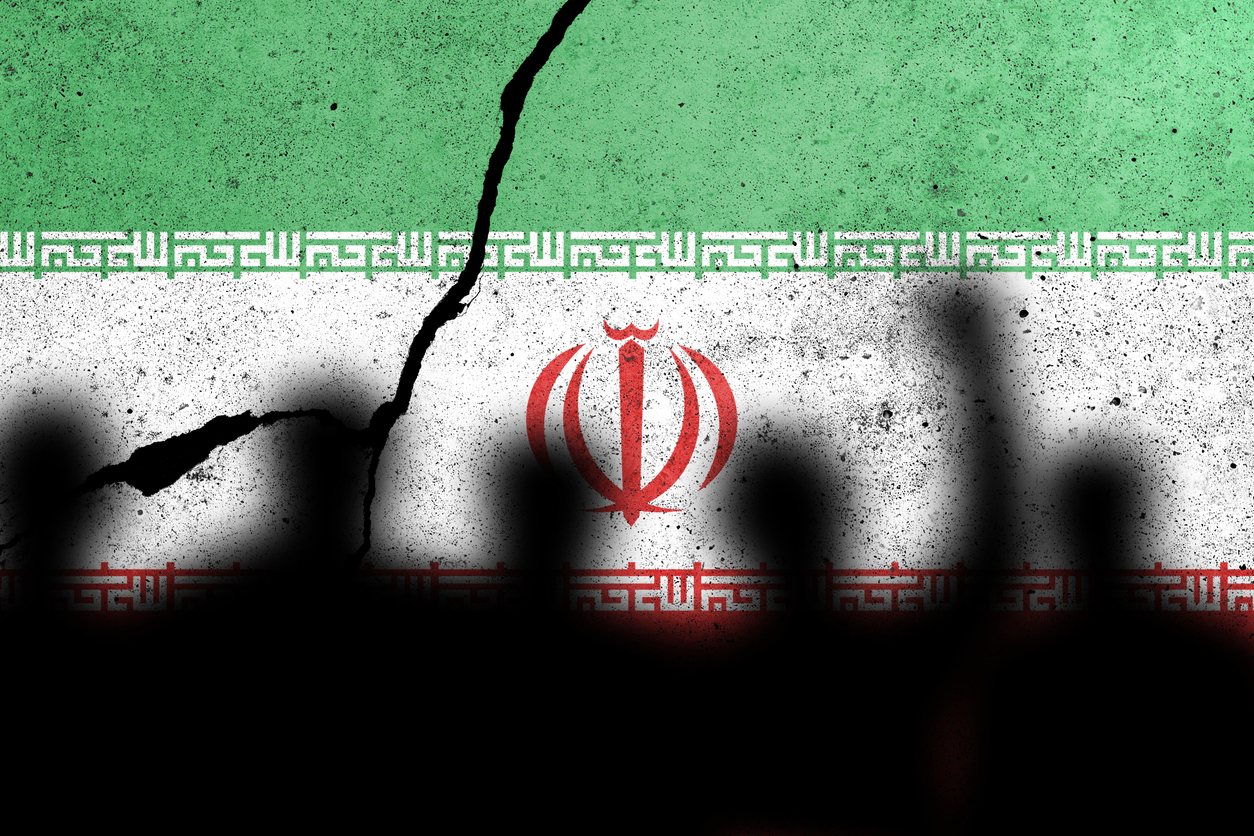
Recurring protests in Iran revive predictions of collapse, but history, institutions, and security cohesion suggest a system under strain, not one on the brink.
Lt Gen Syed Ata Hasnain is Governor, the State of Bihar, and Former Commander of India's Srinagar-based Chinar Corps.
January 7, 2026 at 8:19 AM IST
The recent disturbances in Tehran and other Iranian cities, resulting in several fatalities, have again revived external speculation about the durability of the Islamic Republic. Such episodes follow a familiar pattern: protest images circulate rapidly, social media amplifies momentum, and outside observers predict regime change. While understandable, this reaction often repeats a persistent analytical error: mistaking unrest for transition.
Since the 1979 Islamic Revolution, Iran has witnessed repeated cycles of internal protest, driven by political, economic, or social triggers. Yet each has tested, and ultimately reinforced, the same foundational structure: a system that fused ideology, clerical authority, and security power into a durable guardianship state.
Central to this architecture is the Islamic Revolutionary Guard Corps, or IRGC, an institution that functions not as a conventional military alone, but as the principal defender of the revolution, the clerical establishment, and the state’s ideological legitimacy. Unlike traditional armed forces that serve the state irrespective of ideology, the IRGC’s institutional survival is inseparable from the survival of the Islamic Republic itself.
This is where comparisons with other regional experiences often falter. During the Arab Spring, regimes in countries such as Egypt and Turkey faced severe internal challenges. In both cases, the military ultimately acted as the arbiter of stability, defending the state rather than the ruling leadership. Iran’s model is fundamentally different. The IRGC and its affiliated security arms are embedded within the political system itself, leaving little incentive for neutrality or defection during periods of unrest.
That does not mean Iran is immune to pressure. On the contrary, generational change has introduced a profound new dynamic.
The Limits of Ideology
Prolonged sanctions have been especially corrosive. Years of economic isolation have constrained growth, limited modernisation, and narrowed opportunity. The burden has fallen largely on ordinary citizens, while a state-centric economy has favoured entrenched elites. This has created fertile ground for protest, particularly among younger Iranians who see few prospects at home and little stake in the regime’s external confrontations. The enduring hostility with the US and Israel, once justified as revolutionary necessity, is now increasingly viewed as a societal cost rather than a protective shield. Yet history cautions against assuming that dissatisfaction alone produces revolution.
But why have protests not become revolution?
Iran has witnessed major protest cycles before: the student unrest of 1999, the Green Movement of 2009, the economically driven protests of 2017–18, the fuel-price unrest of 2019, and the widespread demonstrations following the death of Mahsa Amini in 2022. Each time, external observers predicted imminent collapse. Each time, the system endured.
The reason lies in the absence of the key enabling factors that historically drive regime change. There is no unified national leadership capable of channelling protest into political transition. Opposition figures remain fragmented, largely external, or lacking credibility across Iran’s diverse social, ethnic, and ideological landscape. Protest movements have been spontaneous and decentralized, powerful in expression but weak in organization.
Crucially, there has been no visible fracture within the security establishment. The IRGC, Basij, police, and intelligence agencies remain cohesive and operationally effective. Unlike 1979, when the Shah’s military hesitated and fragmented, today’s Iranian security apparatus is ideologically committed, experienced in internal control, and prepared for sustained pressure.
Reality Check
China and Russia, meanwhile, have little appetite for an unstable Iran. Both value predictability over reform and see Tehran as a strategic partner in counterbalancing Western influence. A violent or collapsing Iran would threaten energy flows, regional stability, and their own geopolitical interests. Consequently, neither is likely to encourage transformative upheaval, even if they quietly exploit Iran’s economic vulnerabilities.
An often-overlooked dimension is the regional consequence of Iranian instability. A weakened but intact Iran remains deterrable and containable. A fragmented or violently destabilised Iran would be far more dangerous—fuelling proxy wars, intensifying sectarian polarisation, destabilising Iraq and the Gulf, and raising the risk of wider confrontation involving Israel and Hezbollah.
None of this implies that the Islamic Republic is permanently secure. Like all political systems, it carries internal contradictions. Demographic change, economic pressure, legitimacy erosion, and generational disconnect are cumulative forces that will, over time, demand adaptation. Historically, the regime has shown an ability to adjust tactically—through selective repression, calibrated concessions, economic palliatives, and limited social flexibility—without surrendering core power structures.
Politics can also turn on unforeseen shocks. Leadership crises, economic collapse, or external conflict can compress timelines dramatically. Such possibilities cannot be ruled out, but at present there is little evidence of these triggers converging.
Wishful thinking does not replace structural conditions. Regimes rarely fall simply because people are unhappy; they collapse when discontent aligns with leadership, organisation, elite fragmentation, and loss of coercive control. Iran today shows only fragments of that equation. The current unrest is best seen as another phase in Iran’s long negotiation between state and society—reflecting stress and pressure for change, but not yet the mechanics of regime transformation. Endurance may not be infinite, but collapse is not imminent.
Reuters and other major news agencies report that the unrest, driven by economic collapse, inflation and public discontent, has spread to multiple provinces and resulted in several deaths and arrests; yet these demonstrations remain episodic, locally driven and, so far, insufficiently organised to threaten regime control.
Social media imagery from Tehran and other cities highlights intense public anger, especially among younger and urban groups affected by inflation and unemployment. Taken alone, however, it does not show nationwide mobilisation, organised leadership, or fractures within the security establishment. As in earlier cycles, the visuals convey emotion and momentum, not structure or direction—pointing to pressure on the system rather than an imminent threat to regime survival.
For now, Iran remains a state under strain, not a system on the brink—an important distinction too often lost amid the noise of expectation.
More From BasisPoint