.png)

Iran Crisis Threatens Global Oil Flow and India
Iran is unlikely to resemble Venezuela-style regime collapse scenarios. Iran’s political system rests on powerful parallel institutions — the clerical establishment, the Islamic Revolutionary Guard Corps, and entrenched nationalist sentiment — making rapid external regime engineering improbable.

Ajay Srivastava, founder of Global Trade Research Initiative, is an ex-Indian Trade Service officer with expertise in WTO and FTA negotiations.
March 1, 2026 at 12:15 PM IST
The Middle East entered a volatile new phase on February 28, 2026, when the United States and Israel launched coordinated strikes across Iran and killing its supreme leader Ayatollah Ali Khamenei.
Washington is framing the attack as necessary to halt nuclear and missile threats. The US strategic calculations may also include securing Iranian oil, while Israel’s overriding objective is to neutralise its most powerful regional adversary.
The strikes appear rooted in the belief that eliminating the supreme leader could trigger regime collapse and popular uprising.
However, Iran is unlikely to resemble Venezuela-style regime collapse scenarios. Iran’s political system rests on powerful parallel institutions — the clerical establishment, the Islamic Revolutionary Guard Corps, and entrenched nationalist sentiment — making rapid external regime engineering improbable.
Also, the killing of the supreme leader risks transforming him into a martyr, strengthening hard-line resolve and mobilising nationalist resistance.
In a resource-rich, state with strong national identity, external pressure often produces instability, and enduring resistance. This means the US may face deeper military, political, and strategic complications in the months ahead.
Two nuclear-armed states — the United States and Israel — have struck Iran, a country that does not possess nuclear weapons, on the suspicion that it could develop one in the future. Iran has long insisted its nuclear programme is peaceful, and international monitoring has not produced evidence of an existing bomb. The situation recalls the 2003 US invasion of Iraq, which was justified by claims that Iraq possessed weapons of mass destruction that were never found.
The Roots
The roots of the US-Iran tensions trace back to 1953, when the United States orchestrated a coup against Iran’s elected Prime minister, Mohammad Mosaddegh, after he nationalised Iran’s oil industry hurting US oil firms profits. Washington helped install the Shah Reza Pahlavi as ruler, anchoring Iran firmly in a US-backed order. Under the Shah, Iran maintained close ties with both the United States and Israel. But this alignment collapsed with the Iranian Revolution of February 1979, which brought Ayatollah Khomeini to power. The new Islamic Republic defined the United States as a hostile power and severed ties with Israel.
Over the following decades, Iran emerged as Israel’s principal strategic adversary. While Israel improved relations with several Arab states, Iran’s strategic depth expanded through partnerships in Syria and with Hezbollah. However, the weakening of Hezbollah and the fall of Assad in 2024 significantly reduced Tehran’s regional leverage.
Washington sought to curb Iran’s nuclear programme out of fear that Tehran could eventually develop nuclear weapons, fundamentally altering the regional balance of power. Israel views a nuclear-capable Iran as an existential threat. US efforts to limit these risks culminated in the Joint Comprehensive Plan of Action (JCPOA), signed in 2015 under Barack Obama, which imposed strict limits on uranium enrichment, centrifuge numbers, and stockpiles in exchange for sanctions relief. Western powers viewed the agreement as blocking Iran’s pathway to nuclear weapons.
However, in 2018, Donald Trump withdrew the United States from the agreement—despite international inspectors repeatedly verifying Iranian compliance—and reimposed sweeping sanctions. The withdrawal deepened mistrust, reinforcing security anxieties that shaped the confrontation now.
Ineffective UN
An emergency UN Security Council meeting revealed deep divisions: the Secretary-General urged restraint, but member states disagreed over legality and responsibility, producing no binding action. Calls for diplomacy were overshadowed by veto politics and geopolitical rivalries, which continue to limit the Council’s ability to enforce ceasefires or collective measures.
This paralysis has strengthened perceptions that the post-World War II security system is weakening, with conflicts increasingly shaped by unilateral military action and strategic alliances rather than UN-led resolution.
Impact on India
I-Reduction in India’s trade with Iran
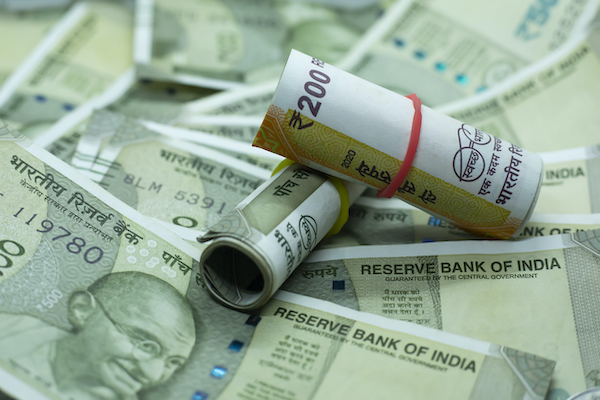
India’s trade with Iran remains modest due to long-standing US sanctions that restrict banking channels, shipping, and energy transactions.
In calendar year 2025, India exported goods worth about $1.2 billion to Iran, dominated by agricultural products — rice alone accounted for roughly $747 million, followed by bananas ($61 million) and tea ($51 million). On the import side, India bought about $408.6 million worth of goods from Iran, including petroleum coke ($135.7 million), apples ($71.5 million), and dates ($33.3 million).
India’s trade with Iran is limited but further instability may disrupt these flows.
II-Impact of closing of Strait of Hormuz
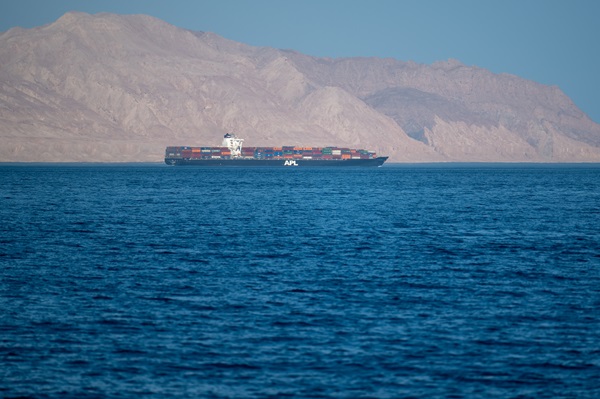
Iran has reportedly closed traffic through the Strait of Hormuz
Large share of India’s crude oil and LNG supplies from Iraq, Saudi Arabia, the UAE and Qatar transit this narrow chokepoint. Estimates suggest roughly 35–50% of India’s crude imports and a significant portion of LNG shipments pass through the strait
Any disruption would push up freight and insurance costs, delay cargoes, and trigger a spike in global oil prices — directly raising India’s import bill.
In response, refiners may reroute cargoes via pipelines to Red Sea ports, source more oil from Russia, the United States, West Africa and Latin America, and draw on strategic petroleum reserves to cushion short-term shocks, though these alternatives increase costs and transit times.
The impact would be global, not just Indian. Nearly one-fifth of the world’s oil and a major share of LNG trade flows through the strait, and most shipments are destined for Asian economies including China, Japan and South Korea.
III-Impact on Oil Prices
Global crude oil prices are expected to rise sharply following the US–Israel strikes on Iran, as markets price in the risk of supply disruptions from one of the world’s most critical energy regions. Brent crude had already climbed to around $70–73 per barrel amid rising tensions, and limited conflict could add $5–$20 per barrel, while disruption to Iranian exports or tanker traffic could push prices above $90 per barrel.
More From BasisPoint