.png)


Ajay Srivastava, founder of Global Trade Research Initiative, is an ex-Indian Trade Service officer with expertise in WTO and FTA negotiations.
July 13, 2026 at 9:24 AM IST
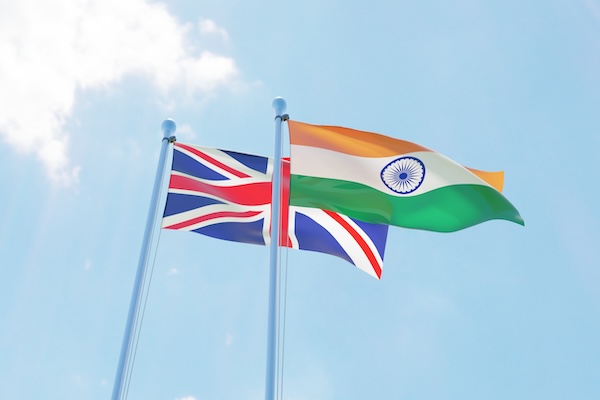
India's tariff concessions under the India–UK Comprehensive Economic and Trade Agreement give the UK better access to India's market, but only in carefully selected sectors.
India has made 64% of its tariff lines duty-free immediately, but these cover only 18% of current UK exports to India. The biggest gains come from another 24% of tariff lines, representing 66% of UK exports, where tariffs will be reduced gradually to zero over periods of up to 10 years. Less than 0.5% of tariff lines receive only partial tariff cuts, while about 12% of tariff lines are excluded from any concession to protect sensitive sectors.
Also Read: India–UK CETA: Mapping India's Export Winners
The biggest gains for UK are concentrated in precious metals, aerospace, premium automobiles and alcoholic beverages, while strategically sensitive products such as gold, telecommunications equipment and aluminium scrap remain largely shielded.
The largest beneficiary is high-purity silver bars. India imported $4.93 billion of silver bars from the UK in 2026, accounting for 45.4% of its total silver-bar imports. The current 10.75% import duty will be phased out over 10 years, although imports will continue to require a licence from the Directorate General of Foreign Trade. Silver grains, $273 million, receive a smaller concession, with the same tariff reduced gradually to half the normal rate over the same period.
Gold remains off limits. Gold bars imported from the UK, worth $111 million, receive no tariff concession and continue to face the existing import duty.
Britain's aerospace industry also secures valuable market access. India imported $340 million of turbo-jets generating more than 25 kilonewtons of thrust in 2025-26. The current 8.25% duty will be eliminated over seven years. Aircraft parts receive even better treatment. Parts of aeroplanes and helicopters worth $76 million, together with other aircraft components valued at $64 million, become duty-free immediately, strengthening supply chains as India expands its civil aviation sector.
Industrial raw materials receive mixed treatment. Iron and steel scrap imports worth $279 million become duty-free immediately. Tariffs of 2.75-5.5% on copper, brass, lead and stainless-steel scrap will be phased out over five to ten years. Waste paper, including kraft and corrugated grades, also receives either immediate duty-free access or full tariff elimination over ten years, supporting India's recycling and paper industries.
But India has drawn clear red lines around several industrial inputs. Aluminium scrap imports worth more than $354 million receive no concession. Telecom and data communication equipment worth nearly $170 million also remains excluded, preserving the existing 11% tariff. Calcined petroleum coke, for which Britain supplies more than half of India's imports, continues to face the existing 8.25% duty.
Automobiles are among Britain's biggest commercial gains. For the first time in a trade agreement, India will substantially reduce tariffs on UK-made fully built passenger cars and trucks through tariff-rate quotas.
For petrol and diesel passenger cars, duties of 110% on large cars and 66% on smaller models fall to 10% within the quota by Year 5. The annual quota begins at 20,000 vehicles, rises to 37,000 by Year 5 and later settles at 15,000. Even imports outside the quota benefit, with tariffs falling to 50% by Year 10.
Electric, hybrid and hydrogen passenger cars receive more cautious treatment. No concession is available during the first five years. From Year 6, only premium vehicles qualify. Cars priced below £40,000 remain outside the scheme, protecting India's mass-market EV industry. For vehicles priced above £40,000, duties fall from 110 per cent to 10 per cent by Year 10 within a quota that expands from 4,400 vehicles to 22,000 annually from Year 15.
UK-made trucks also receive significant concessions. The existing 44% tariff falls to 8.8% within a quota rising from 2,500 to 3,500 trucks, while out-of-quota duties decline to 22% by Year 10.
Premium alcoholic beverages represent another major British success. India has agreed to reduce tariffs on Scotch whisky, brandy, bourbon, rum, gin, vodka, tequila, cider, mead, sake and liqueurs. The normal 150% duty falls to 110% in the first year and then to 75% by Year 10. The lower tariff applies only to products meeting minimum import prices of either $5 per litre (about $3.75 for a 750 ml bottle) or $6 per 750 ml bottle, depending on the product, ensuring that the benefits are confined to premium brands.
Scotch whisky receives an even larger concession. Its tariff falls immediately from 150% to 75%, before declining to 40% over ten years. India imported nearly $300 million of whisky and other alcoholic beverages from the UK in 2025-26. Although Scotch accounts for only a small share of India's overall whisky market, lower tariffs are expected to intensify competition in the premium and super-premium segments.
Digital integrated circuits worth $78 million already entered India duty-free and therefore gain little from the agreement.
For the UK, the largest commercial gains are likely to come not from mass-market consumer goods but from silver, aerospace equipment, premium vehicles and high-end spirits.
More From BasisPoint