.png)

Yield Scribe is a bond trader with a macro lens and a habit of writing between trades. He follows cycles, rates, and the long arc of monetary intent.
January 6, 2026 at 3:37 AM IST
India’s government bond market is being pulled in two very different directions, and the tension is no longer subtle. On paper, the Centre’s fiscal discipline looks reassuring, even virtuous. Debt ratios are easing, fiscal consolidation is back in fashion, and rating agencies remain broadly comfortable. Yet bond yields refuse to cooperate. The reason lies not in New Delhi’s arithmetic, but in the growing fiscal weight of the states and the scale at which they are tapping the market.
While the Centre has worked to steady its balance sheet, state governments have moved in the opposite direction. Borrowing plans have expanded rapidly, driven less by capital expenditure than by an intensifying cycle of welfare commitments announced during successive election seasons. These promises have fiscal lives far longer than the political cycles that spawned them.
In the January–March quarter of 2025–26, state government borrowing plans have stunned the markets. Gross issuance close to ₹5 trillion exceeded expectations by a wide margin, and if states adhere to their announced calendars, annual issuance will rise close to 9% year on year. Large issuers such as Karnataka, Maharashtra and Tamil Nadu are leading the charge, each grappling with widening deficits and limited revenue flexibility.
This surge matters because state government bonds are not a sideshow as they price off Indian government bonds, compete for the same investor base, and increasingly dictate conditions across the sovereign curve. Persistent supply pressure has kept spreads elevated, with state government bonds trading at 70–80 basis points over comparable Indian government bonds. As issuance intensifies into the final quarter, those spreads risk widening further.
The problem is being compounded by a subtle but important shift in issuance behaviour.
States are shortening maturities, lowering the weighted average maturity of their borrowings. That has pushed pressure down the curve, distorting even the short end.
The five-year Indian government bond now trades around 110 basis points over the repo rate, the widest gap in nearly three years. This is not a reflection of policy uncertainty; it is a supply signal.
Fiscal Spillover
Layered on top is a welfare architecture that increasingly resembles a de facto nationwide income support system. When state-level schemes are combined with central programmes, the cumulative fiscal burden becomes hard to ignore. Markets may not price ideology, but they do price supply.
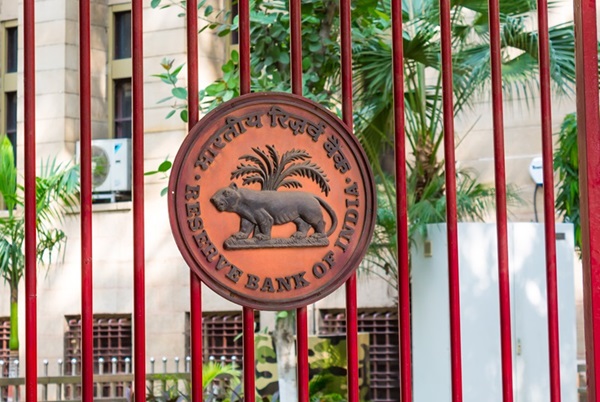
Against this backdrop, the Reserve Bank of India’s recent liquidity measures have offered only limited comfort. Announced open market operations worth ₹2 trillion and foreign exchange swaps of $10 billion have helped stabilise system liquidity, but they are largely offsetting the drain created by earlier foreign exchange interventions. They are not designed to absorb sustained sovereign supply at this scale.
The banking system, meanwhile, is in no position to act as buyer of last resort. Deposit growth has lagged credit expansion, pushing the incremental credit-deposit ratio above 100%. With loan demand outpacing deposits, banks have turned to market borrowings and have begun trimming excess statutory liquidity ratio holdings whenever yields soften. Each rally in bonds becomes an opportunity to sell.
Traditional long-term buyers are also less reliable. Pension funds are allocating more aggressively to equities, while foreign portfolio investors remain selective and episodic. Net equity outflows of around ₹1.67 trillion in calendar year 2025 have already reshaped domestic liquidity conditions, with spillovers into bond demand.
Even as the Centre moves to lower its debt-to-GDP ratio towards 54.5–55% in 2026–27, state deficits are likely to rise towards 3.4% of GDP. Taken together, gross borrowing by the Centre and states could approach ₹30 trillion next year. That quantum of supply would test even the deepest markets, let alone one grappling with constrained domestic demand.
This is why bond yields have remained stubbornly elevated despite a supportive monetary policy stance. It is also why further RBI bond purchases, while helpful at the margin, may struggle to engineer a durable rally. Monetary operations cannot compensate indefinitely for fiscal supply pressures emanating beyond the Centre’s balance sheet.
The uncomfortable truth is that India’s bond market problem is no longer about credibility at the top. It is about coordination across layers of government. Economists and rating agencies may continue to applaud the Centre’s restraint, but markets are pricing the system as a whole. Until state finances are brought back into the consolidation conversation, yields are likely to remain under pressure, and the sovereign curve will continue to tell a story far less flattering than the headline fiscal numbers suggest.
More From BasisPoint