.png)

Import Barriers on Metallurgical Coke Are Raising the Cost of Making Steel in India
Over the past 1 year, India has progressively tightened controls on LAM Coke imports through safeguard measures, quantitative restrictions, and provisional anti-dumping duties, creating a double barrier on both volumes and prices.

Ajay Srivastava, founder of Global Trade Research Initiative, is an ex-Indian Trade Service officer with expertise in WTO and FTA negotiations.
December 28, 2025 at 4:42 AM IST
India’s steel expansion is being undermined by a policy contradiction at its core. While the government protects domestic steelmakers through high safeguard and anti-dumping duties and Quality Control Orders on finished steel imports, it simultaneously restricts access to Low Ash Metallurgical Coke, or LAM Coke—a non-substitutable input that accounts for 35–40% of steel production costs. By capping volumes and imposing high duties on this essential input, policy intended to support steel producers is instead raising costs, eroding competitiveness, and choking capacity expansion. In steel, as in growth, misaligned input and output regulations work against national economic objectives.
This raises a fundamental policy question: does making core industrial inputs more expensive truly serve India’s national economic interest?
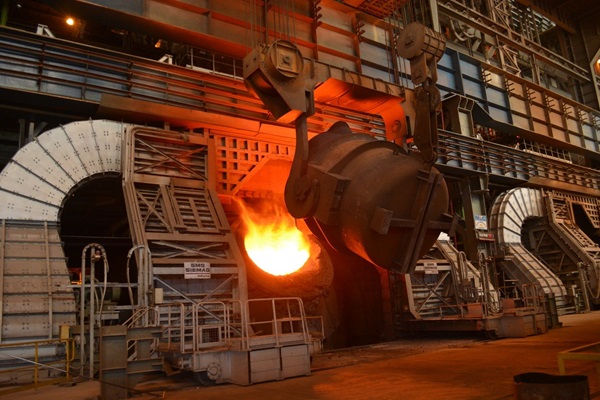
LAM Coke is central to the blast furnace–basic oxygen furnace steelmaking route. It provides heat, acts as a reducing agent, and maintains furnace stability and permeability. Its low ash content improves furnace efficiency, reduces fuel consumption, and supports higher productivity. Given that most domestic coal contains 14–15% ash, imports of low-ash coke are not optional but technically unavoidable for many steel plants.
Over the past 1 year, India has progressively tightened controls on LAM Coke imports through safeguard measures, quantitative restrictions, and provisional anti-dumping duties, creating a double barrier on both volumes and prices. A safeguard investigation in 2023 led to import caps, followed by country-wise QRs from January 2025 limiting imports to 1.4 million tonnes per half-year, a ceiling subsequently extended through December 2025. In parallel, an anti-dumping investigation covering Australia, China, Colombia, Indonesia, Japan, and Russia resulted in provisional duties of $60–$120 per tonne in November 2025.
A major flaw in the anti-dumping exercise is freight benchmarking. LAM Coke is shipped almost entirely as dry bulk, with freight costs around $20–25 per tonne, but the investigation reportedly used container freight benchmarks—810 times higher—artificially inflating landed values and dumping margins. This has pushed duties above what actual trade economics justify.
The impact is visible. In the first half of 2025, steelmakers secured only about 1.5 million tonnes of met coke against demand of over 3 million tonnes, forcing reliance on uneven domestic supply and raising the risk of production cuts. Since LAM Coke makes up roughly 38% of finished steel costs, a 20–25% rise in coke prices translates into a 3–5% increase in steel prices, squeezing margins and hurting competitiveness at home and abroad.
Restricted access to quality coke also reduces productivity—raising coke rates, increasing energy use and causing downtime. MSMEs in secondary steel, foundries and ferro-alloys are hit hardest, with cost shocks cascading into automobiles, infrastructure and engineering exports. Higher steel prices act as a tax on growth, slowing investment across the economy.
Steps Needed
India urgently needs a comprehensive review of its steel regulatory framework. While the government shields domestic steelmakers by imposing high safeguard and anti-dumping duties and QCOs on finished steel imports, it simultaneously restricts access to critical inputs such as low-ash metallurgical coke. This policy contradiction raises production costs, weakens competitiveness, and ultimately hurts the very domestic producers the protection is meant to support. Regulations on outputs and inputs must be aligned, not work at cross-purposes.
More From BasisPoint