.png)

T.K. Arun, ex-Economic Times editor, is a columnist known for incisive analysis of economic and policy matters.
April 29, 2026 at 12:05 PM IST
The elections have passed the stage where further government action or inaction cannot affect the results. This is the time for the government to stop pretending that the war on Iran has no effect on India, apart from hurting our peaceable sensibilities, and start taking remedial policy action.
India must allocate natural gas to fertiliser production, even if that means that people who run their vehicles on compressed natural gas have to switch to petrol and incur additional expenditure.
India must initiate a major transition away from liquid petroleum gas as the preferred cooking fuel, to electricity, produced from domestically plentiful coal, sunshine and wind.
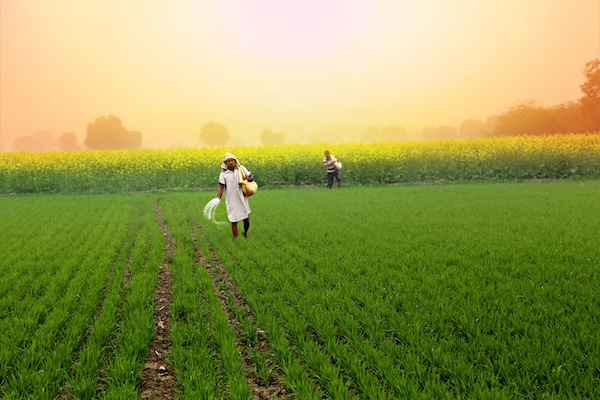
This is the right occasion to bring about major reform in fertiliser policies, switching from product subsidy to cash transfer to farmers, while leaving fertiliser prices to market competition and innovation in complex fertiliser formulation, to end the current pathetic state in which heavily subsidised urea contributes more to water pollution and climate change than to additional crop output.
Looming Fertiliser Shortage
When the supply of fertilisers and fertiliser inputs stand disrupted for no one knows how long, fertiliser and food prices are bound to go up. This means that India cannot cut back on any domestic production at all, because imports would be expensive.
India has gradually eased the allocation of gas to fertilisers from 65% of the normal to almost 90% of the normal now, thanks to wider sourcing of LNG. However, LNG is turning expensive, as Japan, South Korea and Taiwan, relatively rich Asian nations that import LNG from the Persian Gulf bid up prices for available supplies.
There is plenty of gas in the US that the US could potentially export. But gas can be exported, when not through a pipeline, only as LNG. It takes years to build up liquefaction facilities and export terminals. In the time it would take for Qatar’s damaged LNG facilities to be repaired, no new LNG capacity will come up anywhere in the world.
There is one way to increase the supply of LNG to Asia. Resume piped gas supplies from Russia to Europe, so that the LNG Europe buys now can be diverted to Asia. India should raise this as a formal demand at global fora: gas is an input to food production via power and fertilisers, and as a food emergency looms, Europe can do its bit to ease food and fertiliser shortages that produce hunger and distress in Africa and force people to migrate to Europe, among other places.
If India were to reallocate gas to fertilisers at the expense of compressed natural gas for vehicle fuel, all that will happen is that CNG vehicle owners would have to run on petrol till supplies stabilise. That is preferable to facing fertiliser shortages, food price inflation feeding into general inflation, higher interest rates and lower rates of economic growth.
Fertiliser Price Reform
The solution is to get farmers to use N, P and K fertilisers in the appropriate ratio. Complex fertilisers help this, but Indian farmers use a fraction of the complex fertilisers that their Chinese counterparts do. Pricing reform can change this. Set fertiliser companies free to innovate fertiliser combinations and price them as they think fit, while competing against other fertiliser companies in both educating farmers about testing their soil to identify nutrient requirements and applying the right set of fertilisers.
The government can offer the money it spends as fertiliser subsidy as income support to farmers, to help them purchase fertilisers at market prices. Fertiliser use would become more rational, agriculture would turn more efficient and India would shed the label of perennial subsidiser of traded farm goods, giving India a freer hand at global trade negotiations.
Cook on Electricity
Never waste a crisis is the mantra of policy reformers. The government should make use of the supply disruptions caused by the Iran war to introduce vital reforms, instead of wasting public funds in assuring people that there is no crisis it cannot handle.
More From BasisPoint