.png)

Equities Recover From Day’s Lows as Government Support Measures Lift Sentiment
An end-of-day recap of all that transpired in the Indian markets, highlighting the major price movements and the factors driving them

June 3, 2026 at 11:53 AM IST
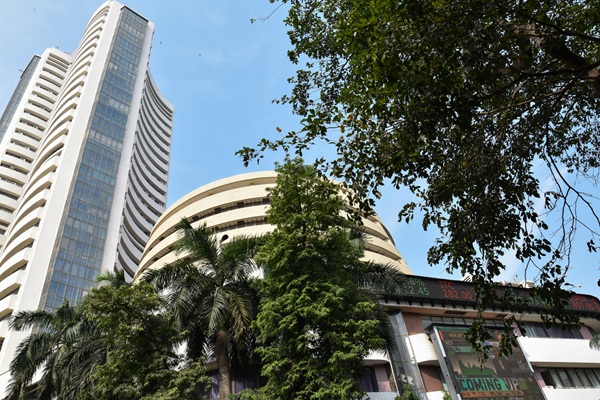
Indian equity benchmarks pared a sharp intraday decline on Wednesday after reports suggested the government may introduce measures to support the rupee, attract foreign bond investors and review long-term capital gains tax provisions. The Nifty50 ended 0.33% or 77.95 points lower at 23,405.60, while the BSE Sensex declined 0.41% or 303.67 points to close at 74,346.17. Both indices had fallen nearly 1.5% during intraday trade before recovering part of the losses.
Investor sentiment remained pressured by renewed geopolitical tensions in West Asia and rising Brent Crude prices, which climbed around 3% toward $99 per barrel after hostilities escalated and diplomatic progress between Washington and Tehran remained limited. Higher oil prices continued to raise concerns around India’s inflation outlook, current account deficit and economic growth prospects.
Technology stocks witnessed sharp selling pressure, with the Nifty IT index tumbling more than 5% in its worst session in four months. Investors reassessed the sector’s earnings outlook amid concerns around AI-led disruption and slowing global technology spending. The IT index has declined more than 22% so far in 2026 despite recent short-term rebounds.
Financial and PSU banking shares helped cushion broader market losses. Sectorally, PSU banks, private banks and healthcare stocks outperformed, while IT remained the weakest-performing segment.
Among Nifty50 constituents, Apollo Hospitals Enterprise, Tata Motors, InterGlobe Aviation and Max Healthcare Institute were among the top gainers. Broader markets also weakened modestly, with the Nifty MidCap and Nifty SmallCap indices falling 0.42% and 0.11%, respectively.
Top Movers of the Day
TCS plunged a little over 8% to ₹2,245 as heavyweight IT stocks came under intense selling pressure, with the counter giving up a large part of its recent rebound amid renewed worries over how AI could cannibalise traditional services revenue.
LTIMindtree dropped about 6.6% to roughly ₹4,054 after Jefferies maintained an underperform rating and flagged that AI could cut legacy IT services revenues by around a quarter, leaving the company’s ambitious growth and margin targets looking stretched.
Apollo Hospitals climbed about 2.6% to ₹8,299, emerging as the top Nifty gainer as money moved into defensives, with hospital and healthcare names benefiting from relatively steady earnings visibility in an otherwise risk‑off session.
Max Healthcare rose 1.7% to ₹965, adding to the outperformance in select consumption and healthcare plays as investors looked for pockets of strength away from rate‑sensitive and IT stocks.
ICICI Bank gained around 1.4% to ₹1,243 from the day’s low and finished firm, helping Bank Nifty rebound over 1,000 points off its intraday bottom as large private lenders attracted dip‑buying interest.
Ola Electric rallied about 10% to roughly ₹43.8, marking its strongest move in around eight weeks, with volumes nearly doubling versus the five‑day average and a large pile of pending buy orders and no sellers at the upper circuit.
Prataap Snacks jumped nearly 9% to around ₹1,186, hitting its highest level in about 21 weeks as the stock extended its recovery to trade almost 38% above its 52‑week low, even while still a few percent below its 52‑week high.
CarTrade Tech surged more than 8% to roughly ₹1,953, reaching a 14‑week high as rising volumes signalled renewed market interest, with the stock now over 29% above its 52‑week low despite remaining well below its prior peak.
John Cockerill India spiked about 20% to near ₹9,112, printing a fresh 52‑week high after the company announced an order worth roughly ₹1,250–1,300 crore from JSW Vijayanagar Metallics for a CRNO project, backed by a more than three‑fold jump in trading volumes.
Futures & Options
Nifty June 2026 futures closed at 23,490, a premium of 84.40 points over the spot Nifty 50 close of 23,405.60, indicating that traders retained selective long positions despite continued weakness in the cash market. In the cash segment, the Nifty 50 declined 77.95 points or 0.33%, while volatility rose sharply with India VIX jumping 6% to 16.28 amid renewed geopolitical tensions and concerns over rising oil prices.
Among stock futures, Tata Consultancy Services, HDFC Bank and Infosys were the most actively traded contracts in the F&O segment of the NSE. The June 2026 derivatives series will expire on 30 June 2026.
Bonds
India’s government bond yields extended its rise on Wednesday, climbing toward 7.0240% from 7.0129% in the previous session, as higher crude oil prices and elevated US Treasury yields pressured the domestic debt market ahead of Friday’s Reserve Bank of India policy decision.
The benchmark 6.48% 2035 bond yield remained elevated through the session as traders maintained short positions in anticipation of higher cut-offs at the upcoming government bond auction. However, demand from state-owned banks at higher yield levels helped cap further upside in yields and prevented a sharper selloff in sovereign debt.
Meanwhile, short-term treasury bills yields eased after the RBI rejected all bids for the 182-day and 364-day Treasury bills at Wednesday’s auction, while accepting bids only for the 91-day paper. Traders viewed the move as a signal that the RBI was unwilling to accept elevated short-end borrowing costs, supporting sentiment at the shorter end of the curve.
Forex
Indian rupee weakened on Wednesday as rising oil prices, weak domestic equities and renewed geopolitical tensions in West Asia pressured the currency, although likely RBI intervention helped limit sharper losses. The rupee closed at 95.7050 against the US dollar, down 0.46% from the previous close of 95.2650.
Sentiment deteriorated after Brent Crude prices climbed nearly 3% following renewed military escalation in West Asia, including Iranian missile launches toward Kuwait and Bahrain and US strikes on Iran’s Qeshm Island.
Toward the close of trade, the rupee recovered some ground after a Bloomberg report stated that India was considering reducing taxes on foreign bond investors and removing limits on overseas ownership of certain government securities.
Crypto
Crypto markets extended their sharp decline on Wednesday as risk sentiment deteriorated across global markets, triggering heavy liquidations and renewed selling pressure in major digital assets. Bitcoin dropped more than 4% over the past 24 hours, briefly falling below the $66,000 mark before recovering slightly to trade near $66,900. The latest decline pushed Bitcoin significantly lower from highs recorded earlier this year and reinforced the weak start to June for the crypto market.
Ethereum traded near $1,881 after falling nearly 5% during the session. Ethereum has now declined more than 55% from its 2025 peak near $4,950, although institutional interest remained visible through continued inflows into Ethereum exchange-traded funds. Ethereum-focused ETFs reportedly attracted more than $1.5 billion in inflows during May 2026 despite the broader weakness in digital assets.
US Stock Futures
US stock futures traded mixed early Wednesday as investors balanced continued optimism around artificial intelligence-driven earnings growth against lingering uncertainty surrounding US-Iran negotiations. Futures linked to the Dow Jones Industrial Average declined around 0.3%, while S&P 500 futures slipped marginally. Meanwhile, Nasdaq-100 futures edged higher by around 0.2%, supported by strength in technology shares.
Investor sentiment remained supported by a series of strong corporate earnings updates tied to AI-related demand. Recent results from Dell Technologies and Hewlett Packard Enterprise reinforced expectations that artificial intelligence spending continues to drive growth across the technology sector.
US Treasury Notes
US Treasury yields moved higher in early Wednesday trading as renewed geopolitical tensions in West Asia and rising oil prices revived concerns around persistent inflation and higher-for-longer interest rates. The benchmark 10-year Treasury yield climbed above 4.48%, while the policy-sensitive 2-year Treasury yield rose toward 4.08%, reflecting broad-based weakness in government bonds.
Selling pressure in Treasuries intensified after overnight military exchanges between US and Iranian forces disrupted ongoing diplomatic talks and pushed Brent Crude prices higher toward $98 per barrel. Rising energy prices renewed fears of inflationary pressures feeding back into the global economy.
Top News
- India cabinet approves $1 billion for aviation fuel price fund
- RBI denies selling $12 bn gold, says reserves steady at 880.52 tonnes
- US trade body proposes 12.5% duty on India, others on forced labour gaps
- SBI chief backs rate pause, says India's growth story goes beyond Sensex
- India set for $2-billion drone order in biggest buy, industry body says
- US-India trade deal 99% done, last-mile talks this week: US Ambassador Gor
- Apple agrees to submit India financials in long-pending antitrust case
- India tightens checks on overseas flows as currency pressure mounts, sources say
- CMR Green, India's first IPO in a month, fully subscribed on first day
- India's fuel demand outlook hit by price hikes, slowing industrial activity
- Services PMI rises to 59.8 in May as demand, output growth pick up
- India's IndusInd Bank slips on report of whistleblower complaint
- JioStar bets big on AI-generated shows after success of Mahabharat
- India's Tata taps Chery for premium EV push, leveraging Chinese tech
- Fire in Delhi hotel kills at least 21, police say
- Gulf tensions escalate as Iran hits Kuwait, US strikes near Hormuz
- Russia accuses Ukraine of killing eight civilians in drone strike on a passenger bus
More From BasisPoint