.png)


T.K. Arun, ex-Economic Times editor, is a columnist known for incisive analysis of economic and policy matters.
March 10, 2026 at 5:28 AM IST
Coal is so 19th-century, oil and gas ooze 20th-century ‘modernity’, while renewables spell contemporary, climate-conscious cool — so goes the common sense on fuels. Common sense often lacks sense: it used to be the common sense that the sun moved around the earth and that women are less than equal to men.
Gas is vital for maintaining grid stability in power grids that connect to a lot of renewable power. Renewable power, except for those tapping the energy of ocean waves or the heat below the earth’s crust, are intermittent, and when these cease to be forthcoming, thermal generation must kick in. For battery storage of electricity to become grid-scale, battery minerals would need to be mined, refined, transported and converted on a scale that generates not just massive amounts of greenhouse gas emissions but also much, mining-associated environmental and social dislocation.
It is not feasible to shut down and restart coal burning power plants to accommodate the intermittency of renewable generation. Hydel plants and gas turbines are easier to ramp up and down. Gas, therefore, is integral to stable grids that draw in a lot of renewable power. For the same amount of power generation, gas emits far less carbon dioxide, as compared to a coal-burning power plant.
In other words, the thermal generation needed to complement renewables, with a relatively small carbon footprint, is gas. Combined cycle gas turbines have high levels of thermal efficiency, upward of 50%, and as much as 64% in the most advanced working models. The cycles that are combined are the gas cycle and a conventional steam cycle.
Gas burns inside a chamber filled with compressed air, pushing hot gases out of the chamber with explosive energy to drive a turbine. In our school lessons on the dynamo, a copper coil turns inside a magnetic field, to produce electricity. In a large turbine, what is linked to the turbine shaft, and thus rotates when the turbine blades spin, is a giant electromagnet, placed inside a static copper coil, producing the same effect as turning a coil inside a magnetic field. It is simpler to connect leads to a stationary copper coil to draw out the power than to draw power from a rotating coil.
The exhaust gas from the turbine, after it has spun the blades, is still superhot, and its heat is recovered to boil water and generate steam, which then turns the blades of another turbine, much as happens in a coal-burning power plant. This is the steam cycle.
The gas cycle and the steam cycle combine to produce the high conversion efficiency of combined cycle gas turbines. But then, where is the gas to come from?
India relies on imports for half the gas it consumes every year, and gas demand is constrained by its relatively high price. India has about 20,000 MW of gas-based power generation capacity that lies idle, because the cost of gas would make the power produced by burning it too costly to sell to the grid.
In the first 10 months of the current fiscal year, gas imported as LNG ran to nearly 30 billion standard cubic metres. For the full year, the import volume would exceed 36 billion SCM. The government wants to increase the share of gas in India’s energy mix from 6% at present to 15%. That target is purely arbitrary, has no rational basis, and will make India far more exposed to global supply conditions of LNG.
Domestic oil and gas exploration is not proceeding well, going by the tepid response to the 9th and 10th rounds of bidding for licences under the Open Acreage Licensing Policy. Increasing the share of gas in total energy use either directly or indirectly by increasing the share of renewables is to increase LNG imports, at a time when global demand for LNG also moves up.
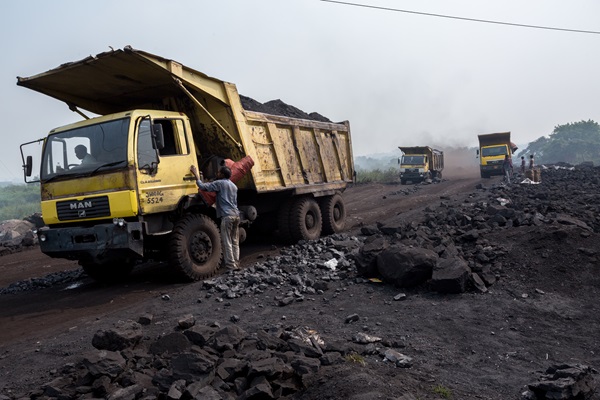
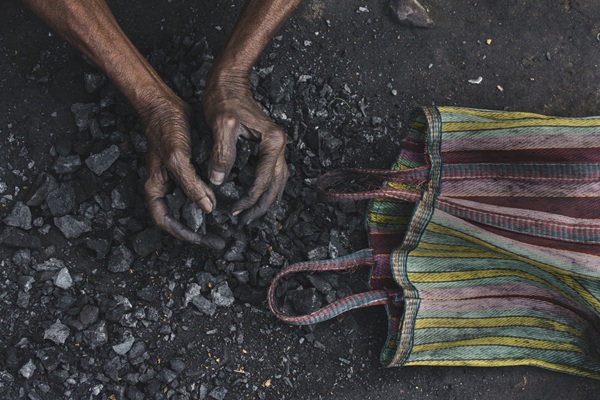
India’s 400 billion tonnes of estimated coal reserves, of which 220 billion tonnes are proven reserves, offer the way out. Gasified coal can stand in for natural gas.
Coal can be gasified either underground or after being mined and brought to the surface. India’s ongoing 100 million-tonne coal gasification mission is for mined coal. In situ gasification under the ground is technically more demanding, and calls for further investments in R&D.
When steam is passed over powdered coal under conditions of high heat and pressure, the carbon of the coal mixes with the oxygen of H2O to form carbon monoxide and hydrogen, to form what is called Synthesis Gas or syngas. Along with CO and H2, syngas also contains traces of methane and carbon dioxide. This syngas can be burnt in a gas turbine, like natural gas, or scrubbed and converted into methane or pure carbon or a variety of petrochemicals, including synthetic aviation fuel, petrol and diesel.
Gasified coal was used for street lighting in the 19th century, including in colonial India. That explains why ‘gas works’ figures as an entry in the States’ List of subjects, in the Constitution’s Seventh Schedule, which allocates areas of governance between the Union and the States. After World War I, Germany tasked its scientists to develop processes to create petrofuels out of coal, and, in the 1920s, the Fischer-Tropsch process was perfected to create hydrocarbon chains out of syngas. During World War II, the Wehrmacht flew on synthetic aviation fuel and the Panzer tanks wreaked destruction rolling on diesel synthesised from coal.
Where India needs to innovate is in better ways to gasify coal right underground, without first having to dig up the stuff to the surface, and in the capture and use of the carbon dioxide once coal has been converted into gas, and the gas used up as fuel.
Removing the colonial mindset, a big deal with the present government, lies not so much in removing busts of white men from prominent display as in having the confidence that Indian scientists would be able to achieve breakthroughs the nation needs, when provided with the right organisational framework, funds and support without attached strings.
Indian coal offers the path to energy sovereignty, if only the government would dump its arbitrary targets for a holistic plan to leverage India’s coal riches.
More From BasisPoint